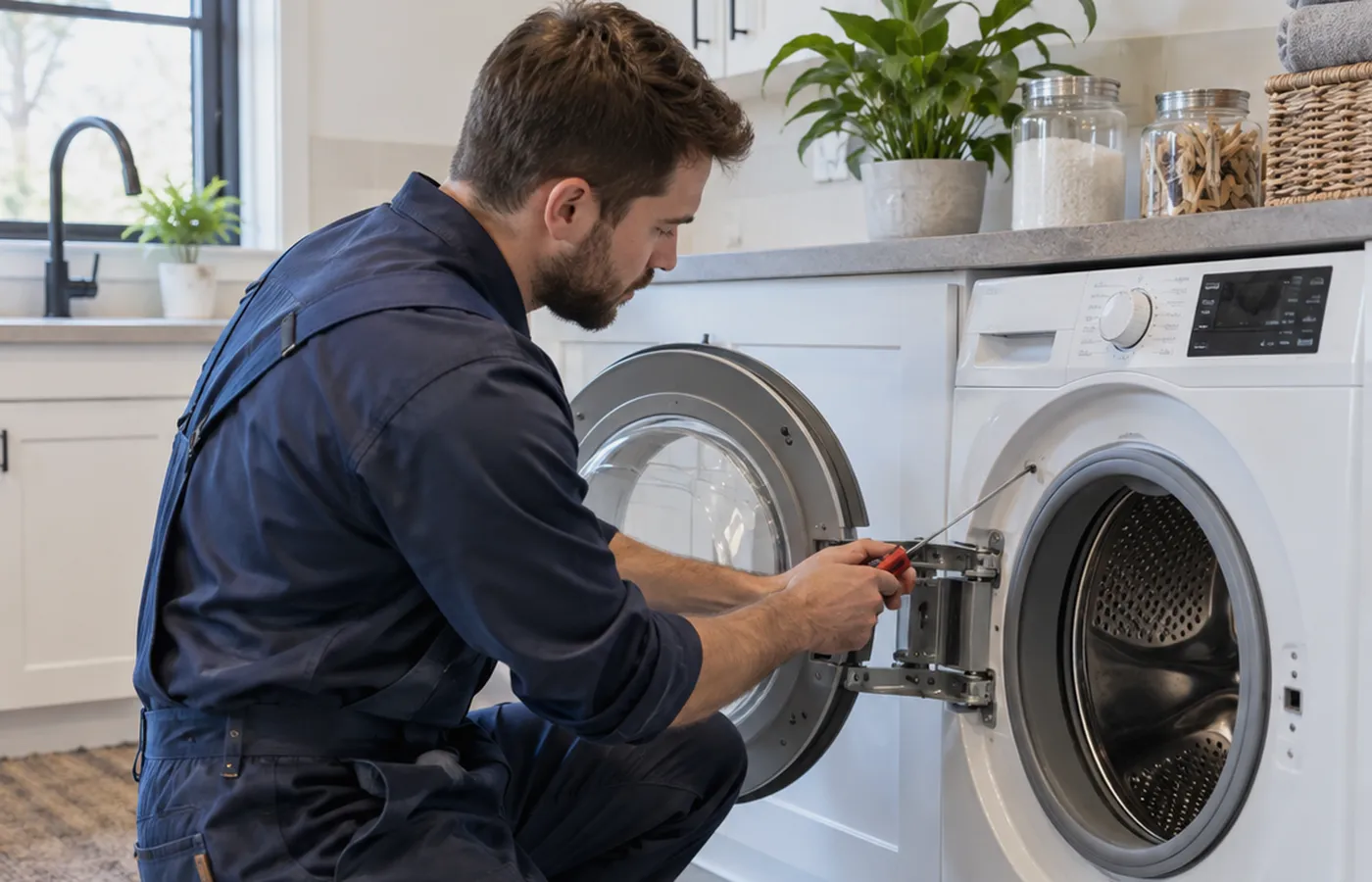
What does “washer not draining” actually tell you?
Standing water means the machine did not complete the expected drain path, but that can happen for several reasons. A blocked filter, kinked hose, clogged pump path, failed drain pump or control problem can all interrupt the same stage of the cycle.
Note whether you hear the drain pump humming, whether any water leaves the machine, and whether an error code appears. Those observations are more useful than guessing which part is bad.
Can the drain hose or filter cause the problem?
A kinked or crushed drain hose can restrict flow. Some front-load washers also use an accessible pump filter that can collect coins, lint and small items. Follow the model-specific owner instructions before opening a filter because trapped water may release quickly.
Do not disconnect hoses or open service panels with the washer energized. Water and electrical components are a poor combination.
What does a failing drain pump look like?
A drain pump may become jammed by debris, develop worn internal parts or fail electrically. A humming pump with little water movement suggests a different situation from a completely silent drain stage, but testing is still needed.
Replacing a pump without checking the drain path can miss an obstruction that caused the symptom or stressed the pump in the first place.
Why can a draining problem also look like a spin problem?
Many washers check water level before high-speed spin. If water remains in the tub, the control may refuse to spin normally. That is why “washer will not spin” and “washer will not drain” can overlap.
If the washer drains completely but still will not spin, the diagnostic path shifts toward the door or lid lock, drive system, motor control, belt, coupling or other model-specific components.

Can a control or sensor stop draining?
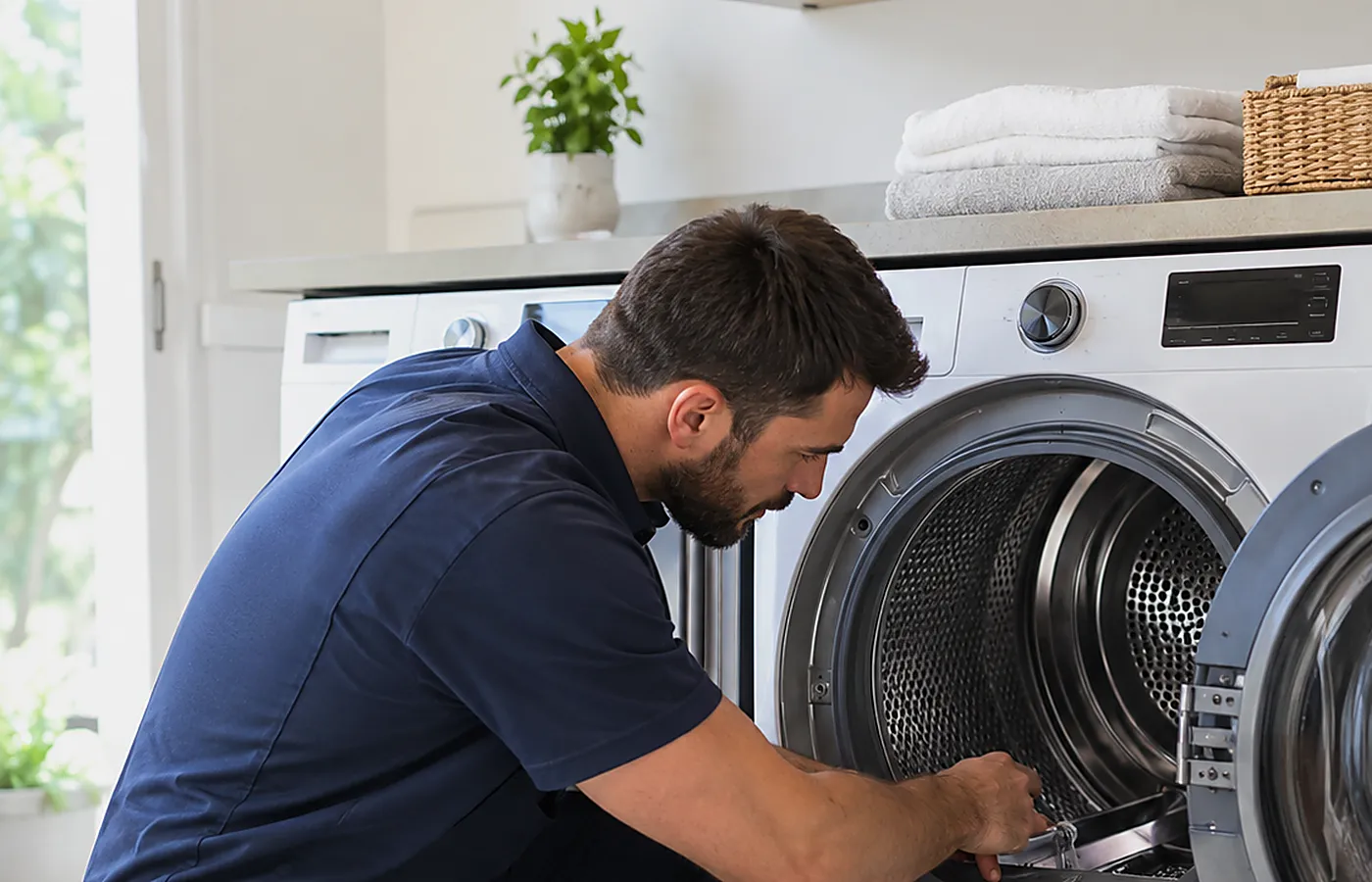
Pressure sensing, water-level information, wiring and control logic can affect the transition into drain. Error codes are useful when they are interpreted for the exact model, but they should not be treated as interchangeable across manufacturers.
What if the washer is also leaking?
Stop the cycle if water is escaping onto the floor. Shut off the water supply when appropriate and safe to do so, and keep water away from electrical connections. A drain blockage can sometimes contribute to overflow behavior, but hoses, door seals and fill components may be separate causes.
How draining and spinning are connected
The pattern matters because one symptom can come from several different systems. These observations help organize the diagnostic path without assuming a failed part.
| What you notice | Areas usually considered |
|---|---|
| Tub stays full and washer will not spin | Drain path, pump, filter, hose or control issue |
| Pump hums but water does not leave | Obstruction, restricted hose or failing pump |
| Drains slowly | Partial blockage, weak pump or hose restriction |
| Drains normally but will not spin | Door/lid lock, drive, motor, suspension, sensing or control |
What should you check before requesting service?
Keep the checks external and safe. The goal is to describe the problem accurately, not to dismantle the appliance.
- Look for a visibly kinked drain hose.
- Use the manufacturer’s accessible pump-filter procedure if the model provides one.
- Do not force a locked door while water remains in the drum.
- Record the stage of the cycle where the washer stops.
- Stop use if water is leaking near electrical components.
When should you request washer service?
If the hose and manufacturer-approved filter checks do not resolve the problem, or if the pump is noisy, the washer shows recurring errors or water remains trapped, service should move into pump, control and drain-path diagnosis. Have the model number and error code ready.
Frequently asked questions
Can a washer spin if it cannot drain?
Many models will not enter a normal high-speed spin while water remains in the tub, so a drain fault can appear as a spin problem.
Should I keep restarting the cycle?
Repeated restarts rarely clear a physical blockage or failed pump and can create more water movement. Stop and diagnose the drain problem.
Can a clogged filter stop a washer from draining?
Yes, on models that use an accessible pump filter. Follow the manufacturer instructions because trapped water may release when the filter is opened.
What should I tell the technician?
Share whether the pump makes noise, whether any water drains, the error code if shown, and whether the problem affects spinning too.

Harpeth Appliance Works Editorial Team
This guide explains “Washer Not Draining: What to Check Before Service” for Franklin homeowners, with symptom-specific observations, safe external checks and the information that helps prepare a washer service request.
Editorial responsibility →