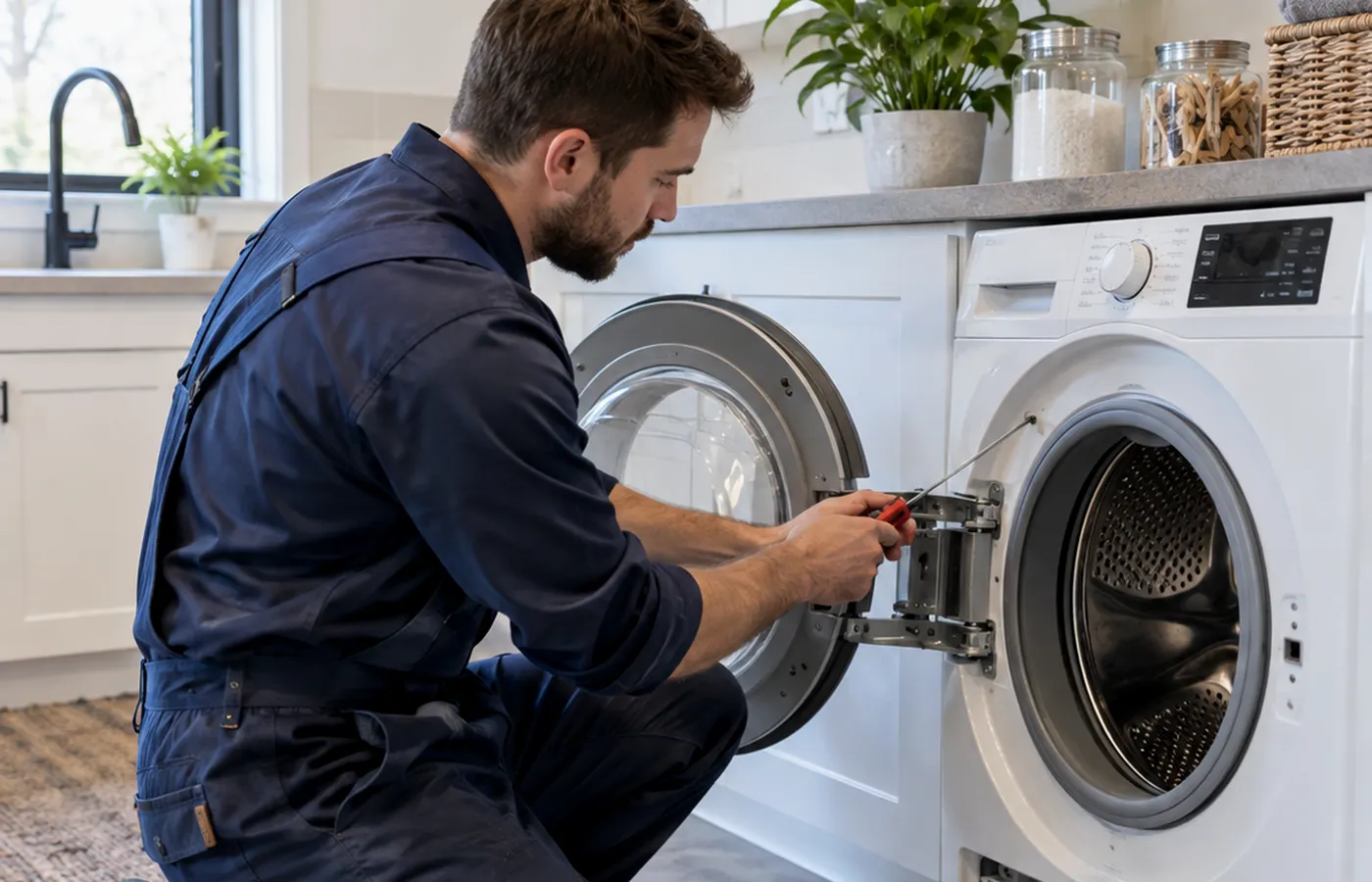
Supply hoses can leak even when the washer is not running.
Hot and cold supply hoses, valve connections and the wall valves remain pressurized while the household water is on. A leak in that area may continue after the washer is switched off.
If you know the correct valves and they operate normally, shutting them can limit additional water. Do not force a corroded or stuck valve, and seek plumbing help when the leak is outside the appliance.
Leaks during fill point toward a different system.
Water that appears while the machine is filling can involve inlet connections, the dispenser, internal fill hoses, the tub or an overfill condition. Front-load washers can also leak around the door boot if it is damaged or contaminated.
Record whether the leak begins immediately when water enters or later when the drum moves. Timing is one of the strongest clues for separating fill, wash and drain faults.
Drain-phase leaks often involve pumps, hoses or connections.
A washer can remain dry through fill and wash, then release water rapidly when the drain pump starts. Pump housings, drain hoses, clamps and standpipe connections are common areas to inspect during diagnosis.
Do not assume every puddle is an appliance leak. An overflowing standpipe or plumbing blockage can send water onto the floor while the washer itself is functioning normally.
Shaking and load conditions can contribute to leaks.
Excessive movement can strain hoses and seals or cause water to slosh where it normally would not. A severely unbalanced front-load washer can also stress the door boot.
If the machine begins banging violently, stop the cycle instead of letting it finish. Load distribution, suspension and leveling should be considered alongside the leak source.
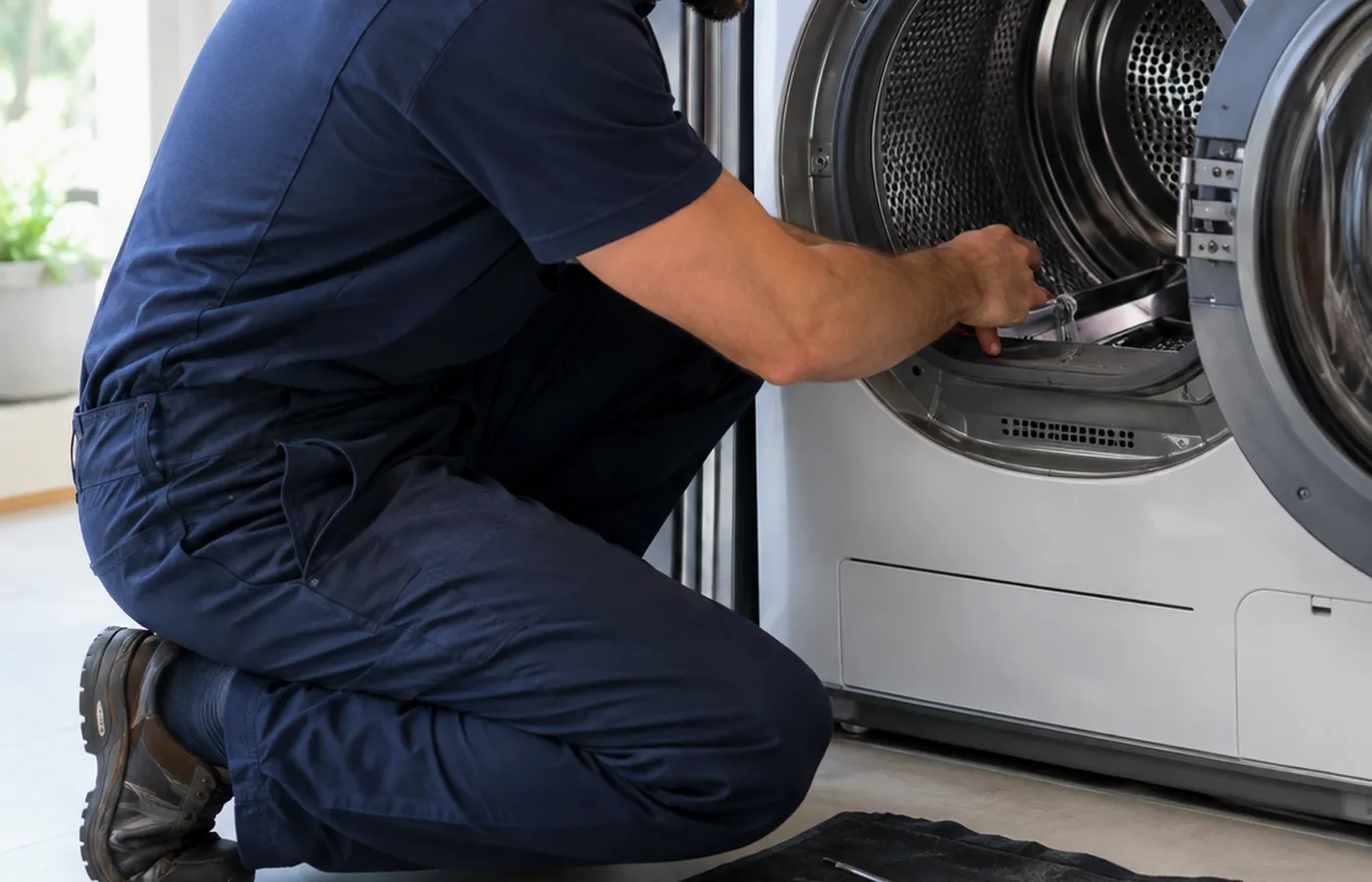
Dry the affected materials promptly.
EPA moisture guidance recommends drying wet or water-damaged materials promptly, generally within 24 to 48 hours, to reduce mold growth potential. That means cleanup should begin even before the appliance diagnosis is complete.
Use safe methods to remove standing water and increase drying. If moisture has entered wall cavities, subflooring, insulation or electrical areas, the property may need additional professional assessment beyond appliance service.
What information helps diagnose a washer leak?
Tell the technician where the water first appeared, which cycle phase was active, how large the leak was and whether the machine was shaking. Photograph the model label and any visible water trail or damaged hose.
If the leak happens only with certain loads or water temperatures, mention that pattern. Small details can distinguish a door-seal problem from a drain or plumbing condition.
Washer leak timing and systems to consider
| Leak timing | Possible area | Useful clue |
|---|---|---|
| While idle | Supply hose or wall valve | Does water continue with washer off? |
| During fill | Inlet, dispenser, fill hose, overfill | Does leak start before drum movement? |
| During wash | Door boot, tub, internal hose | Does movement make it worse? |
| During drain | Pump, drain hose, standpipe | Does water appear when pump starts? |
| During violent spin | Suspension, load, door/tub sealing | Is the machine moving excessively? |
Leak timing narrows the diagnostic path but does not prove a specific component failed.
What to do after a washer leak
- Stop the washer. Prevent another fill or drain event.
- Control the water source. Close accessible supply valves if safe and appropriate.
- Remove standing water. Protect flooring and nearby materials.
- Start drying. Follow appropriate moisture-control guidance promptly.
- Document the symptom. Photograph water location, model label and any visible hose problem before service.
Frequently asked questions
Can I run a short cycle to find the leak?
Not when water is already damaging the surrounding area. Preserve the information you have and move to diagnosis.
Could the drain pipe cause the puddle instead of the washer?
Yes. A blocked or overflowing standpipe can look like a washer leak during drain.
How quickly should wet flooring or cabinets be dried?
EPA guidance recommends prompt drying, generally within 24 to 48 hours, to reduce mold growth potential.
Should I replace supply hoses after a leak?
Only after identifying the source. A supply hose may be involved, but pump, tub, door and drain systems can create similar visible water.
Related Franklin appliance resources
Sources and further reading
- EPA Mold, Moisture and Your Home , Federal guidance on prompt drying of wet materials and moisture control.

Harpeth Appliance Works Editorial Team
This guide explains “What Should You Do When a Washer Leak Reaches the Floor?” for Franklin homeowners, with symptom-specific observations, safe external checks and the information that helps prepare a washer service request.
Editorial responsibility →