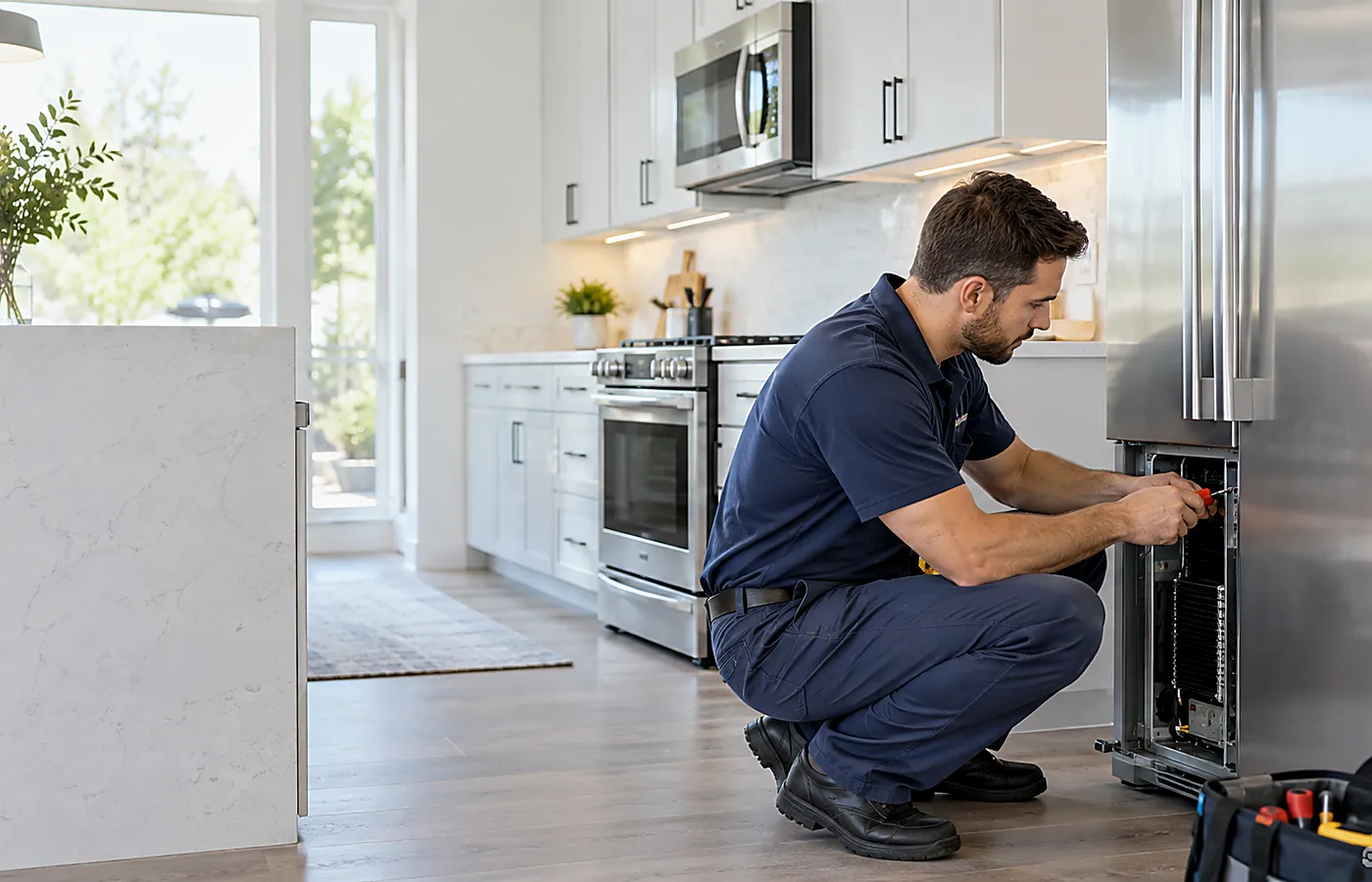
Write down the symptom before it changes.
Intermittent appliance problems can disappear temporarily by the time a technician arrives. Record what the machine was doing, what part of the cycle it was in, how long the problem lasted and whether an error code or unusual sound appeared.
For leaks, note whether the water appeared during fill, wash, drain or while the appliance was idle. For temperature problems, note which compartment is warm and whether fans or compressors seem to run. These observations are more useful than guessing the failed part.
Photograph the model and serial label.
Model information connects the appliance to the correct technical platform. A photo avoids transcription errors and can reveal revision or serial information that matters for parts selection.
Use the normal door opening, cabinet edge or other accessible label location. Do not pull out a heavy refrigerator or remove a built-in appliance solely for identification.
Create normal working space without creating a hazard.
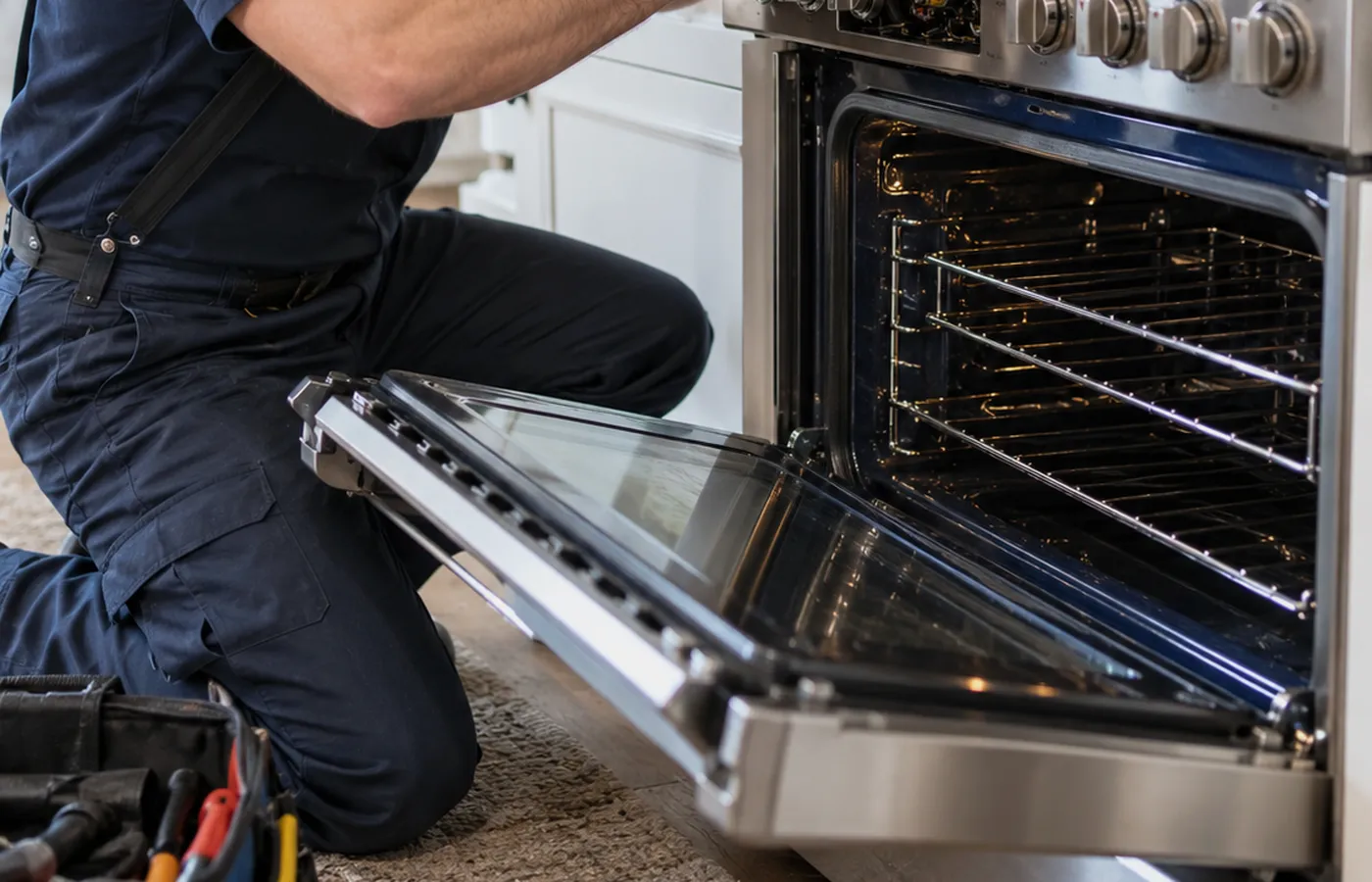
Clear baskets, rugs, pet items, cleaning supplies and other ordinary clutter from around the appliance. Make a path from the entrance to the work area and secure pets when needed.
Do not attempt to move a stacked laundry unit, disconnect a gas range or detach a built-in dishwasher unless you are qualified and it is necessary for immediate safety. Access planning is part of the service visit.
Preserve useful evidence.
A photograph of water beneath a dishwasher, frost pattern inside a freezer or a displayed error code can be useful if the symptom changes before the appointment. Short video can also capture intermittent noise or vibration when it is safe to do so.
Evidence should never require you to operate an unsafe appliance. If there is smoke, gas odor, active water reaching electrical areas or severe overheating, stop normal operation and focus on safety.
Think about what happened before the failure.
Recent events can provide context: a power outage, plumbing work, a moved appliance, a newly installed vent, a very unbalanced laundry load or a filter change. The event may or may not be causal, but the sequence is useful to report.
Also mention recent service on the same appliance. A new symptom after a component change can be related or completely separate, and the technician needs the history to decide what to verify first.
Prepare the questions you want answered.
Useful questions include what system failed, whether another condition contributed, whether the appliance should remain off, whether manufacturer authorization applies and what should be monitored after the repair.
Writing those questions down can make the final explanation more useful, especially when several family members share responsibility for the appliance or when the homeowner is comparing repair with replacement.
Appointment preparation checklist
| Prepare | Why | Do not |
|---|---|---|
| Model/serial photo | Identifies exact appliance | Remove unsafe panels |
| Symptom notes | Preserves intermittent details | Guess at the failed component |
| Clear floor area | Creates safe access | Move heavy built-ins yourself |
| Photos of leaks/codes | Preserves evidence | Run an unsafe appliance for a photo |
| Recent event history | Adds diagnostic context | Assume correlation proves the cause |
Preparation should make the visit safer and more informative, not turn into a DIY repair project.
Ten-minute preparation before service
- Photograph the label. Capture the whole data plate clearly.
- Write one sentence about the symptom. Describe the behavior without diagnosing the component.
- Record any code or unusual sound. Preserve intermittent evidence.
- Clear the immediate floor and counter area. Create safe working space.
- Flag safety issues during scheduling. Mention gas, smoke, active water, overheating or recurring electrical trips immediately.
Frequently asked questions
Should I empty the refrigerator before service?
Not always. Follow the service provider’s instructions. If food safety is already a concern, handle food according to current USDA guidance.
Should I pull out the washer or dryer?
Usually not unless it can be done safely and the provider specifically asks. Connected or stacked appliances can be heavy and awkward.
What if I cannot find the model number?
Share the brand, appliance type and any partial information you can access safely. The guide on this site shows common label locations.
Should I reset the appliance before the appointment?
If a normal reset is safe and manufacturer-approved, it may be reasonable, but record any error code first and do not repeatedly reset an appliance that trips power or shows a safety concern.
Related Franklin appliance resources

Harpeth Appliance Works Editorial Team
This Franklin homeowner guide focuses on how should you prepare for an appliance repair appointment?, with practical preparation steps and clear boundaries between safe observations and service-level diagnosis.
Editorial responsibility →