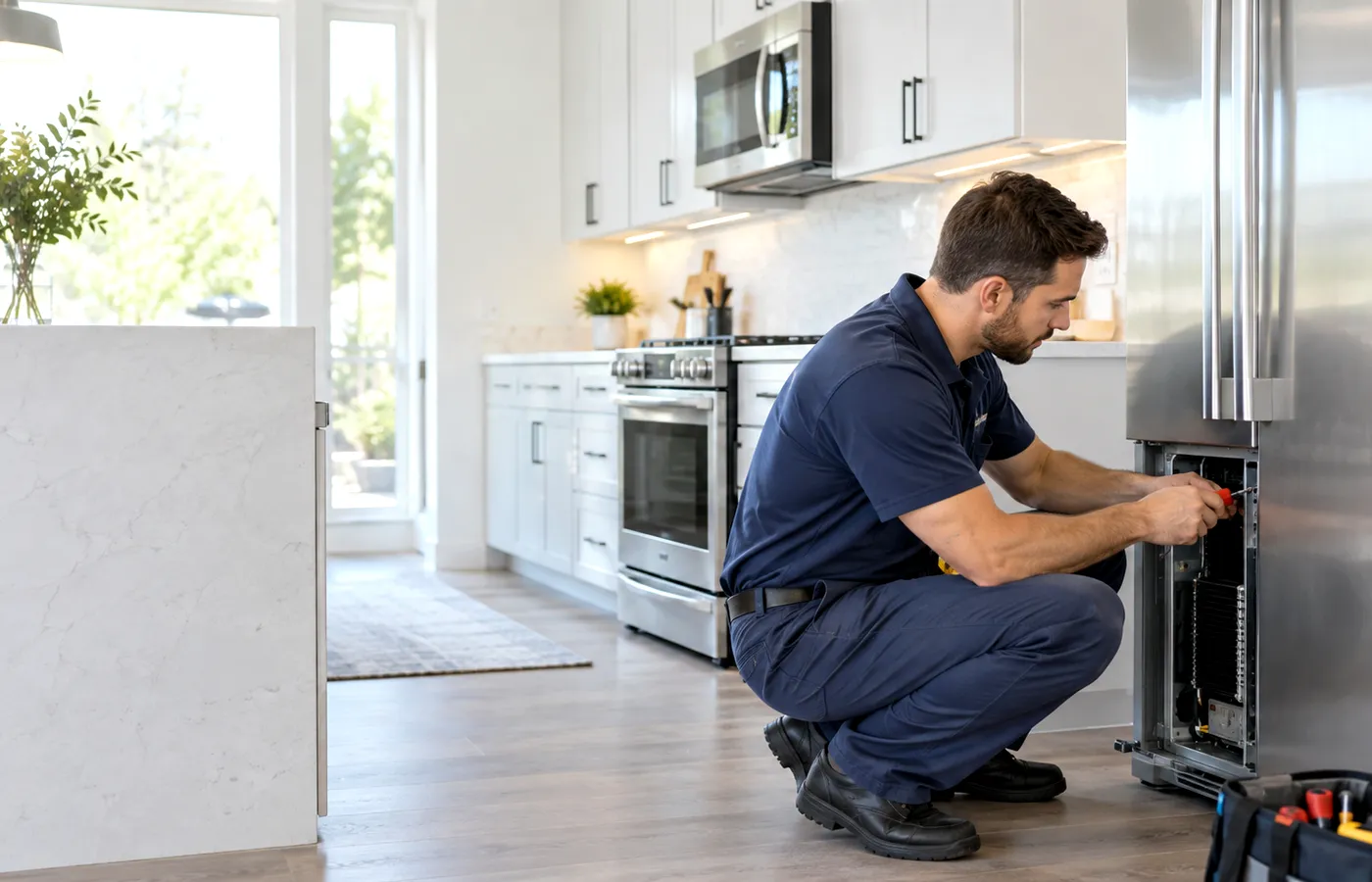
What happens before tools come out?
The technician should confirm the appliance, brand, model when available and the complaint. A short symptom history can reveal useful patterns: whether the problem is intermittent, whether an error code appeared, whether a leak happens during fill or drain, or whether a power outage occurred immediately before the failure.
This conversation is not filler. It helps prevent unnecessary testing and can flag safety boundaries before the appliance is moved or energized. Mention gas odor, active leakage, smoke, repeated breaker trips or severe overheating immediately.
Safe access and installation context come next.
Built-in appliances, stacked laundry units and machines installed in tight cabinets may need additional access planning. The technician may need space to pull the appliance forward, reach a service panel or inspect connections. Clear the immediate work area without attempting to disconnect gas, hardwired power or difficult plumbing yourself.
If flooring is delicate or cabinetry is tight, say so. Protecting surrounding finishes is part of practical service planning, especially with heavy refrigerators and built-in kitchen equipment.

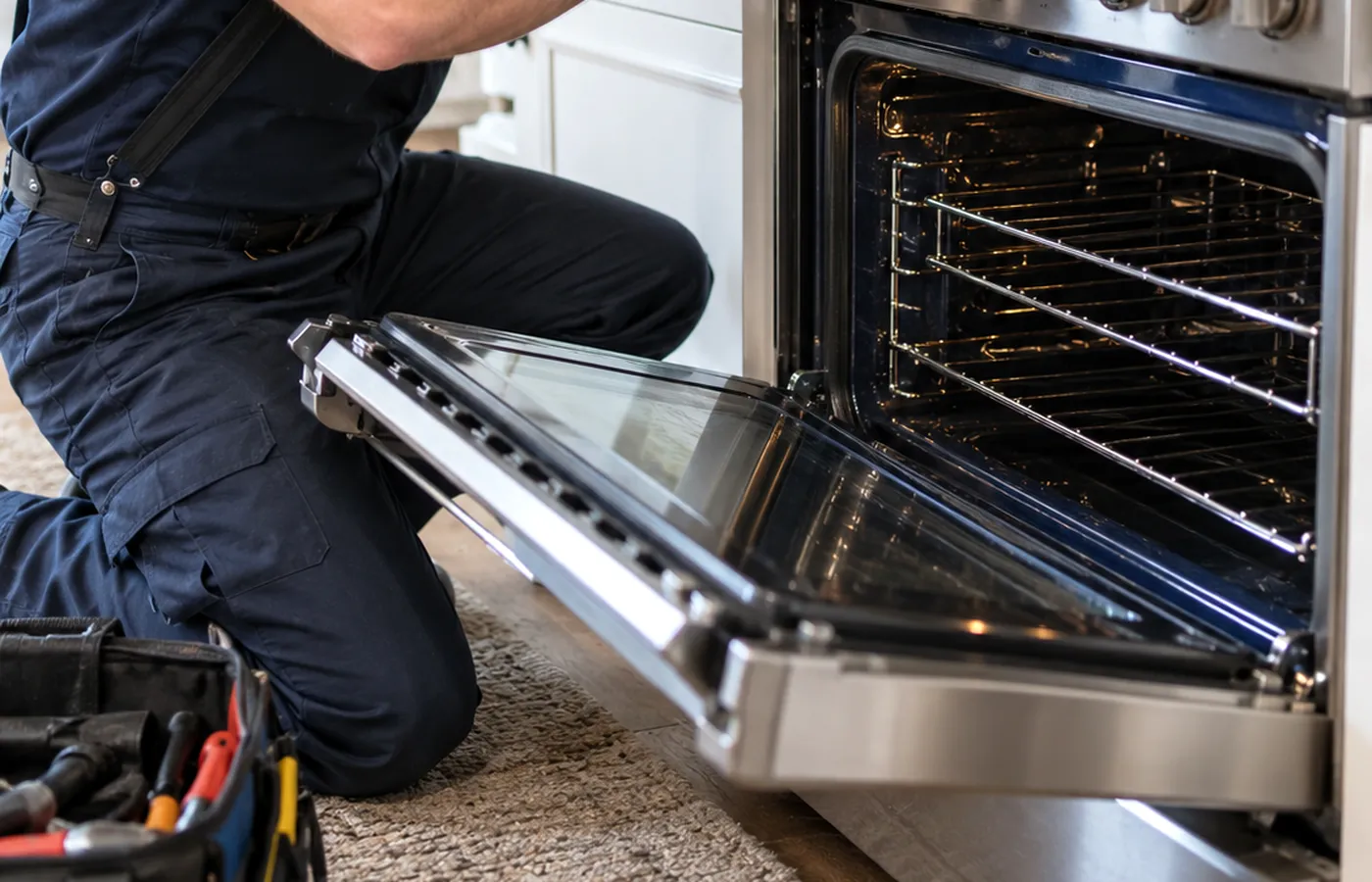
Diagnosis is a sequence of tests, not one universal checklist.
A washer that will not drain may require inspection of the filter, hose and pump circuit. A dryer that does not heat may require checking supply, heating components and airflow. A refrigerator not cooling can involve fans, sensors, defrost, airflow or the sealed system.
Because appliance designs vary, the same symptom can require different tests on different models. That is why model identification matters and why a good diagnosis avoids replacing a component solely because it is common on another machine.
How should the findings be explained?
You should receive a plain-language explanation of what the technician found and why that finding accounts for the symptom. When another condition contributed, such as restricted dryer airflow causing thermal stress, that condition should be part of the explanation rather than hidden behind a component name.
The explanation should also make clear whether the appliance can remain in normal use, should stay off, or requires another service path. Safety and usability are different from the question of whether a repair is technically possible.
What happens when the appliance needs a component?
Some repairs can be completed during the initial visit when the correct component and access are available. Others require a model-specific part, additional authorization or specialized work. The next step should be clear rather than implied.
If a second visit is required, document the diagnosis and keep the appliance in the recommended state. Do not continue test cycles on a leaking, overheating or electrically unstable appliance simply because the repair is pending.
Testing after repair matters.
After a component is installed, the appliance should be tested for the original symptom and for conditions related to the repair. A dryer heating repair should still include attention to airflow. A dishwasher leak repair should be checked through an appropriate water phase. A washer drain repair should verify that water leaves the tub and the machine can continue its sequence.
Post-repair testing helps confirm that the component change addressed the observed problem rather than only changing the symptom temporarily.
What information helps during a service visit?
| Information | Example | Why it helps |
|---|---|---|
| Model number | Label inside door frame or cabinet opening | Identifies exact platform and components |
| Symptom timing | Leaks during drain, not fill | Narrows the system involved |
| Error code | Displayed code or light pattern | Adds model-specific diagnostic context |
| Recent event | Power interruption before failure | Provides useful sequence information |
| Access condition | Stacked unit or built-in installation | Helps plan safe service access |
Do not create unsafe access just to prepare for the visit. Model labels and observations are useful only when they can be gathered safely.
How to prepare the appliance area
- Clear normal clutter. Create safe working room around the appliance without disconnecting fixed services.
- Photograph the model label. A clear photo can be easier than reading the label during the call.
- Write down the symptom sequence. Describe what happens before, during and after the failure.
- Preserve useful evidence. Photograph a leak location or displayed code if it can be done safely.
- Stop unsafe operation. Do not keep running equipment that leaks, overheats, smells burnt or repeatedly trips power.
Frequently asked questions
Do I need to pull the appliance out before the visit?
Usually not. Heavy, built-in or connected appliances can create injury or property risk if moved without proper technique.
Should I clear an error code before the technician sees it?
If the appliance is safe to leave as-is, recording the code first can preserve useful diagnostic information.
Can a diagnosis be made from the phone description alone?
The description can narrow possibilities, but many faults need model-specific inspection and testing before a component can be identified responsibly.
What if the appliance starts working again before the visit?
Intermittent faults still have diagnostic value. Note the circumstances, duration and any codes or sounds that occurred when the problem was present.
Related Franklin appliance resources

Harpeth Appliance Works Editorial Team
This Franklin homeowner guide focuses on what should you expect during an appliance repair visit?, with practical preparation steps and clear boundaries between safe observations and service-level diagnosis.
Editorial responsibility →