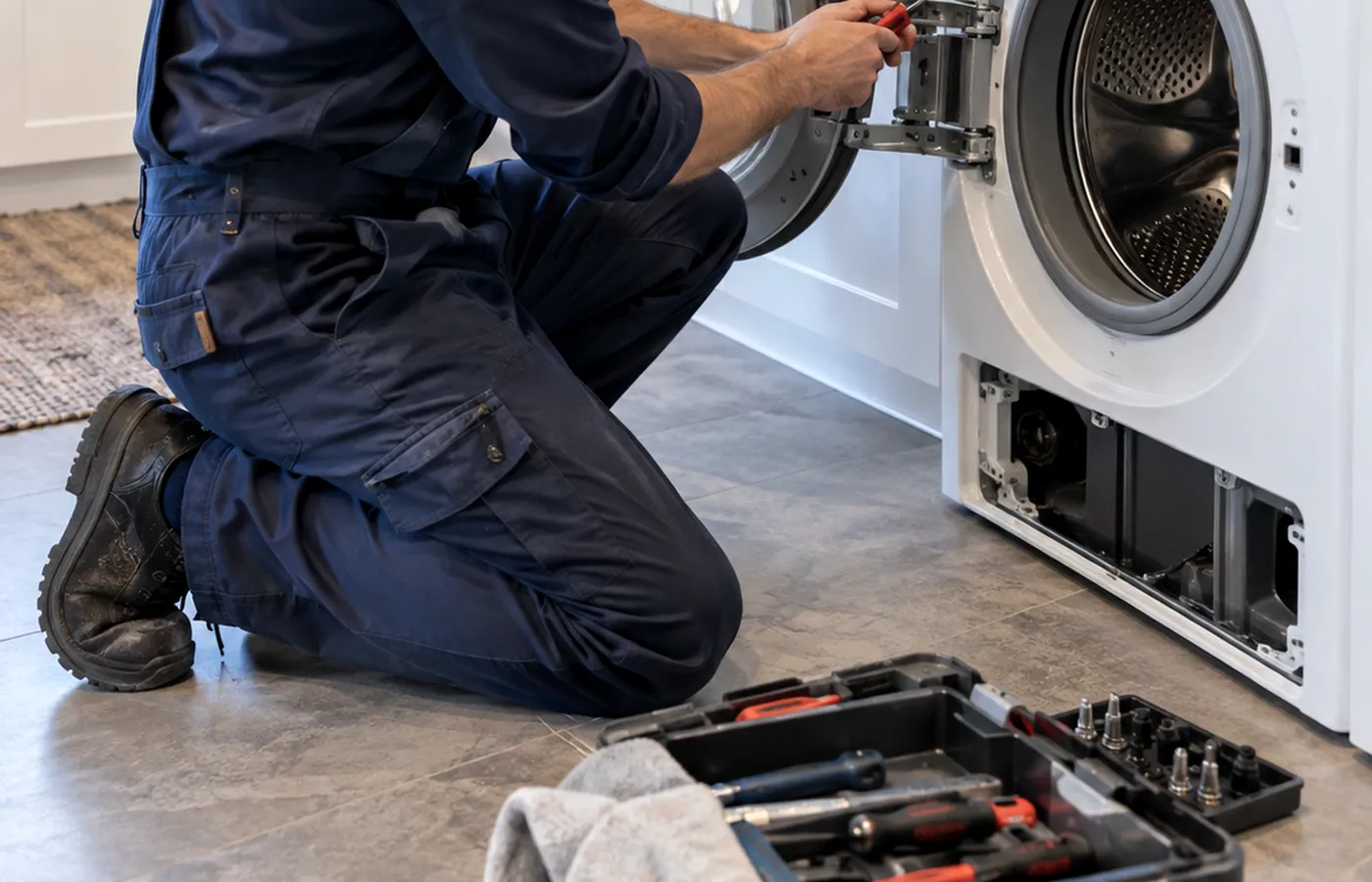
The puddle location can be misleading.
Water follows gravity, cabinet seams and flooring slopes. A leak at the rear inlet connection can travel forward under the dishwasher and appear near the toe kick. A door-seal leak can run down the front and then underneath.
Photograph the visible water before cleanup if it is safe. The location and timing are useful diagnostic clues even when they do not reveal the exact failed component.
When the leak occurs matters.
A leak that begins while the machine fills points toward different systems than one that appears only during drain. Fill-phase problems can involve the inlet connection, valve or overfill conditions. Wash-phase leaks can involve circulation, door sealing or spray patterns. Drain-phase leaks can involve the pump, drain hose or connections.
If you can observe the timing without running an unsafe cycle, note it. Do not repeatedly operate a machine that is actively damaging flooring or cabinetry just to collect more evidence.

Door seals are only one possible source.
A damaged or contaminated door gasket can allow water to escape, but the door may also leak when spray is deflected by a loading issue, a damaged spray arm or an abnormal water level. Cleaning the seal area is reasonable; replacing the gasket without identifying the pattern can miss the real cause.
Check for obvious debris around the seal with the appliance off. Do not force or stretch the gasket while inspecting it.
Pump and hose areas can leak beneath the tub.
Dishwashers use circulation and drain components under the tub. Seals, housings, clamps and hoses can leak only when the pump is running, which is why a machine can appear dry while idle.
Access to the underside can involve electrical connections and sharp metal edges. Model-specific diagnosis is safer than removing panels without knowing the service layout.
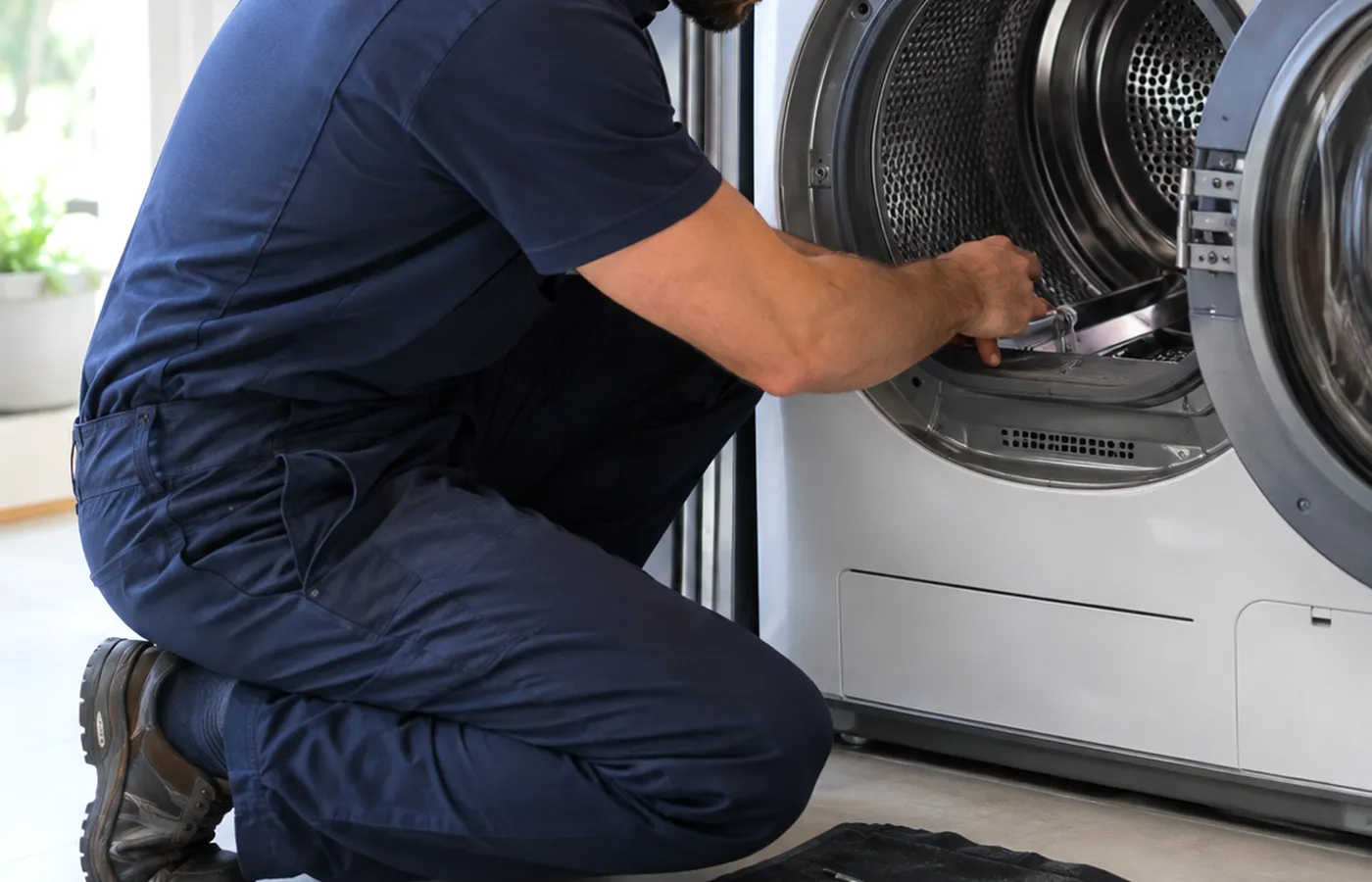
Moisture outside the appliance should be handled quickly.
EPA guidance advises drying water-damaged materials promptly, generally within 24 to 48 hours, to reduce the chance of mold growth. That means the household problem continues after the dishwasher is switched off if flooring, cabinets or wall materials remain wet.
Remove standing water and dry accessible surfaces safely. If water has spread beneath finished materials or into electrical areas, additional property or electrical help may be appropriate.
What should you tell the technician?
Report where the water first became visible, which cycle phase was running, whether the dishwasher was recently installed or moved, and whether plumbing work occurred nearby. Photograph the model label and any visible water trail.
Those details help distinguish appliance leaks from sink, disposal or plumbing connections that happen to share the same cabinet area.
Dishwasher leak timing and likely systems to inspect
| When water appears | Systems to consider | Useful observation |
|---|---|---|
| During fill | Inlet valve, supply connection, overfill control | Does water appear before spray starts? |
| During wash | Door seal, spray, circulation pump, tub | Is water at the front or under the center? |
| During drain | Drain pump, hose, disposal/sink connection | Does it appear only when water is pumped out? |
| While idle | Supply connection or external plumbing | Does water continue with dishwasher off? |
| After several cycles | Small intermittent leak | Look for moisture tracks or cabinet swelling |
Timing helps organize diagnosis, but water can travel before it becomes visible.
What to do when you find water under the dishwasher
- Stop the cycle. Prevent additional water movement through the appliance.
- Protect the surrounding area. Remove standing water from accessible flooring and cabinet surfaces.
- Shut the water supply if appropriate. Use the correct accessible valve only if you know how to do so safely.
- Document the leak. Photograph the water location and note the cycle phase.
- Dry affected materials. Follow appropriate moisture-control guidance and seek additional help if water has spread into hidden areas.

Frequently asked questions
Can a dishwasher door seal cause water underneath the machine?
Yes, water from the door can travel under the front edge, but pumps, hoses, inlet connections and other sources can create the same visible puddle.
Should I run another cycle to see exactly where it leaks?
Not if water is actively damaging surrounding materials. Preserve the evidence you already have and move to diagnosis.
Can the kitchen sink or disposal make it look like the dishwasher is leaking?
Yes. Drain and plumbing connections often share the sink cabinet, so the true source can be outside the dishwasher.
How quickly should wet materials be dried?
EPA guidance recommends drying wet or water-damaged materials promptly, generally within 24 to 48 hours, to reduce mold growth potential.
Related Franklin appliance resources
Sources and further reading
- EPA Mold, Moisture and Your Home , Federal guidance on promptly drying wet materials to reduce mold growth.

Harpeth Appliance Works Editorial Team
This guide explains “Why Is My Dishwasher Leaking Underneath?” for Franklin homeowners, with symptom-specific observations, safe external checks and the information that helps prepare a dishwasher service request.
Editorial responsibility →