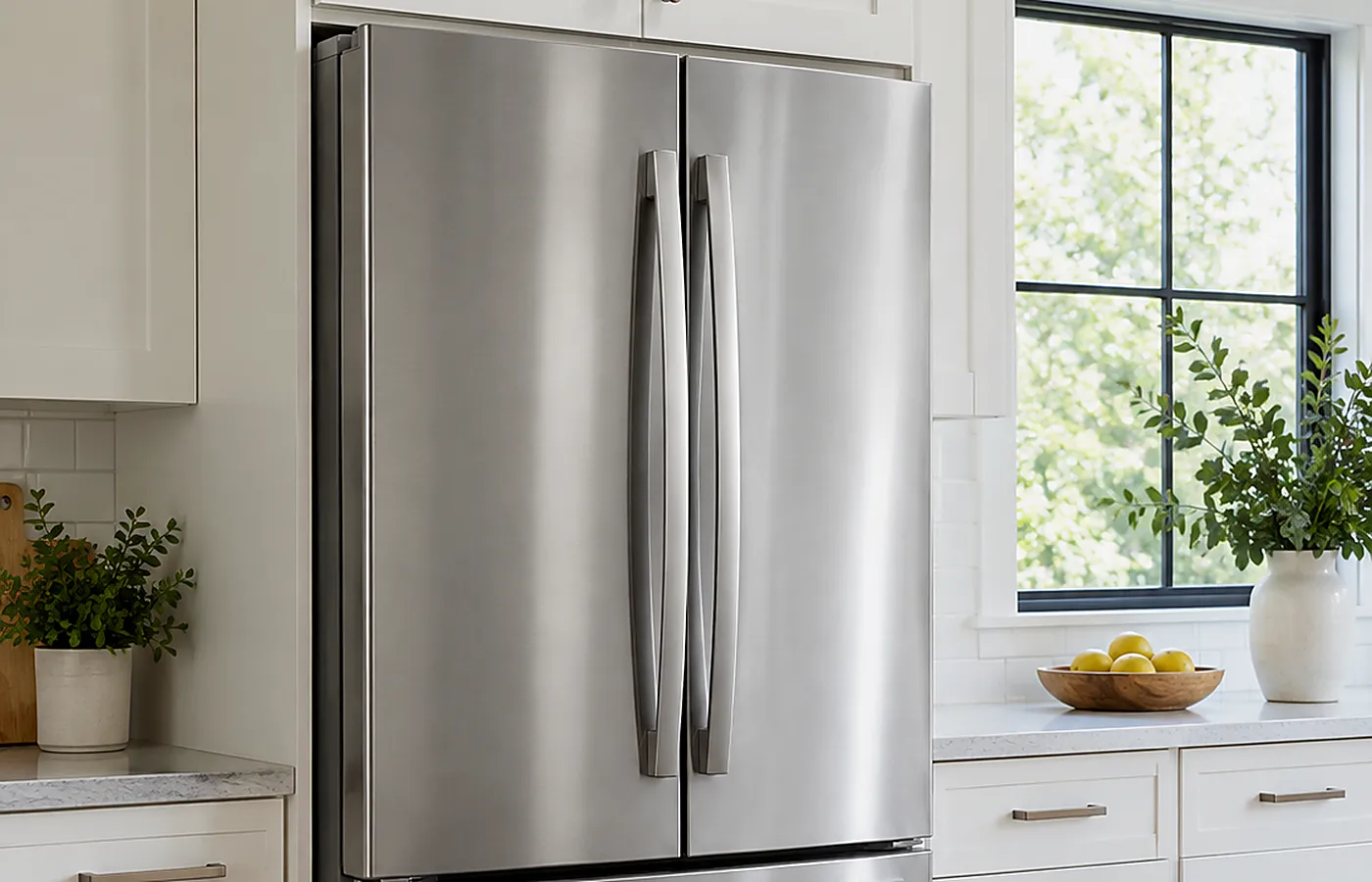
Why is time important when cooling stops?
Refrigerators are designed to maintain a cold environment, not to act as indefinite insulated storage after power is lost. Once active cooling stops, the temperature gradually rises. Door opening accelerates that process because cold air is replaced by warmer room air.
That is why the first food-safety action is often simple: keep the doors closed while you establish whether the outage is brief or whether the refrigerator has a mechanical problem. Every inspection of the shelves should have a reason.
Use temperature, not touch, smell or taste.
Food can be unsafe even when it looks normal. USDA guidance emphasizes using temperature and time to make decisions. A refrigerator thermometer can show whether the compartment is holding at or below 40°F, which is more useful than touching a container and deciding that it still feels cool.
Do not taste food to decide whether it is safe. If perishable items have been above the recommended temperature for too long, follow the official discard guidance even if there is no obvious odor.
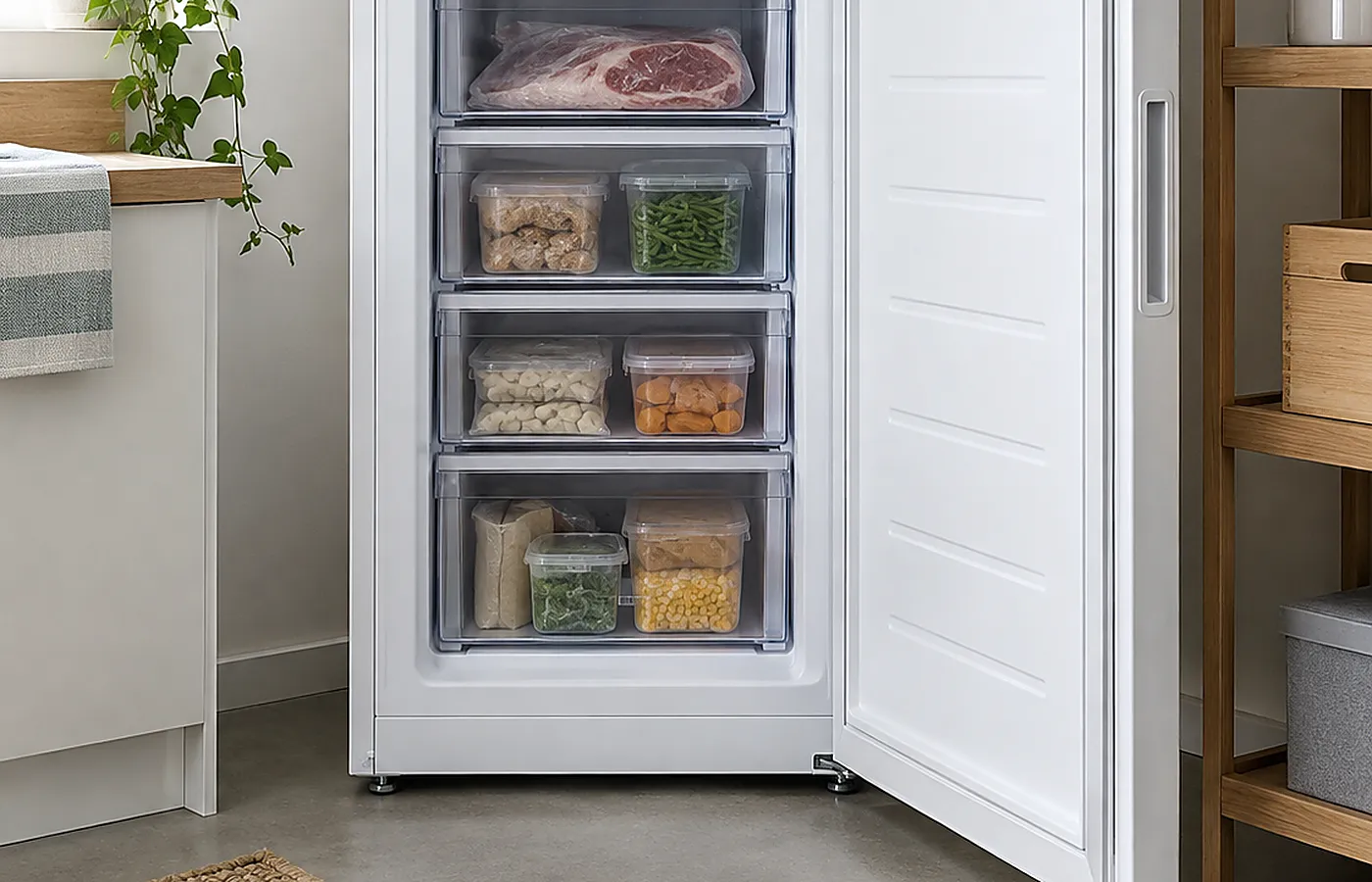
Freezers have a different timeline.
A full freezer holds cold longer than a refrigerator because the frozen food mass acts as thermal storage. USDA guidance gives approximately 48 hours for a full freezer and 24 hours for a half-full freezer when the door remains closed.
Frozen food that still contains ice crystals or remains at safe temperature may have different handling options than food that has completely thawed and warmed. Use the official USDA chart rather than a blanket rule for every item.
Separate food safety from appliance diagnosis.
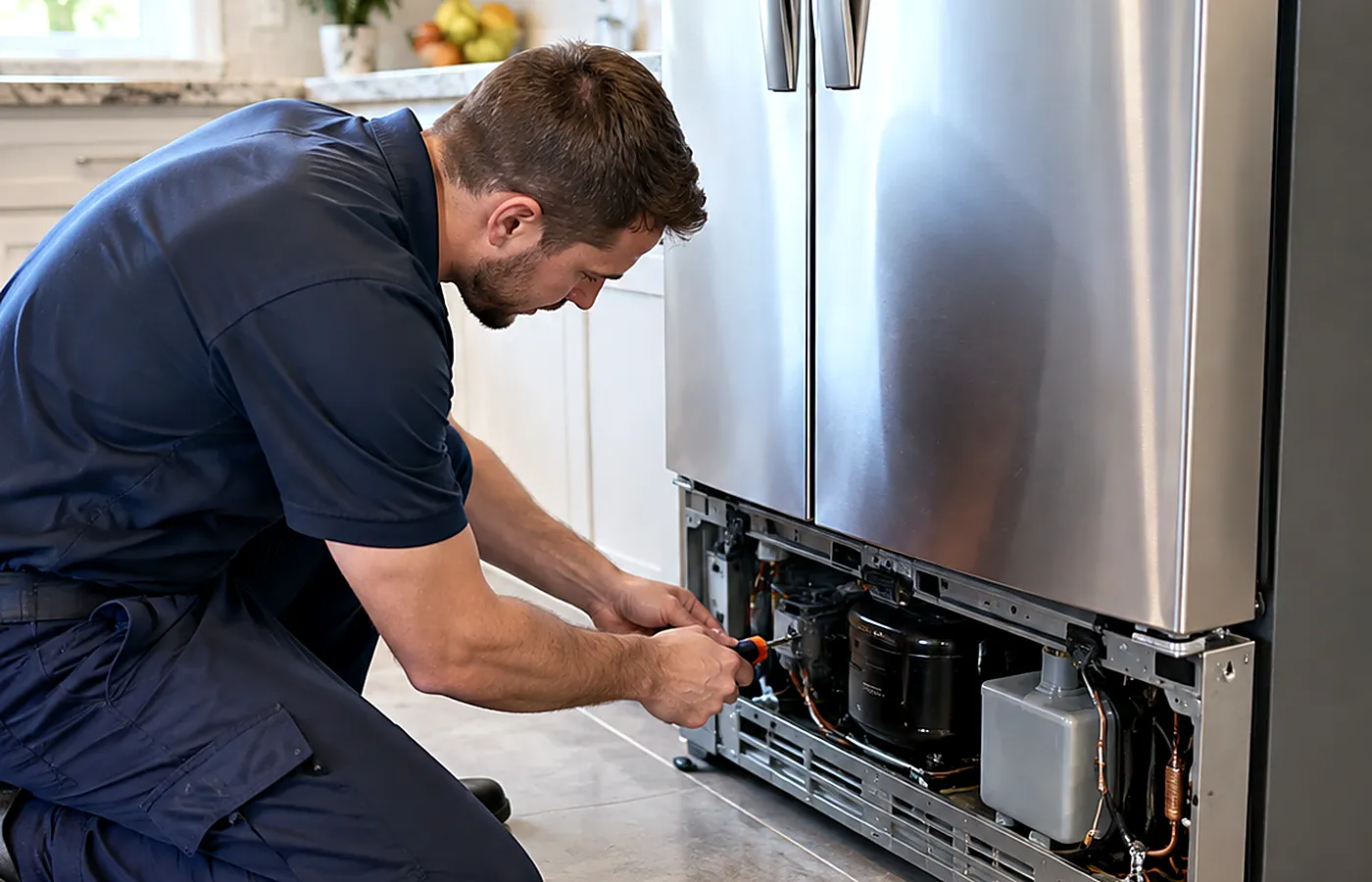
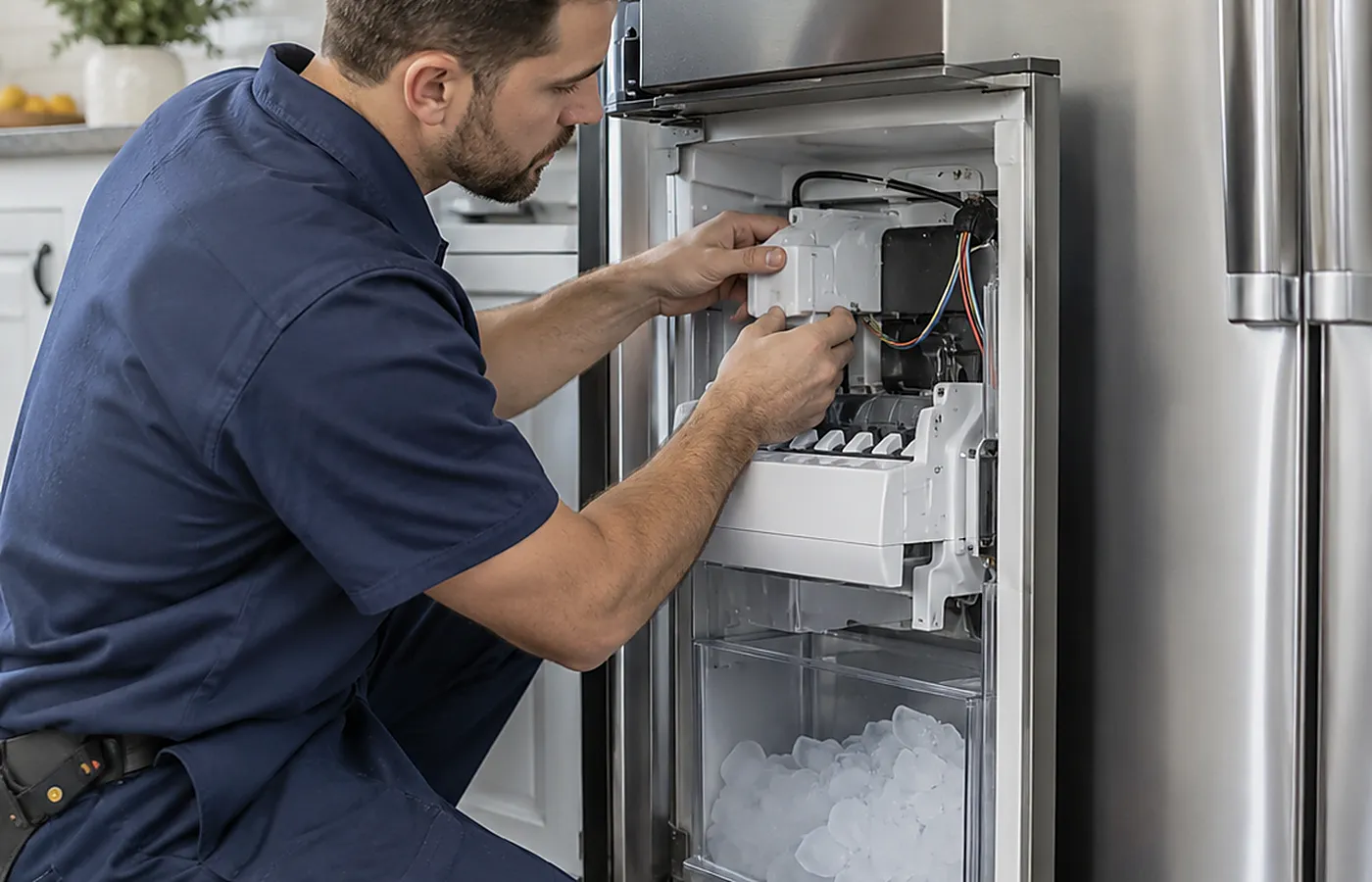
The food decision and the repair diagnosis happen in parallel. A refrigerator can have power and lights while failing to move cold air correctly. Fans, sensors, defrost systems, airflow and sealed-system faults can all affect compartment temperature.
Avoid leaving the doors open while trying to listen for components or inspect the interior. Gather simple observations, then close the cabinet and move to proper diagnosis if normal cooling does not return.
What changes when the cause is a power outage?
During a known outage, the priority is preserving cold air and tracking outage duration. When power returns, verify that the refrigerator actually resumes cooling. A running sound or illuminated display does not confirm that safe temperature has been restored.
If a breaker trips again after the outage, do not repeatedly reset it. That becomes an electrical or appliance diagnostic issue in addition to food safety.
Create a simple household refrigerator-emergency plan.
Keep a refrigerator/freezer thermometer in place, know where a cooler is stored, and keep the appliance model information accessible. During severe weather, those small preparations reduce unnecessary door opening and make it easier to decide when food needs to be moved.
For households storing temperature-sensitive medication, follow the medication manufacturer or healthcare provider’s storage instructions rather than applying food-storage rules to medicine. Different products have different stability requirements.
USDA outage time guidance at a glance
| Storage area | Approximate guidance when unopened | Key action |
|---|---|---|
| Refrigerator | About 4 hours | Keep door closed and monitor time/temperature |
| Full freezer | About 48 hours | Keep door closed |
| Half-full freezer | About 24 hours | Keep door closed |
| Perishable food above 40°F | Follow USDA time limits | Use official discard guidance |
This table summarizes USDA emergency guidance. Always check the current USDA page for item-specific recommendations and exceptions.
What to do when refrigerator cooling is lost
- Keep the doors closed. Preserve the cold air already inside the appliance.
- Track time. Record when the outage or cooling failure began if you can.
- Check measured temperature. Use a refrigerator/freezer thermometer when available.
- Move food only when necessary. Opening doors repeatedly can shorten the safe window.
- Diagnose the appliance separately. If power is restored but cooling does not return, use the refrigerator service path.
Frequently asked questions
Can I tell if food is safe by smelling it?
No. USDA guidance says not to rely on appearance or odor alone for food safety decisions.
How long does an unopened refrigerator stay cold during an outage?
USDA guidance says about four hours if the door remains closed.
Does a full freezer stay cold longer than a half-full freezer?
Yes. USDA guidance gives about 48 hours for a full freezer and about 24 hours for a half-full freezer when unopened.
What if the refrigerator has power but the food compartment is warm?
Treat the food-safety issue based on measured temperature and time while the appliance is diagnosed for airflow, fan, sensor, defrost or refrigeration-system faults.
Related Franklin appliance resources
Sources and further reading
- USDA Keeping Food Safe During an Emergency , Primary federal guidance for refrigerator and freezer food safety during outages.

Harpeth Appliance Works Editorial Team
This Franklin homeowner guide focuses on how do you protect food when a refrigerator loses power or cooling?, with practical preparation steps and clear boundaries between safe observations and service-level diagnosis.
Editorial responsibility →