Start by confirming that the refrigerator has stable power.
Interior lights and a working display do not prove that every refrigerator circuit is functioning normally, but they do confirm that some power is reaching the appliance. Check whether the home has stable power and whether the refrigerator breaker is in its normal position.
If the breaker is tripped, one reset can help determine whether the problem immediately returns. Do not repeatedly reset a breaker that trips again. That changes the situation from routine refrigerator troubleshooting to an electrical or appliance safety concern.
Protect food before spending time on diagnosis.
A warm refrigerator is time-sensitive because food safety can become a separate problem before the appliance fault is identified. Keep the door closed as much as possible and use a thermometer if available. USDA guidance says an unopened refrigerator keeps food cold for about four hours during a power outage.
Do not repeatedly open the door to feel whether the shelves are cold. Temperature and time are more reliable than touch. If perishable food has warmed beyond safe limits, follow current USDA guidance rather than smell or taste.
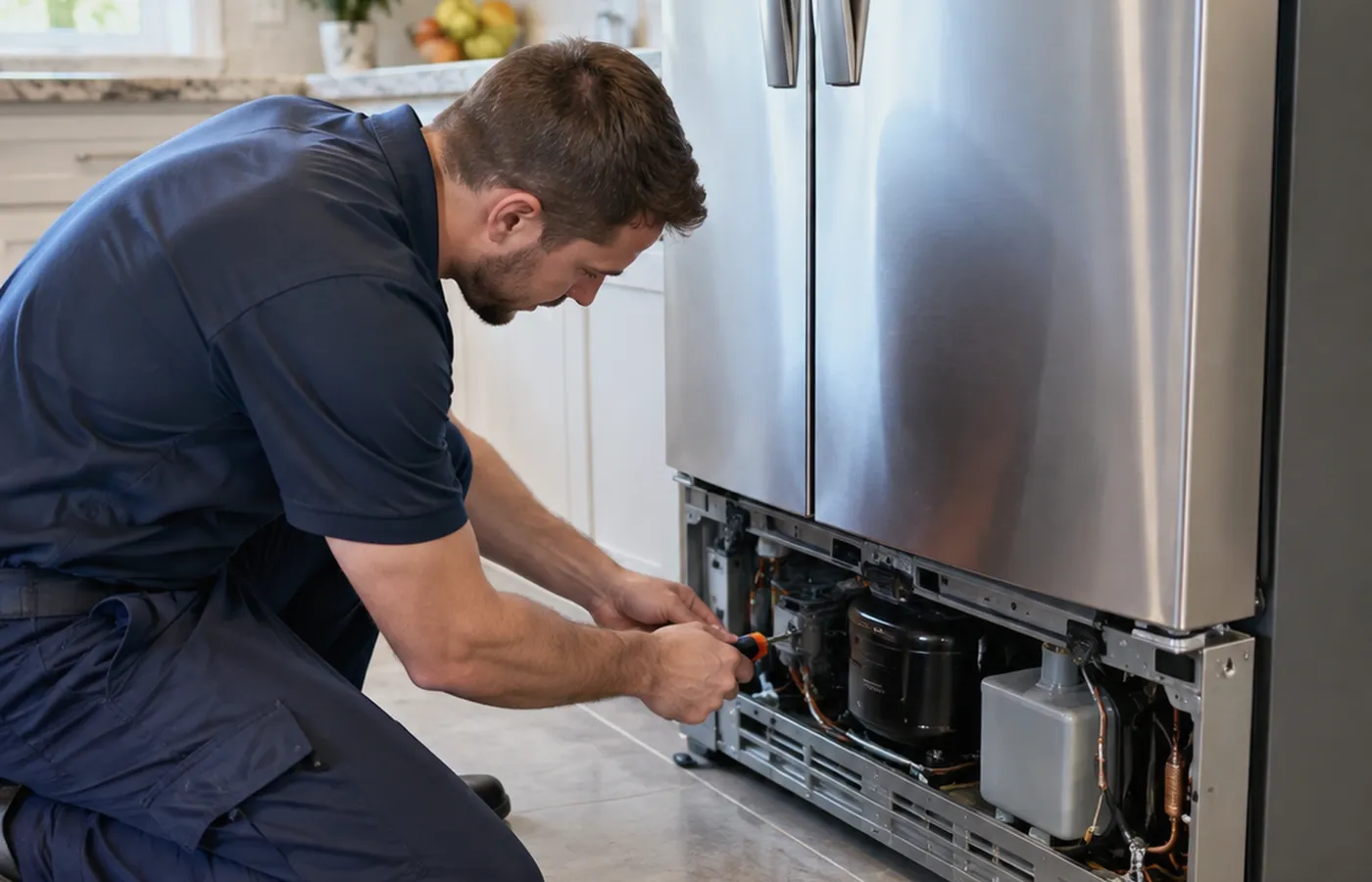
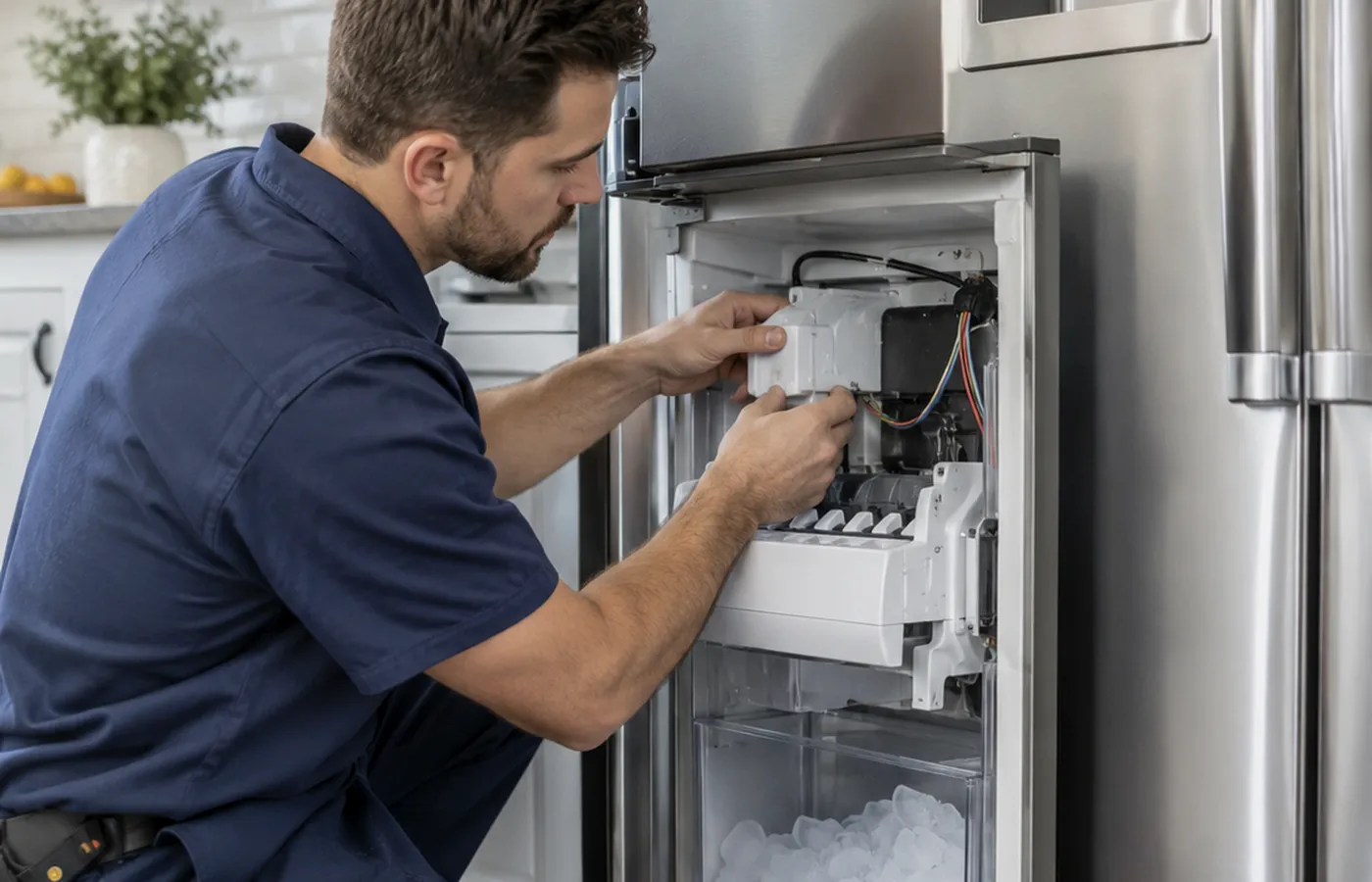
Listen for operation, but do not diagnose from sound alone.
After power returns, you may hear fans, relays or compressor operation. Those sounds are useful observations, but they do not prove that the refrigerator is actually moving heat correctly. A fan can run while another airflow or defrost problem prevents the fresh-food section from cooling.
Likewise, a quiet refrigerator is not automatically a failed compressor. Controls, protective devices, sensors and power conditions can all affect whether major components are being commanded to run.
Why can the freezer be cold while the refrigerator is warm?
Many refrigerators cool the fresh-food section by moving cold air from the freezer or evaporator area. If an evaporator fan, air damper, ice buildup or defrost fault restricts that airflow, the freezer may remain colder while the refrigerator warms.
This pattern is diagnostically useful because it points toward airflow and defrost relationships, but the exact cause still depends on the model. Do not chip ice with sharp tools or apply uncontrolled heat to the evaporator area.
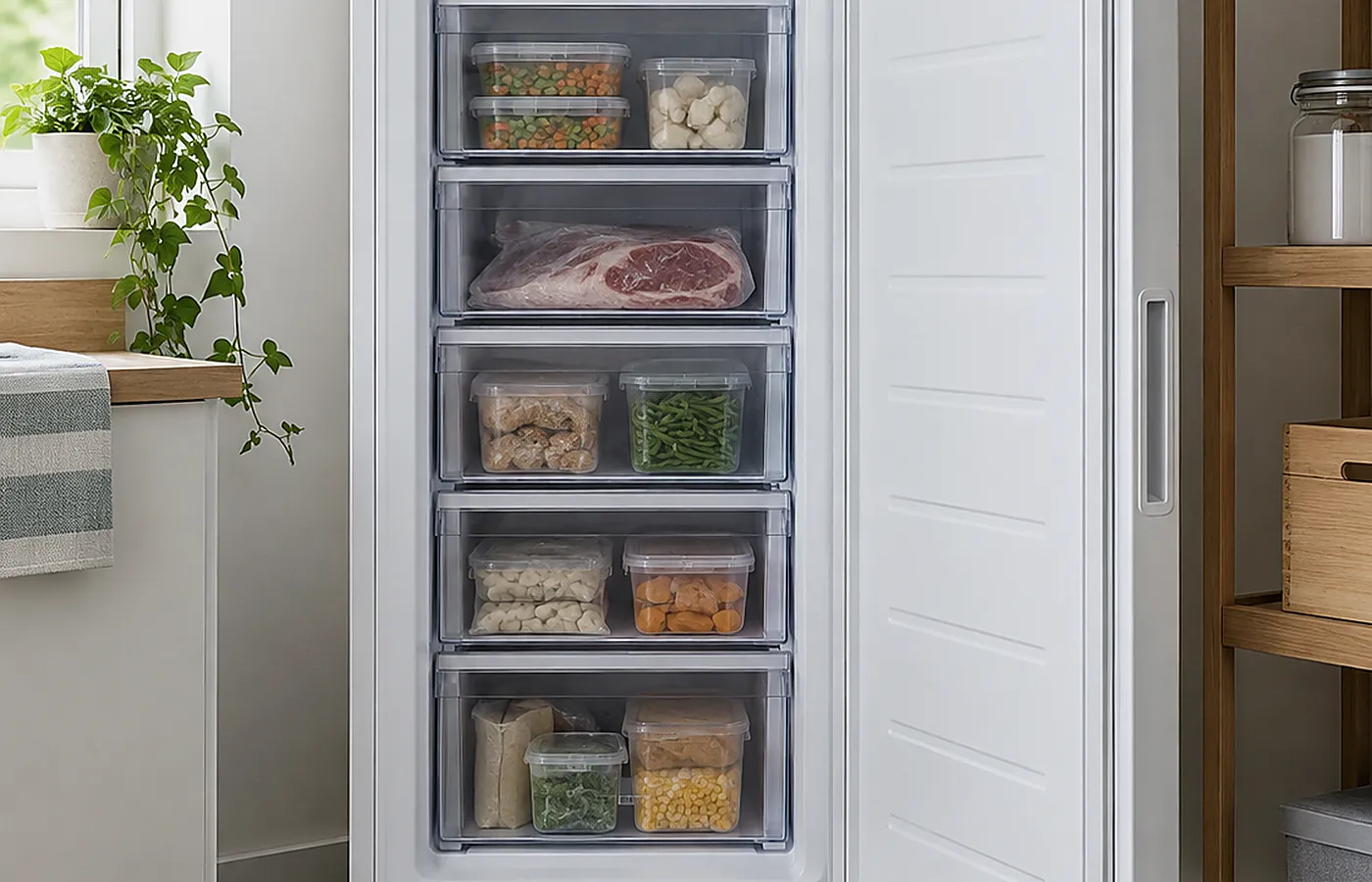
Could the outage affect electronic controls?
Modern refrigerators use control boards, sensors and power supplies. A normal manufacturer reset may clear a temporary control state after an interruption, but a repeated failure after reset requires testing.
The phrase “power surge” should be treated as context, not as a component diagnosis. A control board can fail, but so can a fuse, relay, sensor, fan or another part of the cooling path. The outage explains when the symptom began; testing explains why it continues.
When should you move from safe checks to service?
If stable power is present, the manufacturer reset does not restore cooling, and the appliance remains warm, professional diagnosis becomes the sensible next step. The technician should know the model number, whether the freezer is cold, whether fans are running, whether frost is visible and whether the symptom began immediately after the outage.
Keep the appliance in a safe state while waiting. If the breaker will not remain set, leave it off. If food safety is uncertain, handle the food separately rather than waiting for the repair diagnosis.
What does each post-outage refrigerator symptom suggest?
| Observation | What it may point toward | What it does not prove |
|---|---|---|
| Lights on, refrigerator warm | Cooling system is not restoring temperature | Compressor failure |
| Freezer cold, fridge warm | Airflow, fan, damper or defrost path | A single specific component |
| Breaker trips again | Electrical or appliance fault needs attention | A harmless reset issue |
| Display blank | Power supply or control path needs checking | Control board failure by itself |
| Heavy frost near evaporator area | Possible airflow/defrost relationship | Safe DIY ice removal with sharp tools |
These patterns narrow the diagnostic path but do not replace model-specific testing.
Safe next steps after the outage
- Keep the doors closed. Protect cold air and food while you establish whether cooling returns.
- Verify stable house power. Make sure the outage has actually ended and nearby circuits are normal.
- Check the breaker once. If it trips again, leave it off instead of repeatedly resetting.
- Follow the manufacturer’s reset sequence. Use only model-appropriate instructions.
- Record observations. Note freezer temperature, fan sounds, visible frost and any displayed code before service.

Frequently asked questions
How long should I wait for cooling to return after power comes back?
Recovery varies by model, room conditions and how warm the compartments became. Use a thermometer and the manufacturer’s guidance rather than a fixed time from touch alone.
Should I unplug the refrigerator for several hours to reset it?
Use the reset procedure specified by the manufacturer. Long unplugging periods can worsen food-safety concerns and may not address the underlying fault.
Does a warm refrigerator after an outage mean the compressor is bad?
No. Airflow, fans, sensors, defrost systems, controls and power conditions can create the same complaint.
What if the refrigerator breaker keeps tripping?
Stop repeated resets. Leave the circuit off and have the electrical/appliance fault assessed appropriately.
Related Franklin appliance resources
Sources and further reading
- USDA Keeping Food Safe During an Emergency , Food-safety guidance for refrigerator and freezer outages.

Harpeth Appliance Works Editorial Team
This guide explains “Why Is My Refrigerator Not Cooling After a Power Outage?” for Franklin homeowners, with symptom-specific observations, safe external checks and the information that helps prepare a refrigerator service request.
Editorial responsibility →