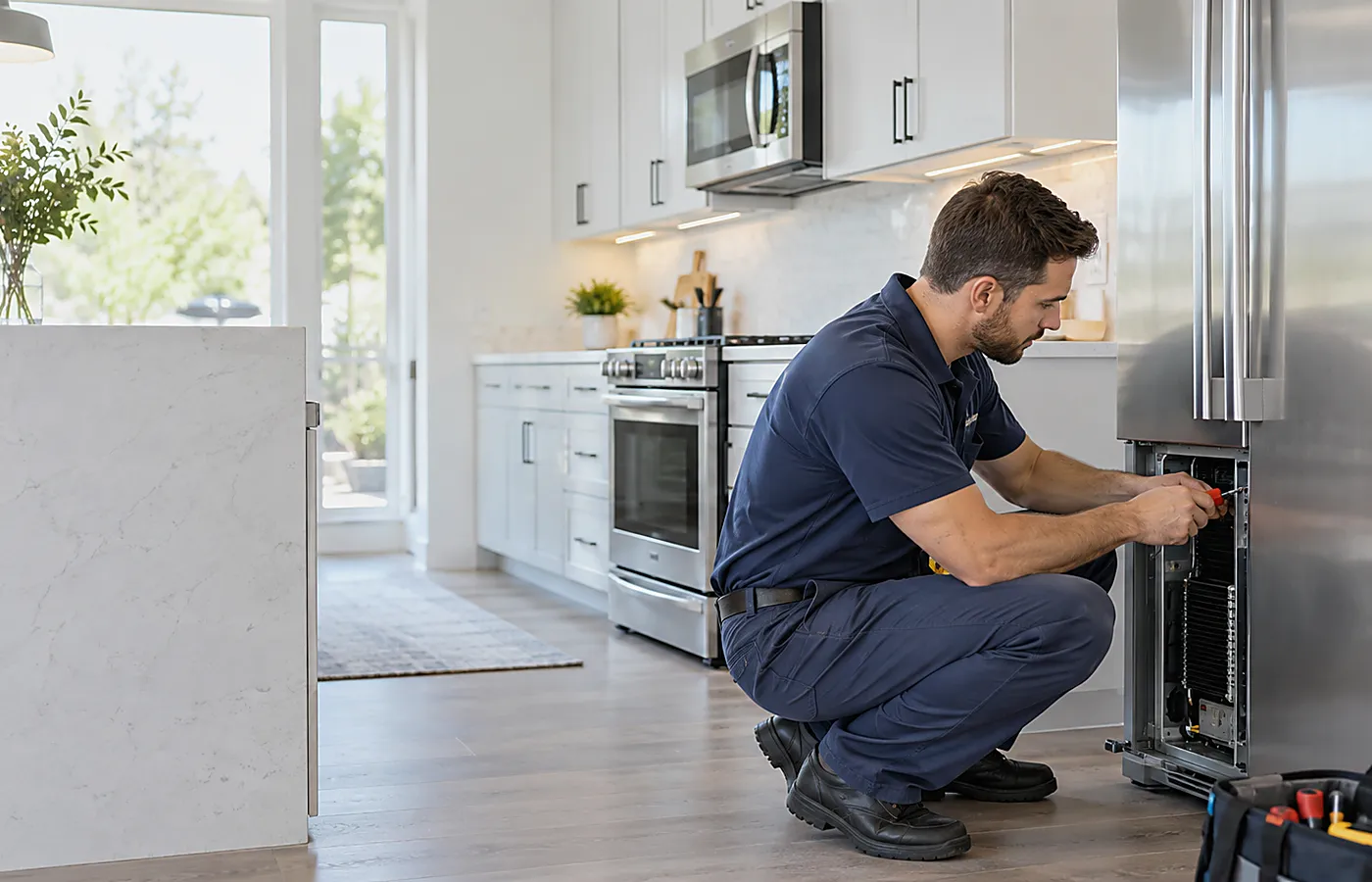
First, determine whether the problem is house power or the appliance.
Start by checking whether lights and other nearby circuits are operating normally. A single dead appliance after an outage can be caused by a breaker, a receptacle, a power-control state or an internal appliance fault. If more than one device on the same circuit is affected, the electrical side of the problem may need attention before appliance diagnosis.
Avoid disassembling the appliance or testing live electrical parts. The purpose of the first check is only to establish whether normal power appears to be available. If the breaker trips again after one reset, leave it off and do not keep forcing power back to the circuit.
Give refrigerators and freezers a separate food-safety plan.
A refrigerator that remains warm after an outage is both an appliance problem and a food-safety problem. Keep the doors closed as much as practical while you verify whether the unit has restarted. The USDA advises that an unopened refrigerator keeps food cold for about four hours, while a full freezer can hold temperature longer if it remains closed.
Do not use smell or taste as the test for whether perishable food is safe. If the outage was long or the internal temperature rose, follow current USDA emergency food guidance. Appliance diagnosis can continue, but food safety has its own clock.
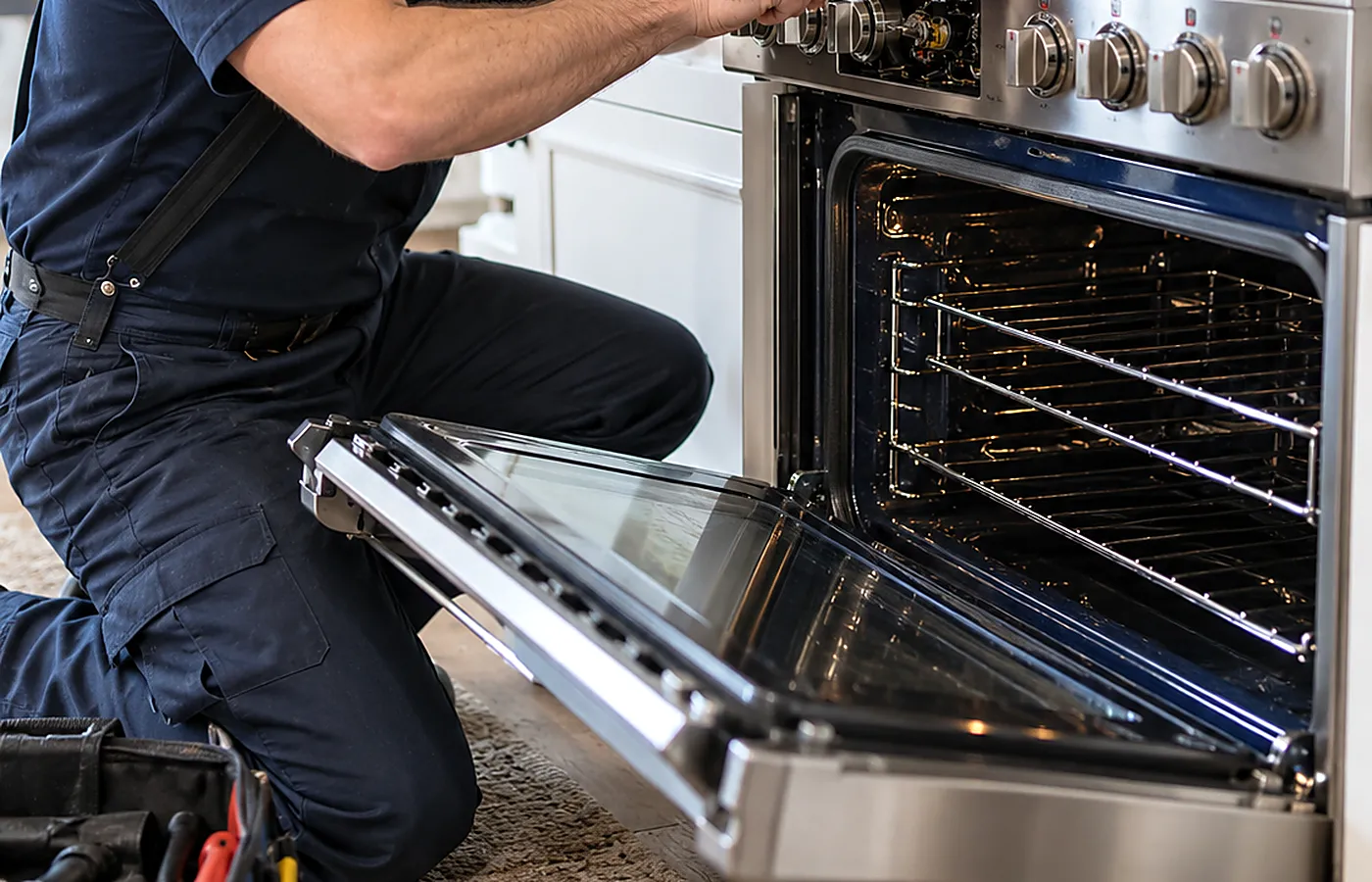
Why can electronic controls behave differently after power returns?
Modern appliances use control boards, sensors and power supplies that may remain in an error state after an interruption. A normal manufacturer reset can sometimes clear a temporary state, but a display that remains blank or an appliance that immediately fails again needs more than repeated power cycling.
A control board should not be blamed simply because the issue began after an outage. Supply voltage, fuses, protective devices, wiring and other components can create similar symptoms. The timing of the outage is useful evidence, not a complete diagnosis.
Treat a suspected surge as a diagnostic clue, not a conclusion.
People often describe any post-outage failure as “surge damage,” but the exact electrical event is rarely visible from the symptom alone. A technician may need to verify supply conditions and test the affected circuit or appliance before identifying which component failed.
If several unrelated devices failed at the same time, document what happened and consider whether an electrician should assess the home’s electrical system. Appliance service and electrical service solve different parts of the problem, and some situations need both.
Gas appliances still require normal gas-safety boundaries.
A power outage can interrupt ignition and controls on a gas range or other gas appliance. When power returns, do not keep attempting ignition if you smell gas or suspect a fuel problem. Follow local gas-safety procedures and use qualified help before returning the appliance to normal operation.
The fact that an appliance uses gas does not mean every post-outage symptom is a gas fault. Electronic ignition, control modules and power supply are still part of many modern gas appliances.
Why this topic is relevant in Franklin and Middle Tennessee.
Middle Tennessee experiences thunderstorms, winter weather and other events that can interrupt electric service. Franklin homeowners may therefore encounter appliance problems immediately after an outage even when the underlying fault differs from one household to another.
The useful local angle is preparedness: know where the appliance breaker is, keep model information accessible, understand refrigerator food-safety limits and avoid repeated electrical resets. That is more defensible than claiming one weather event causes a specific component failure across Franklin homes.
Post-outage symptoms and the next question to ask
| Symptom | First question | Avoid |
|---|---|---|
| Appliance completely dead | Is normal power present at the circuit? | Repeated breaker resets |
| Refrigerator running but warm | Has cooling actually resumed and is food still safe? | Assuming the compressor failed |
| Control panel blank or frozen | Does the manufacturer specify a normal reset? | Opening control panels around live power |
| Breaker trips after restart | Does it trip again after one reset? | Forcing the breaker on repeatedly |
| Several devices affected | Is there a broader electrical problem? | Treating every device as an isolated appliance fault |
These are triage questions, not component diagnoses. Electrical hazards and food safety should be handled before routine appliance troubleshooting.
What to do after power returns
- Wait for stable power. Confirm the home is no longer in a flickering or intermittent power condition.
- Check the circuit once. If the breaker is tripped, one reset can help establish whether the fault immediately returns.
- Follow manufacturer instructions. Use only the normal reset sequence described for your appliance model.
- Protect refrigerated food. Keep refrigerator and freezer doors closed and follow current USDA guidance if cooling is not restored.
- Document what changed. Note which appliances failed, whether any codes appeared and whether multiple circuits were affected.
Frequently asked questions
How long should a refrigerator take to feel cold again?
Recovery time varies by model, room conditions, door opening and how warm the cabinet became. Use a thermometer rather than touch alone when food safety is in question.
Can I keep resetting the breaker if the appliance will not start?
No. If the breaker trips again, repeated resets can obscure the problem and may create a safety concern.
Does an outage automatically damage a control board?
No. The outage timing is a clue, but other electrical and appliance faults can create the same symptom.
Should I unplug appliances during severe weather?
Follow manufacturer and electrical-safety guidance for your home. For permanent or hardwired appliances, do not improvise disconnection methods.
Related Franklin appliance resources
Sources and further reading
- USDA Food Safety During Emergencies , Current food-safety guidance for refrigerators and freezers during outages.

Harpeth Appliance Works Editorial Team
This Franklin homeowner guide focuses on what should you check when an appliance acts up after a power outage?, with practical preparation steps and clear boundaries between safe observations and service-level diagnosis.
Editorial responsibility →