
Why does the cycle sequence matter?
A washer that fills, pauses and never moves is different from one that agitates briefly and then stops. Record the exact order of events rather than describing the machine only as “not working.”
If drain and spin still work, some shared components are already proven to operate, which narrows the diagnosis.
Can a lid or door lock prevent agitation?
Top-load and front-load washers use different safety logic, but many require a confirmed closed or locked condition before high-motion steps. A latch that does not register correctly can interrupt the sequence.
Do not bypass a lid or door safety switch.
What parts create wash motion?
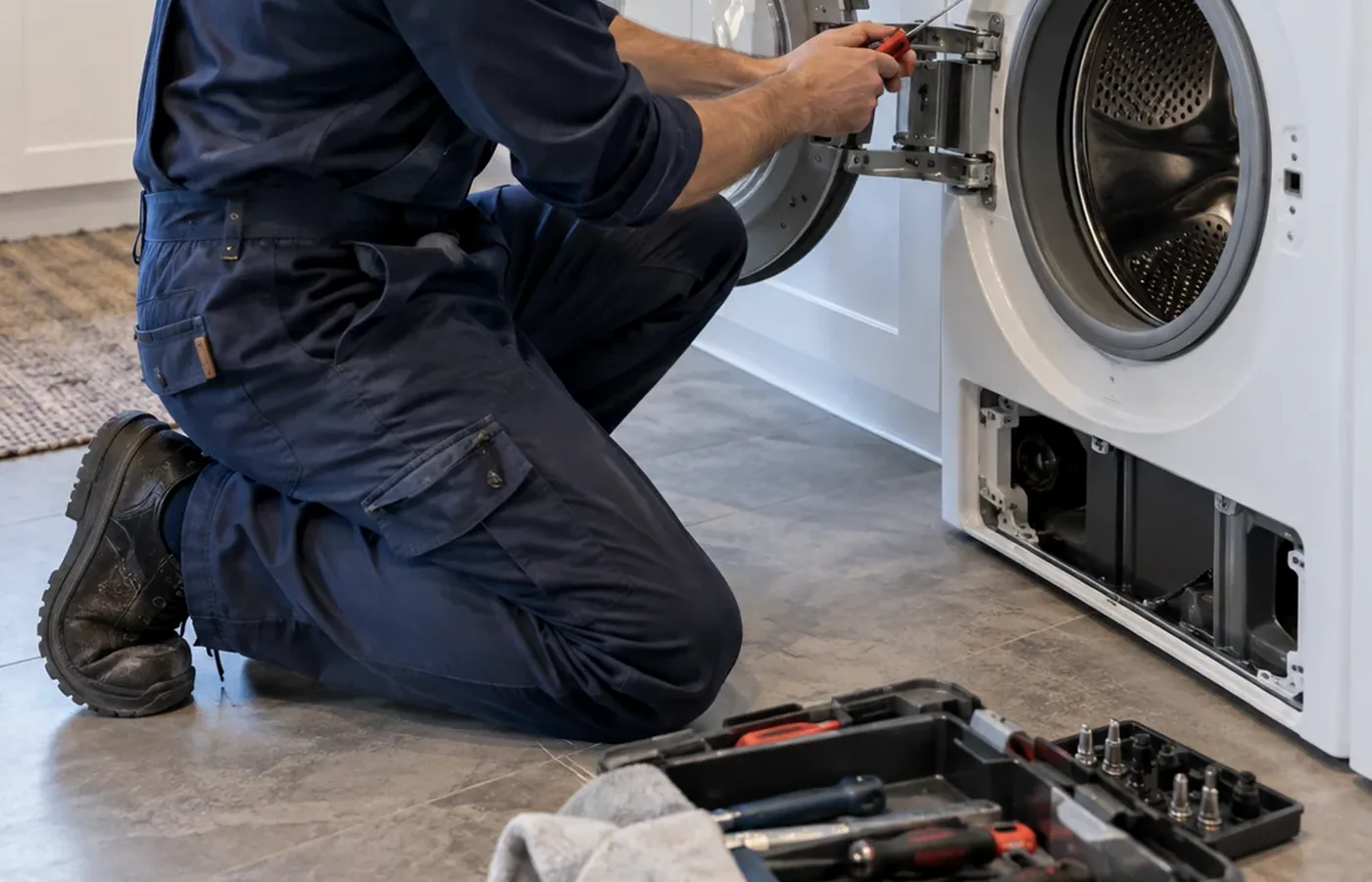
Depending on design, wash motion can involve a belt, motor, transmission or gearcase, coupler, actuator, clutch, wash plate or agitator connection. Not every washer uses the same mechanism.
The model number is essential because a symptom that looks identical can come from a very different drive system.
What can the sound tell you?
A quiet machine, a humming motor, repeated clicking or a motor that runs without tub movement are different patterns. Record the sound rather than opening panels to watch internal parts.
Grinding or a burning odor is a reason to stop the cycle and avoid repeated testing.

Can an overloaded or unbalanced load stop normal agitation?
An extreme load can interfere with normal movement or trigger protective logic. Remove excess items only after the cycle is safely stopped and the lid or door can be opened normally.
If ordinary loads repeatedly fail to move, the problem is not explained by one unbalanced load.
What can you safely check before service?
Confirm the cycle selected actually includes agitation, note lock behavior, record any code, and compare whether drain and spin functions still work. Keep hands out of the tub during any powered cycle.
Share the model number and the sequence of fill, pause, sound, drain and spin behavior when requesting service.
How does this fit a Franklin appliance service request?
For service in Franklin, include the appliance brand, complete model number, exact symptom and the address or ZIP code. If the appliance is built in, stacked, behind a gate or inside a multi-unit building, include access details so the request starts with the right context.
Frequently asked questions
Why does my washer fill and then just sit there?
The control may be waiting for a lock signal, attempting to start the drive system or detecting a condition that prevents wash motion. The next sounds and cycle steps help narrow it.
Can a washer drain and spin but still fail to agitate?
Yes. Some designs use different components or control states for agitation and spin, so one motion can work while another does not.
Does a loose agitator mean the transmission is bad?
Not necessarily. Agitator or wash-plate connections, drive components and control behavior all depend on the model.
Should I try to force the agitator by hand?
Do not force internal wash components. With power off, you can note obvious looseness, but diagnosis should not involve defeating safety systems or applying force.
When is washer service appropriate?
Service is appropriate when the washer consistently fills but will not create normal wash motion after cycle and load checks.

Harpeth Appliance Works Editorial Team
This page uses symptom-first, safety-first appliance guidance for Franklin homeowners and separates observable behavior from component diagnosis.
About our editorial approach →