Why can the freezer stay cold while the refrigerator gets warm?
The freezer is commonly where the evaporator removes heat. Many refrigerator designs then move part of that cold air into the fresh-food section. If that air path is reduced, the freezer can continue to feel cold while the refrigerator temperature rises.
That pattern makes compartment comparison useful. Note whether the freezer is fully frozen, only slightly cold, or also beginning to warm. The difference changes the diagnostic path.
How can blocked airflow create this symptom?
Food packages, ice buildup or a blocked return-air path can reduce circulation between compartments. A refrigerator packed tightly around vents can also create warm zones even when the cooling system is operating.
Keep visible vents clear and avoid forcing items against the rear or upper air channels. Do not remove interior panels to look for hidden ice while the appliance is energized.
What does the evaporator fan do?
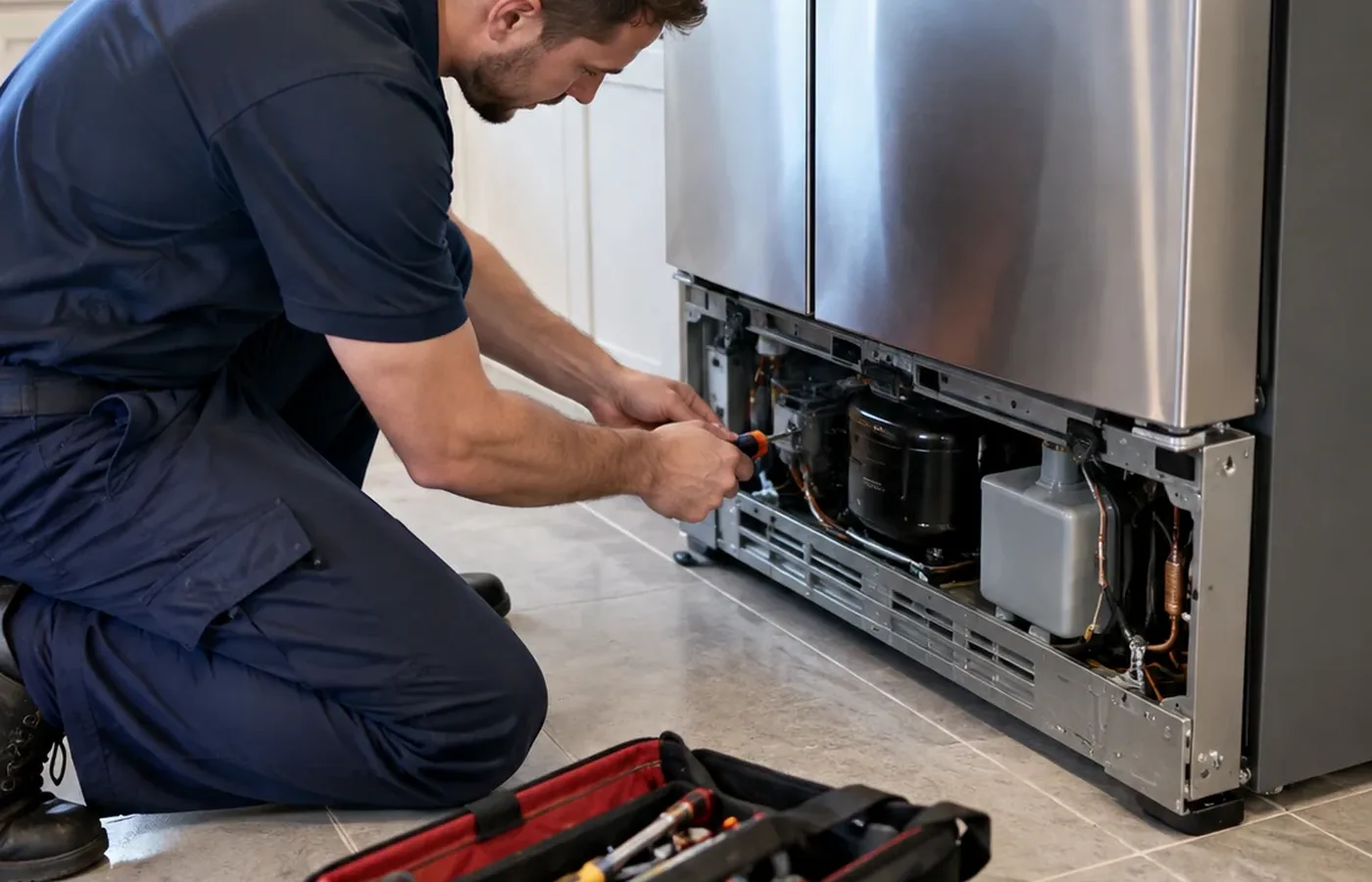
The evaporator fan moves cold air across the evaporator and through the cabinet. If the fan is not running when it should, the freezer may retain some cold while the fresh-food section loses airflow.
A change in fan sound can be useful context. Scraping, intermittent running or silence during an active cooling period can help a technician decide what to test.
Can the air damper keep the refrigerator section warm?
Many models use a damper or controlled vent to regulate how much cold air enters the refrigerator compartment. A damper that stays closed, binds mechanically or receives the wrong control signal can limit fresh-food cooling.
Damper location and design vary by model, which is why the complete model number is more useful than assuming a universal part layout.
Why does frost or a defrost problem matter?
Heavy frost around the evaporator can eventually restrict the air that the fan is supposed to move. The freezer may still feel cold near the ice while the refrigerator section becomes progressively warmer.
Visible frost on an interior freezer panel is worth documenting. Do not chip ice with tools or use high heat around plastic liners, wiring or refrigerant tubing.
What can you safely check before requesting service?
Confirm the temperature settings were not changed, keep interior vents clear, check that both doors close fully and note whether the evaporator fan can be heard during normal operation. Also record whether the symptom began suddenly or developed over several days.
If food temperatures are unsafe or the refrigerator continues warming, protect perishable food and arrange diagnosis rather than repeatedly changing controls.
How does this fit a Franklin appliance service request?
For service in Franklin, include the appliance brand, complete model number, exact symptom and the address or ZIP code. If the appliance is built in, stacked, behind a gate or inside a multi-unit building, include access details so the request starts with the right context.
Frequently asked questions
Why is my refrigerator warm if the freezer still makes ice?
Ice production only shows that part of the freezer is reaching a low temperature. The refrigerator section can still be warm if airflow between compartments is restricted or not being controlled correctly.
Can too much food block refrigerator airflow?
Yes. Packages pushed against supply or return vents can reduce circulation and create warm zones. Keep visible vents open and leave room for air to move.
Does a cold freezer rule out a compressor problem?
No. It makes airflow and compartment-control issues important to check first, but diagnosis still depends on temperatures, fan operation, frost pattern and the specific refrigerator design.
Should I unplug the refrigerator to melt frost?
Do not use an improvised defrost as a substitute for diagnosis. If heavy frost is present, photograph the pattern and follow the manufacturer’s safe instructions before taking further action.
When should I request refrigerator service in Franklin?
Request service when the fresh-food section remains warm after basic setting, door and airflow checks, especially when fan noise, heavy frost or repeated temperature changes are present.

Harpeth Appliance Works Editorial Team
This page uses symptom-first, safety-first appliance guidance for Franklin homeowners and separates observable behavior from component diagnosis.
About our editorial approach →