
What can you safely check first?
Confirm the refrigerator has power, the controls have not been changed accidentally, and doors are closing fully. Look for packages blocking interior vents and check whether the freezer is still cold. That freezer-versus-fridge comparison can help distinguish a whole-system cooling problem from a fresh-food airflow problem.
Avoid repeatedly unplugging and reconnecting the appliance if there are signs of electrical damage or repeated breaker trips. Do not remove sealed-system components or electrical covers unless you are qualified.
How can airflow make the refrigerator warm?
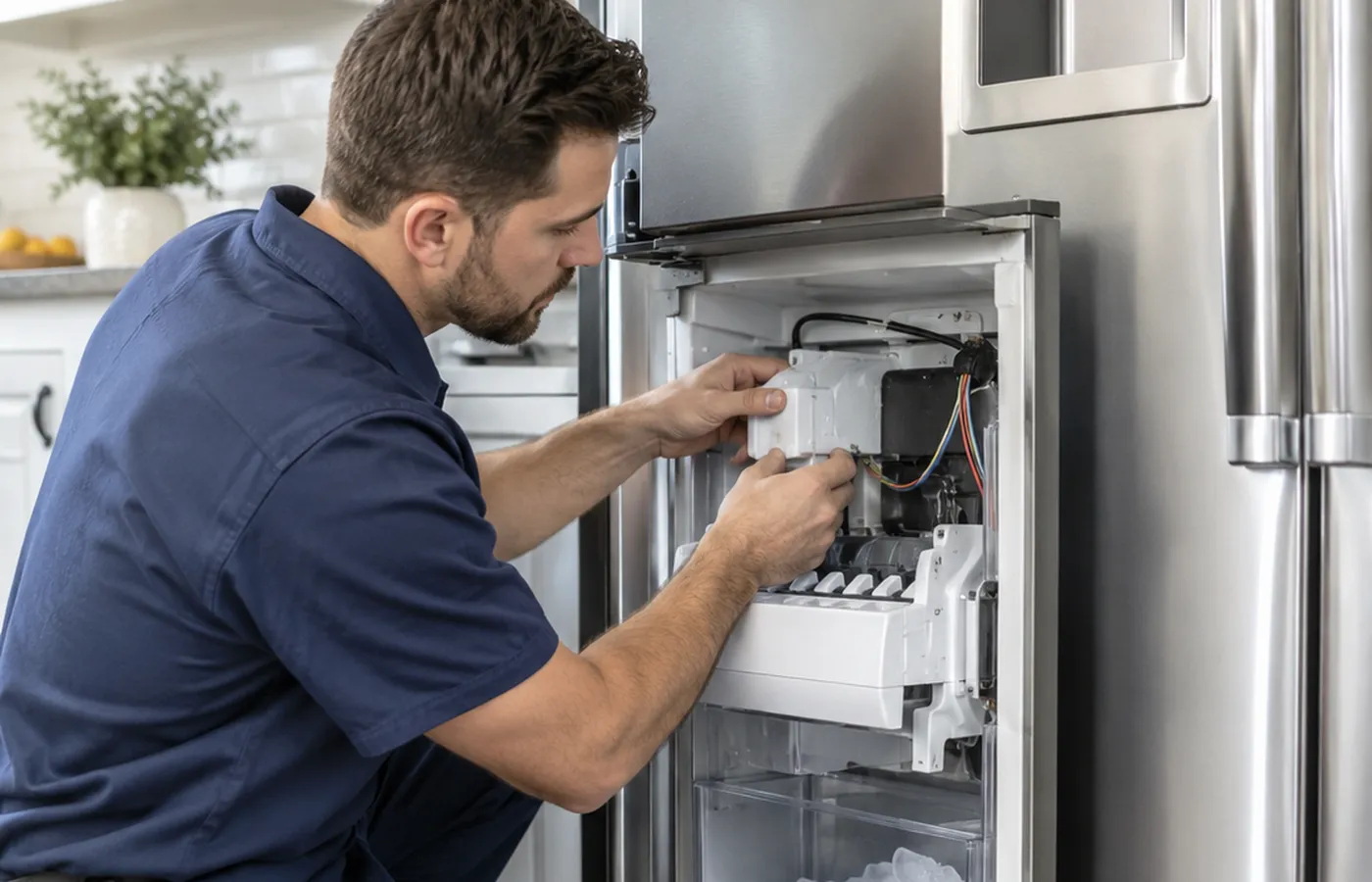
Many refrigerators cool the fresh-food compartment by moving cold air from the freezer or evaporator area. A failed evaporator fan, ice buildup around the evaporator, a blocked return vent or a damper problem can reduce that movement. The result may be a cold freezer with a warm refrigerator section.
If frost is packed behind an interior panel, the visible symptom may point toward a defrost problem rather than a weak compressor. The defrost heater, sensor, control or drain conditions can all affect ice accumulation depending on the design.
What role do condenser airflow and heat removal play?
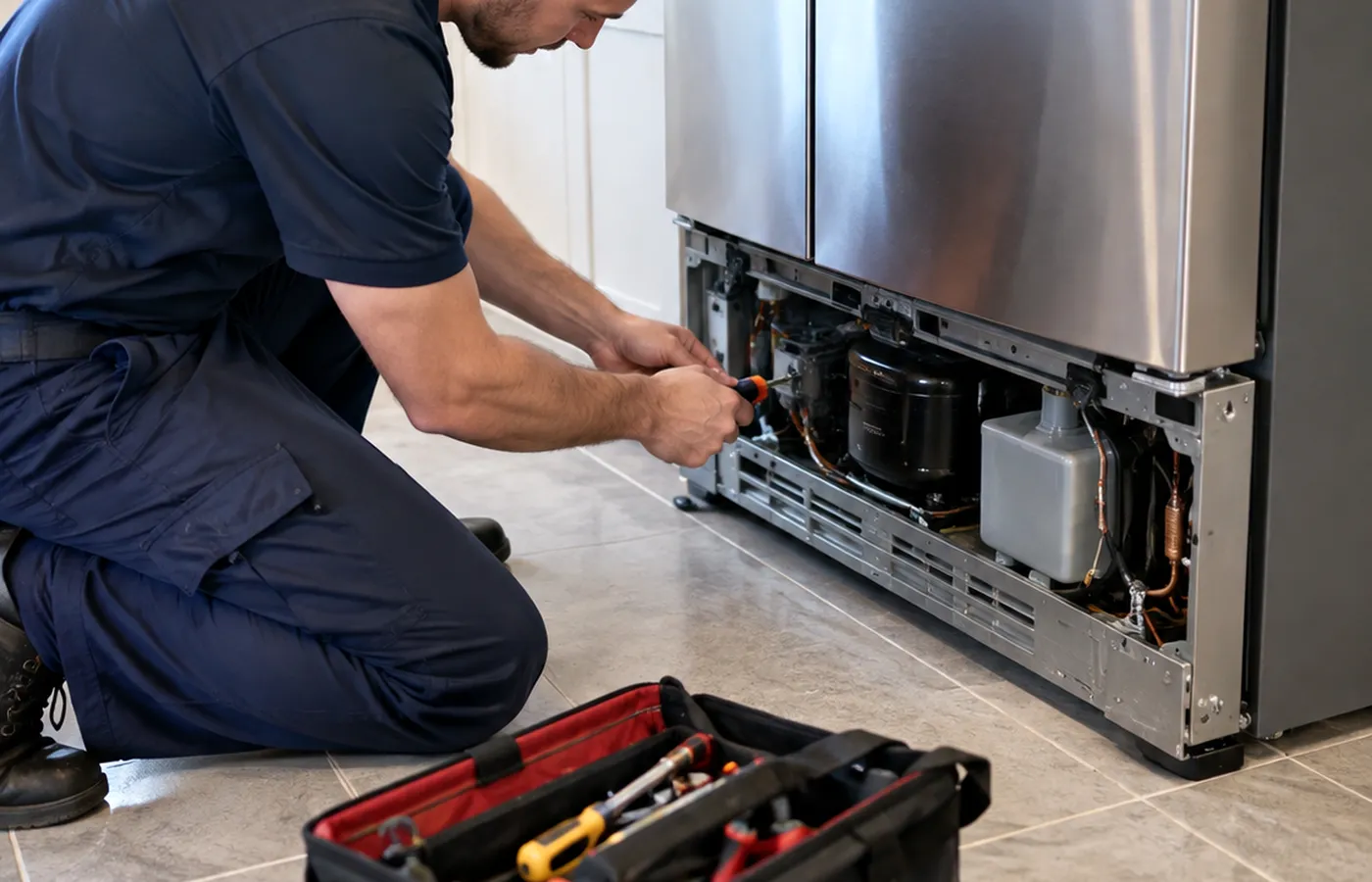
The refrigerator must reject heat to the room. Dust buildup, poor condenser airflow or a condenser-fan problem can make that harder. Some modern refrigerators have condenser coils that are not easily accessible, so follow the owner documentation rather than dismantling panels simply to “clean coils.”
Listen for new fan noise, unusually long run times or hot cabinet areas. Those observations are useful diagnostic context, but they still do not prove one specific component has failed.
Can a sensor or control cause warm temperatures?
Thermistors and temperature controls tell the appliance when cooling is needed. A sensor that reports incorrect information can change compressor and fan behavior. Electronic control problems can produce similar effects, especially when other functions behave abnormally at the same time.
Model-specific error codes can be helpful, but they should be interpreted in the context of the exact appliance rather than treated as universal codes across brands.

When does the sealed refrigeration system become a concern?
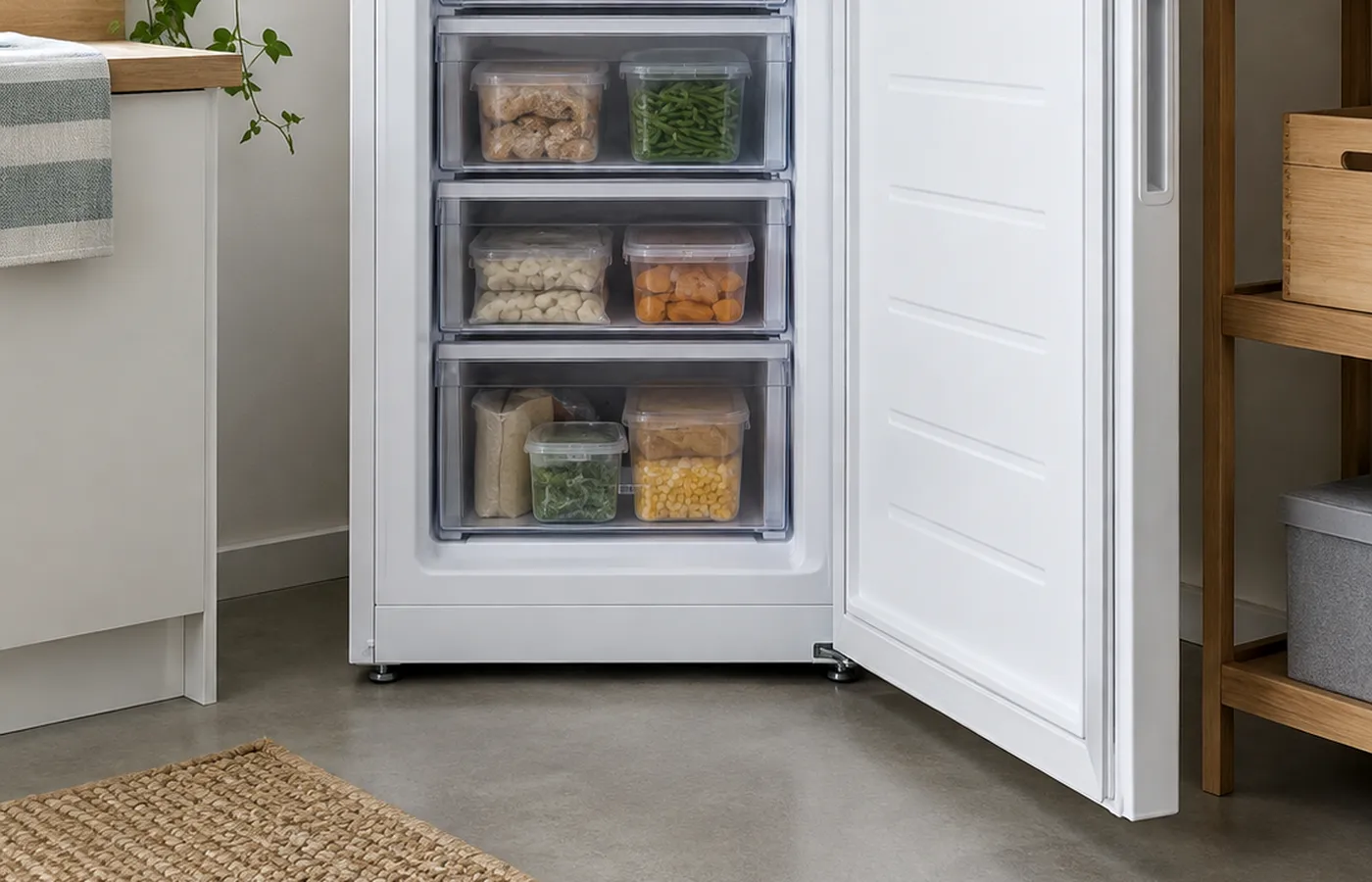
If fans and airflow appear normal but both compartments struggle to reach temperature, the diagnosis may move toward the compressor or sealed refrigeration circuit. Frost pattern, operating pressures and component behavior require qualified testing.
A compressor that runs does not guarantee normal refrigerant circulation, and a compressor that is quiet does not automatically mean the compressor itself is the cause. Relay, control and power conditions may also affect operation.
What should you do about food while the refrigerator is warm?
Keep doors closed as much as practical and use authoritative food-safety guidance if temperatures have risen. Perishable food safety depends on temperature and time, not whether the food still looks or smells normal.
Our refrigerator food-safety guide explains the decision path for outages and cooling loss.
What the symptom pattern can tell you
The pattern matters because one symptom can come from several different systems. These observations help organize the diagnostic path without assuming a failed part.
| What you notice | Areas usually considered |
|---|---|
| Freezer cold, refrigerator warm | Airflow, evaporator fan, damper, frost or defrost system |
| Both sections warming | Power, condenser airflow, fans, sensing, controls or sealed-system performance |
| Heavy frost on rear freezer panel | Defrost-system or airflow restriction |
| Runs constantly but stays warm | Door sealing, airflow, sensing or refrigeration performance |
What should you check before requesting service?
Keep the checks external and safe. The goal is to describe the problem accurately, not to dismantle the appliance.
- Confirm interior lights or display indicate power.
- Check that food is not blocking visible air vents.
- Make sure both doors close fully and gaskets are not obstructed.
- Record whether the freezer is also warming or remains cold.
- Keep doors closed as much as practical while food temperature is uncertain.
When is refrigerator service the next step?
If power and basic airflow checks do not restore cooling, the next step is diagnosis of fans, defrost components, sensors, controls and the sealed system as appropriate. Have the model number ready and note whether the freezer is cold, whether fans are running, whether frost is visible, and whether the problem followed a power interruption.
Frequently asked questions
Can a refrigerator run and still not cool?
Yes. Fans, airflow, defrost faults, temperature sensing and sealed-system conditions can all allow some operation while temperatures remain too high.
Why is my freezer cold but the refrigerator warm?
That pattern often shifts attention toward airflow between compartments, evaporator fan operation, dampers or frost buildup.
Should I unplug the refrigerator if it is warm?
Not automatically. If there is smoke, electrical damage, sparking or repeated breaker trips, stop use and address safety. Otherwise, keeping the doors closed may help preserve cold while service is arranged.
Does warm temperature mean the compressor is bad?
No. Compressor failure is one possibility, but airflow, fans, sensors, controls and defrost faults can create similar symptoms.

Harpeth Appliance Works Editorial Team
This guide explains “Refrigerator Not Cooling: What the Symptom Can Mean” for Franklin homeowners, with symptom-specific observations, safe external checks and the information that helps prepare a refrigerator service request.
Editorial responsibility →