What does this symptom actually tell you?
For “Refrigerator Leaking Water: Where Is It Coming From?,” the useful clues are the timing, the functions that still work and any change that happened just before the symptom. Those observations narrow the refrigerator systems that deserve testing without treating one visible behavior as proof of a failed part.
For “Refrigerator Leaking Water: Where Is It Coming From?,” describe the refrigerator in plain language: what happens, what does not happen, and the cycle stage or condition where the behavior changes. That is more useful than choosing a board, pump, valve or other component before testing.
Blocked defrost drain
During normal defrost, meltwater should travel through a drain path to a pan below the cabinet. Food debris or ice can block that path and send water under drawers, across the freezer floor or onto the kitchen floor. Repeated internal ice around the drain area is useful context because it can show that water is not leaving the compartment as designed.
Water supply or tubing
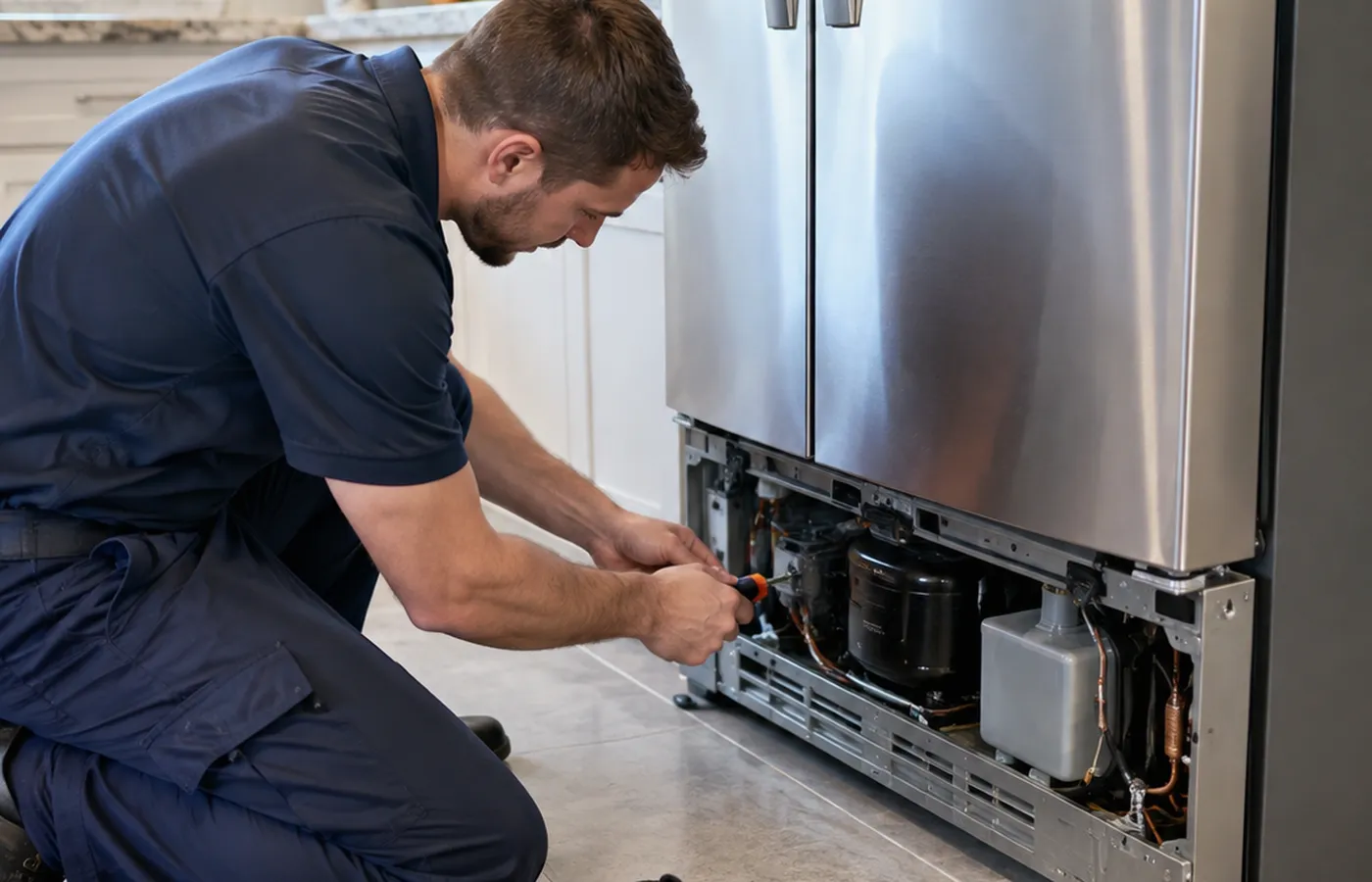
Refrigerators with dispensers or ice makers use a household water connection and internal tubing. A loose fitting, cracked tube or damaged supply line can leak even when the cooling system is working normally. Note whether the leak happens continuously or mainly after the dispenser or ice maker calls for water.
Water inlet valve
The inlet valve opens when the appliance needs water. A valve that does not seal correctly, a damaged connection or mineral debris at a fitting can create a slow drip. Water near the rear lower cabinet or a leak that appears around fill events can shift attention toward the supply side.
Ice-maker fill problem
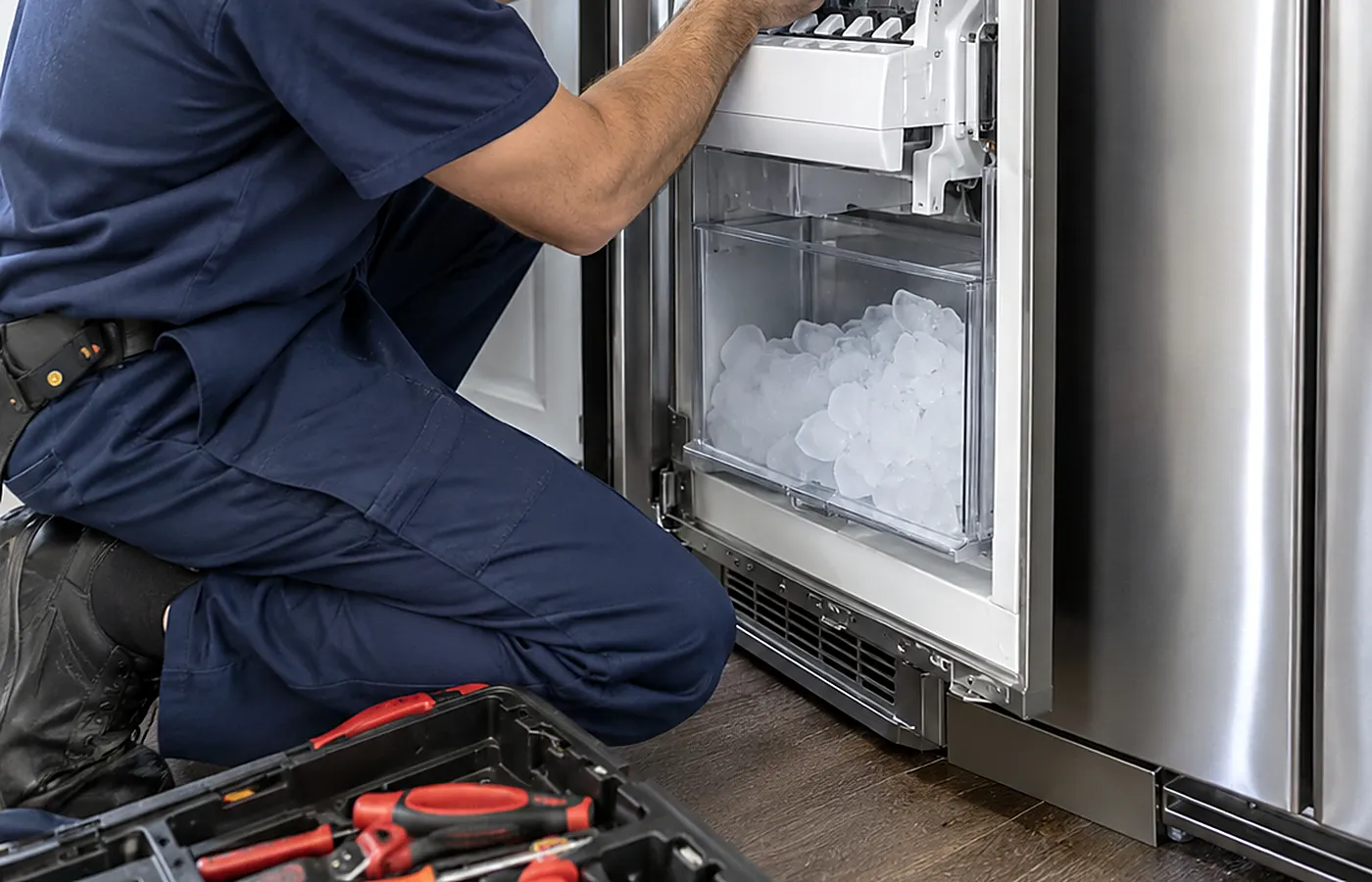
A frozen, misaligned or damaged fill tube can direct water where it does not belong. Overfilling may also send water into the ice bucket or freezer. Small, hollow cubes combined with leaking can suggest the fill system needs attention rather than the refrigerator cabinet itself.
Door gasket and condensation
Warm humid air entering around a door that does not close properly can create excess condensation or frost. Water may appear after that frost melts. Check for packages blocking the door, a folded gasket or visible gaps before assuming a drain or valve has failed.
Drain pan or cabinet issue
A cracked or displaced drain pan is less common than a blocked drain but can still place water under the refrigerator. The source should be confirmed before a part is replaced because water can travel along panels and appear away from the actual leak point.
What can you safely check before service?
Keep checks for “Refrigerator Leaking Water: Where Is It Coming From?” external and low risk. Do not defeat door, lid or thermal safety devices, remove energized panels or continue testing the refrigerator when a clear safety warning is present.
- Move food away from the door so it can close fully.
- Look for visible water around the household supply connection without pulling on tubing.
- Note whether the leak appears after ice production, dispenser use or a defrost cycle.
- If water is reaching an outlet or electrical connection, stop use and address the safety issue.
- Photograph the leak location before drying the area; that can help preserve useful clues.
How does the symptom pattern change the diagnostic path?
The symptom combinations below organize the diagnostic path for “Refrigerator Leaking Water: Where Is It Coming From?.” They are observation patterns, not instructions to replace a specific part without testing.
| What you notice | Areas usually considered |
|---|---|
| Water inside fresh-food section | Defrost drain, condensation, door sealing |
| Water behind refrigerator | Supply line, inlet valve, tubing connection |
| Water in freezer or ice bucket | Fill tube, ice maker, overfill condition |
| Water only after doors have been open often | Condensation, gasket or closure issue |
When should you stop using the appliance?
Stop using the refrigerator if this problem is accompanied by smoke, sparking, burning odor, repeated breaker trips, severe overheating or uncontrolled water near electrical parts. For gas cooking equipment, a gas odor also requires immediate stop-use action.
If there is no immediate safety concern, avoid cycling the refrigerator repeatedly just to reproduce “Refrigerator Leaking Water: Where Is It Coming From?.” Save any error code and note the cycle stage, sound, temperature or other condition present when the symptom appears.
When is professional refrigerator service the next step?
If the safe checks in “Refrigerator Leaking Water: Where Is It Coming From?” do not resolve the issue, the next step is model-specific diagnosis of the relevant refrigerator system. Bring the brand, full model number, any error code and the symptom timing rather than relying on repeated resets.
- Describe the behavior. Explain what the appliance does and when the problem appears.
- Provide model information. The model identifies the appliance platform, component layout and service documentation.
- Flag safety concerns. Mention leaks, overheating, gas odor, electrical smell or repeated breaker trips before the visit.
- Confirm the failed condition. Testing should support the diagnosis before a repair decision is made.
Learn about Refrigerator Repair in Franklin → Find your appliance model number →
What should Franklin homeowners have ready?
For a Franklin service request about “Refrigerator Leaking Water: Where Is It Coming From?,” include the ZIP code and any gate, building or appliance-access instructions that affect the visit. Keep the technical description centered on the refrigerator symptom and when it occurs.
View the Franklin service area → Prepare for an appliance repair appointment →
Frequently asked questions
Why is water collecting under my refrigerator drawers?
A blocked defrost drain or condensation path is a common diagnostic area, but the exact source should be confirmed before service.
Can a refrigerator leak even if it is still cooling?
Yes. Water-system and drain problems can occur independently of the refrigeration system.
Should I shut off the refrigerator water line?
If the leak clearly comes from the supply side and you can safely identify the correct shutoff valve, stopping the water supply can limit damage until service. Do not disturb electrical components.
Can an ice maker cause water on the floor?
Yes. Fill tubing, the inlet valve, overfilling or internal ice buildup can all allow water to escape the normal ice-making path.

Harpeth Appliance Works Editorial Team
This guide explains “Refrigerator Leaking Water: Where Is It Coming From?” for Franklin homeowners, with symptom-specific observations, safe external checks and the information that helps prepare a refrigerator service request.
About our editorial approach →