
What can stop an electric oven from heating?
Bake elements, broil elements, temperature sensors, relays, wiring and control boards all play roles in electric oven heating. Some ovens use both elements during preheat, so one failed element can cause unusually slow or incomplete heating rather than a completely cold cavity.
Visible blistering or breaks in an exposed element are useful clues, but internal element failures can occur without obvious damage.
Can an electric oven have power but still lose heating power?
Displays and lights may operate even when the higher-voltage heating supply is incomplete. Repeated breaker resets are not a repair. If a breaker trips again, or there is heat damage at wiring or the receptacle, stop use and address the electrical condition.
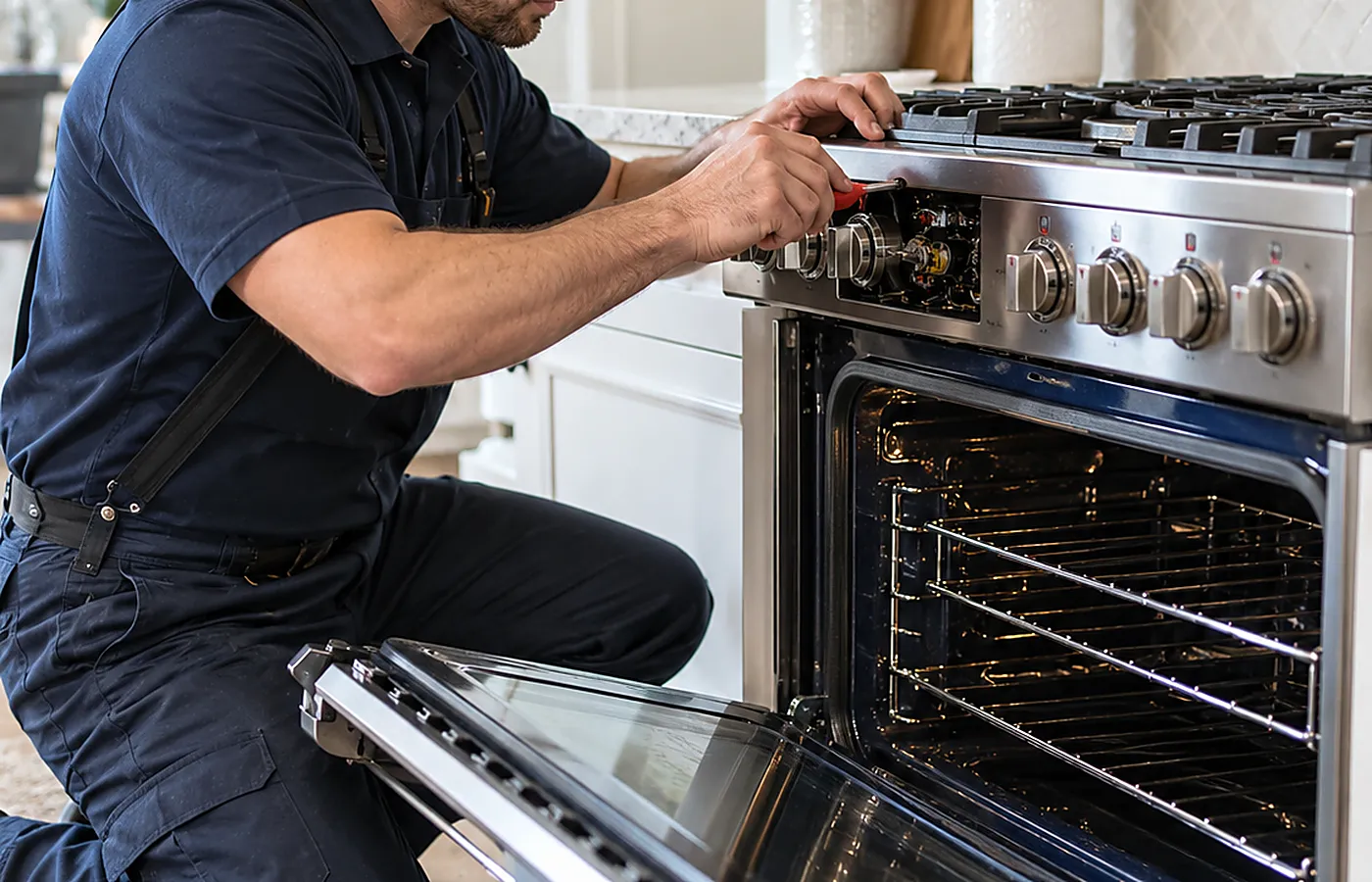

What can stop a gas oven from heating?
Gas ovens commonly rely on an igniter and gas-valve sequence. An igniter can glow yet fail to draw the current required for normal valve operation. Flame sensing, wiring and controls may also matter depending on design.
If you smell gas, stop normal troubleshooting, avoid ignition sources and follow appropriate gas-safety procedures.
Can the temperature sensor cause an oven to stay cold or heat incorrectly?
Temperature sensors report cavity temperature to the control. A sensor or wiring fault can create inaccurate heating behavior, but the exact symptom should be compared with element or ignition operation before assuming the sensor is the cause.

What if the display works but heat never starts?
Control boards, relays, user-interface settings, delayed-start functions and control-lock modes can all affect the heating command. Check the owner documentation for settings before moving into internal diagnosis.
When should you stop using the oven?
Stop use for gas odor, visible sparking, repeated breaker trips, scorched wiring, smoke or uncontrolled overheating. Do not bypass gas valves, thermal protection or interlocks.
Which oven behavior matters most
The pattern matters because one symptom can come from several different systems. These observations help organize the diagnostic path without assuming a failed part.
| What you notice | Areas usually considered |
|---|---|
| Display works, oven stays cold | Element or igniter, relay, wiring or power supply |
| Bake fails but broil works | Bake-specific element, igniter or control path |
| Preheats slowly or unevenly | Heating performance, sensor, door sealing or airflow |
| Trips breaker or shows electrical odor | Electrical fault; stop use and address safety first |
What should you check before requesting service?
Keep the checks external and safe. The goal is to describe the problem accurately, not to dismantle the appliance.
- Confirm the correct cooking mode and temperature were selected.
- For electric ovens, note whether bake and broil behave differently.
- For gas ovens, stop use if you smell gas.
- Do not touch exposed or damaged heating elements.
- Record any error code before cycling power.
When is oven service the next step?
If the oven is configured correctly and still does not heat, diagnosis should test the heating or ignition sequence, temperature sensing and control output for the exact model. Have the model number ready and describe whether the oven is electric or gas, whether any element glows, and whether an error code appears.
What does the preheat pattern tell you?
Watch what happens during the first few minutes without opening panels or touching live components. On an electric oven, note whether either element begins to glow where the design makes that visible. On a gas oven, note whether the igniter appears to begin the normal ignition sequence. Also note whether the display shows a temperature increase or an error.
Those observations help distinguish a command problem from a heating-system problem. They do not justify bypassing interlocks, measuring live high voltage or manually introducing flame to a gas burner.
Frequently asked questions
Can an oven display work while the heating circuit fails?
Yes. Controls and lights can operate even when the heating supply, element, igniter or relay path has a problem.
Does a glowing gas igniter mean it is good?
Not necessarily. An igniter can glow but still fail to operate the gas-valve sequence correctly.
Should I keep resetting a tripped oven breaker?
No. Repeated tripping indicates an electrical condition that should be addressed rather than repeatedly reset.
What information is most useful before service?
Fuel type, brand, model number, error code, whether the display works, and exactly what happens when Bake or Broil is selected.

Harpeth Appliance Works Editorial Team
This guide explains “Oven Not Heating: What Electric and Gas Ovens Can Tell You” for Franklin homeowners, with symptom-specific observations, safe external checks and the information that helps prepare a oven/stove service request.
Editorial responsibility →