Check normal control-lock modes first.
Many modern ranges include child lock, control lock or Sabbath settings that intentionally disable some buttons. A locked panel can look like an electronic failure if the indicator is small or the mode was enabled accidentally.
Use the owner’s manual for the exact model because unlock sequences vary. Do not press random button combinations repeatedly; that can change settings and make the original symptom harder to describe.
Is the display completely blank or only the buttons unresponsive?
A blank display points the diagnostic path toward power supply, fuses, wiring or the control assembly. A lit display with unresponsive keys suggests the appliance is receiving at least some power and may shift attention toward the user interface or control logic.
That distinction is useful but not conclusive. Some controls have separate low-voltage circuits or interface boards, so model-specific testing is still required.
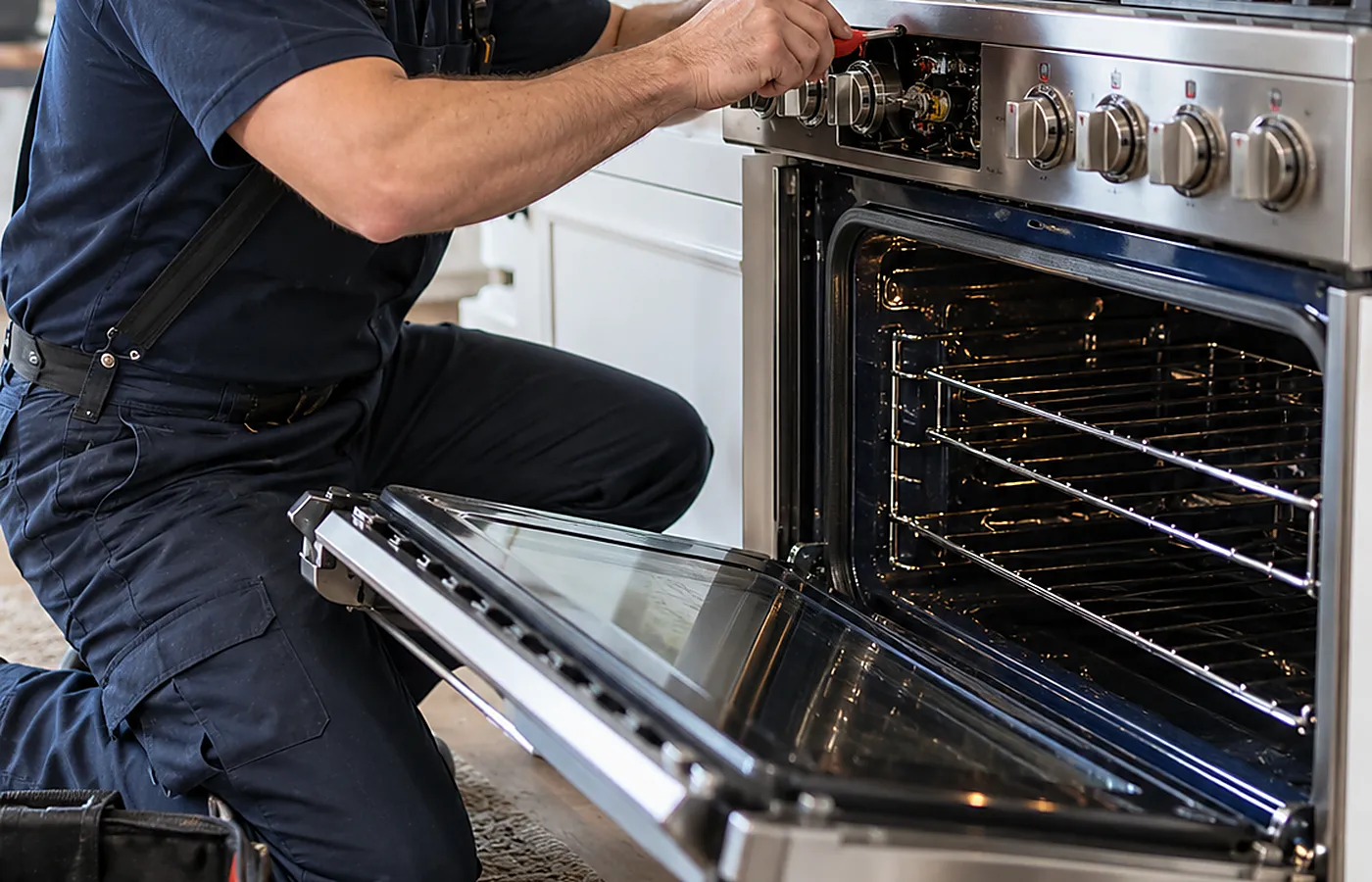

Touchpads and user interfaces can fail separately from the main control.
On some models, the keypad or touch membrane is a separate component from the electronic oven control. On others, the interface is integrated into a single assembly. A failed key matrix can make only certain buttons stop working or can block the whole panel.
Do not assume a main control board is required just because the panel is unresponsive. Parts architecture varies widely across brands and model generations.
Power interruptions can leave controls in an abnormal state.
After an outage, the control may need a normal manufacturer reset. If the panel remains blank or freezes again, repeated power cycling is not a substitute for diagnosis.
If a breaker trips again when the oven is used, stop resetting it. Heating elements, wiring and control components can create electrical faults that need qualified testing.
Gas ranges require an additional safety boundary.
An electronic control problem on a gas range does not automatically mean there is a gas leak, but any gas odor changes the priority. Stop normal troubleshooting and follow gas-safety procedures rather than repeatedly attempting ignition.
Do not remove control panels or manipulate gas valves as part of a button-response test. The useful homeowner information is the model, display state, which buttons respond and whether the problem began after a specific event.
What details help service diagnose the control problem?
Photograph the model label and the control panel. Note whether some keys work, whether the display is lit, whether the oven still heats and whether an error code appears. If the issue is intermittent, a short video can document it when safe.
Those observations help distinguish user-interface, control, power and appliance-operation problems before any parts decision is made.
Control-panel symptoms and what they suggest
| Symptom | System to consider | First safe check |
|---|---|---|
| Panel lit, no keys respond | Control lock, interface, control logic | Check model-specific lock mode |
| Some keys work | Keypad/touch interface | Record exactly which keys fail |
| Display blank | Power or control supply | Confirm household circuit once |
| Problem began after outage | Reset state or electrical fault | Use manufacturer reset only |
| Breaker trips during heat | Heating/electrical fault | Stop repeated resets |
Control-panel symptoms overlap. Use them to guide testing, not to identify a component without diagnosis.
Safe checks before stove or oven service
- Check control-lock indicators. Use the owner’s manual for the exact unlock procedure.
- Record the display state. Note whether the screen is blank, frozen or showing a code.
- Try only the normal manufacturer reset. Do not repeatedly cycle power.
- Stop on gas or electrical warning signs. Gas odor, sparking or recurring breaker trips require immediate safety attention.
- Photograph the model label. Control components are highly model-specific.
Frequently asked questions
Can a stove still heat if the control panel is partly failed?
Depending on the design, some functions may continue while the keypad or display has a separate fault.
Does an unresponsive panel always mean the control board is bad?
No. Control locks, keypad assemblies, wiring and power-supply issues can create similar symptoms.
Should I reset the breaker to fix the panel?
One normal reset may be part of manufacturer guidance, but repeated breaker cycling is not a repair method.
What if I smell gas while the electronic controls are not working?
Stop normal troubleshooting and follow appropriate gas-safety procedures. Do not keep attempting ignition.
Related Franklin appliance resources

Harpeth Appliance Works Editorial Team
This guide explains “Why Are My Stove or Oven Buttons Not Responding?” for Franklin homeowners, with symptom-specific observations, safe external checks and the information that helps prepare a oven/stove service request.
Editorial responsibility →