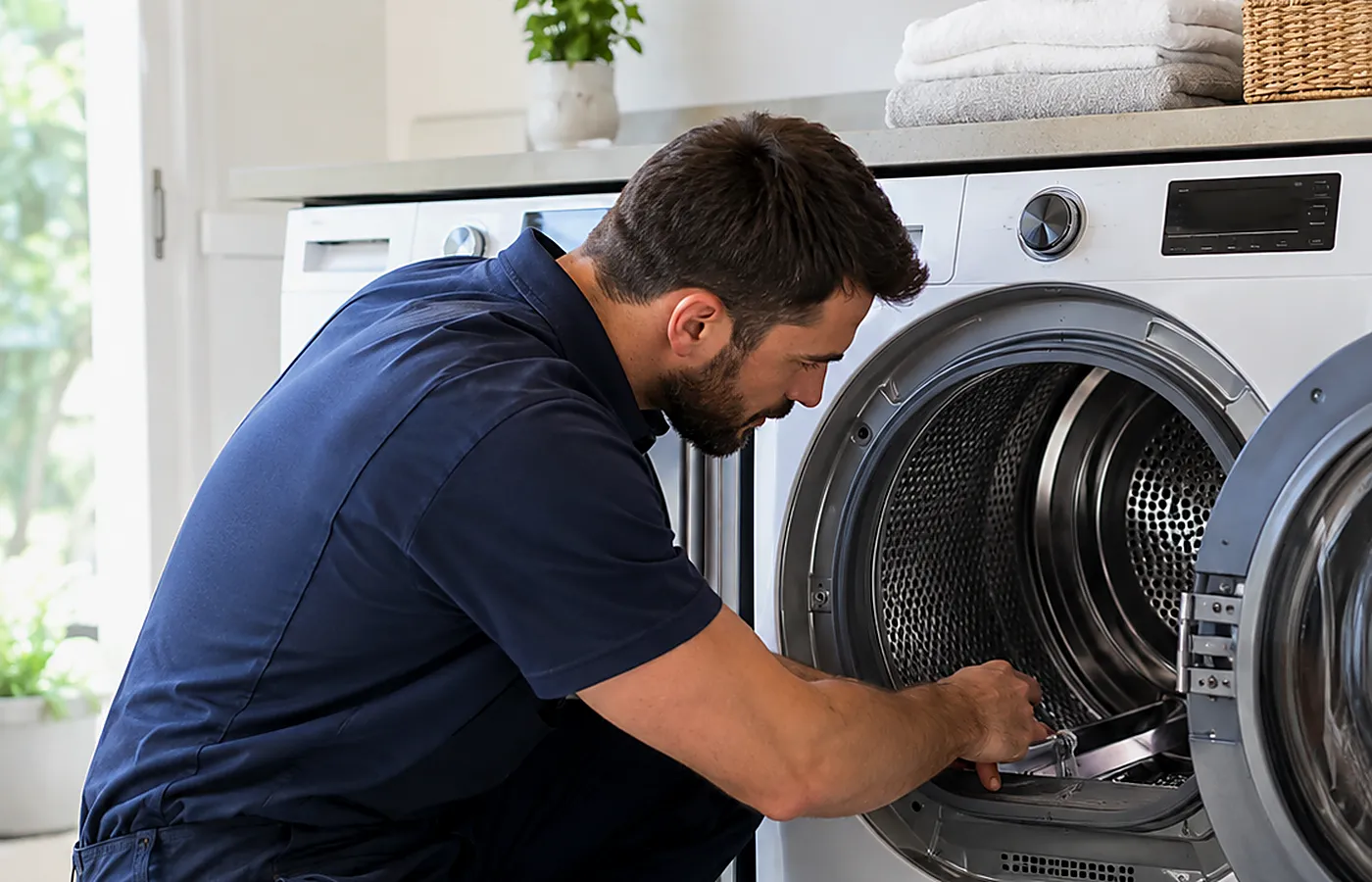
Electric dryers can tumble with an incomplete power supply.
Many electric dryers use one part of the supply for the motor and a higher-voltage circuit for the heating element. That means the drum can turn even when the heating side does not receive what it needs.
Do not open the dryer or probe live high-voltage connections unless you are qualified. If there is a known electrical problem, repeated breaker resets or heat damage at the outlet, the electrical condition should be addressed before normal appliance diagnosis continues.
Heating elements and thermal protection are different parts of the system.
An electric heating element can fail open and stop producing heat. Thermal fuses and high-limit devices can also interrupt operation when temperatures become unsafe. The important question is why a protective device opened if one is found failed.
Replacing a thermal fuse without checking airflow can leave the condition that caused excess heat. Diagnosis should therefore connect the failed component to the exhaust path, cycling controls and operating temperature.
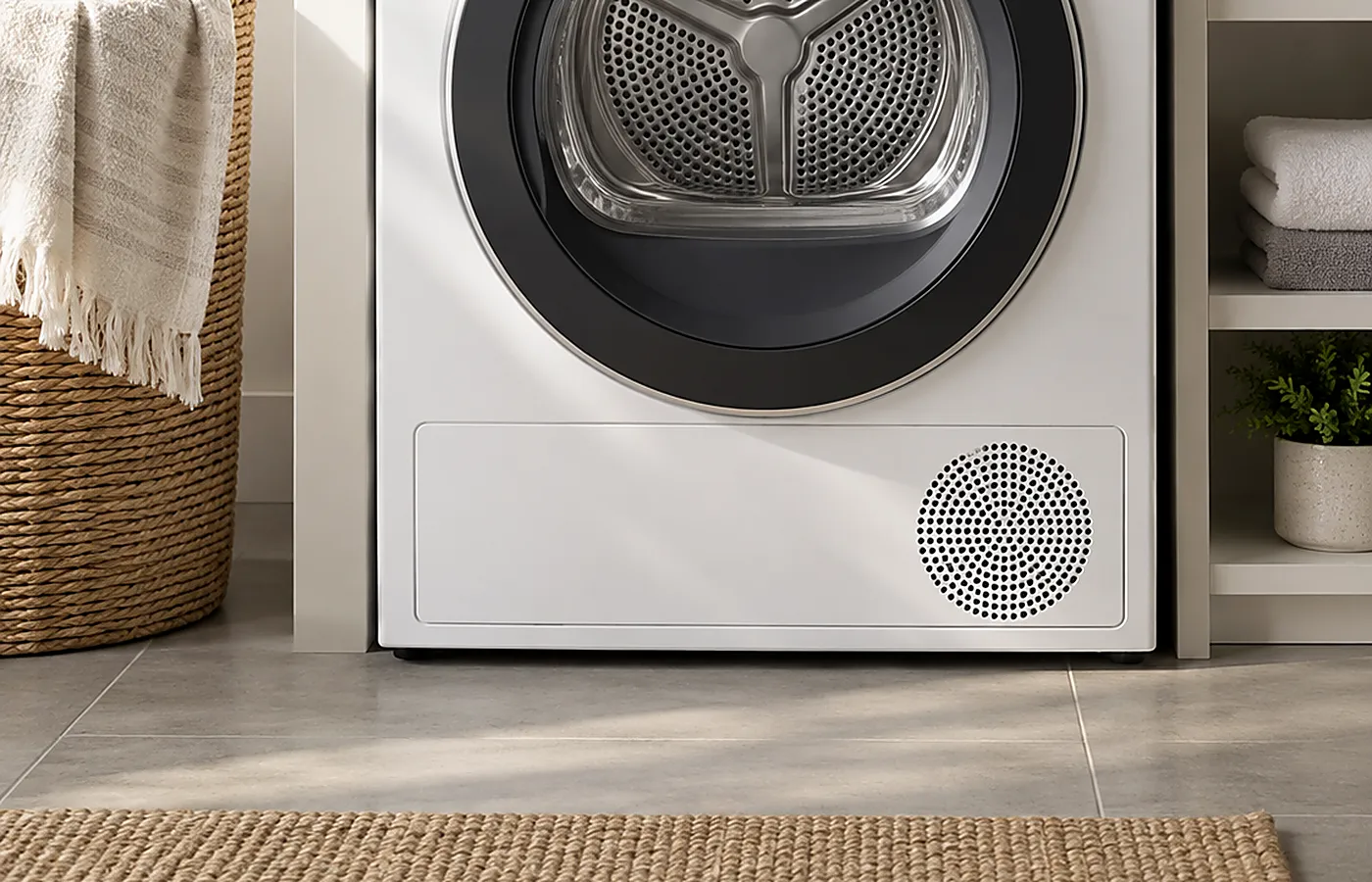

Gas dryers have an ignition sequence.
A gas dryer may use an igniter, flame sensor, gas valve coils and burner assembly. A failure at one step can allow the drum to run while preventing sustained heat.
Do not attempt to modify gas components or defeat safety controls. If you smell gas, stop normal troubleshooting and follow gas-safety procedures before using the appliance again.
Restricted airflow can mimic or contribute to heating problems.
A clogged lint screen, crushed transition duct, long restricted vent or blocked exterior hood can extend drying time and increase cabinet temperature. Some homeowners describe the result as “not heating” because clothes remain damp despite a long cycle.
USFA and CPSC guidance emphasize dryer lint and exhaust maintenance because restrictions can contribute to fire risk. Long drying time should therefore trigger an airflow check even when the dryer still produces some heat.
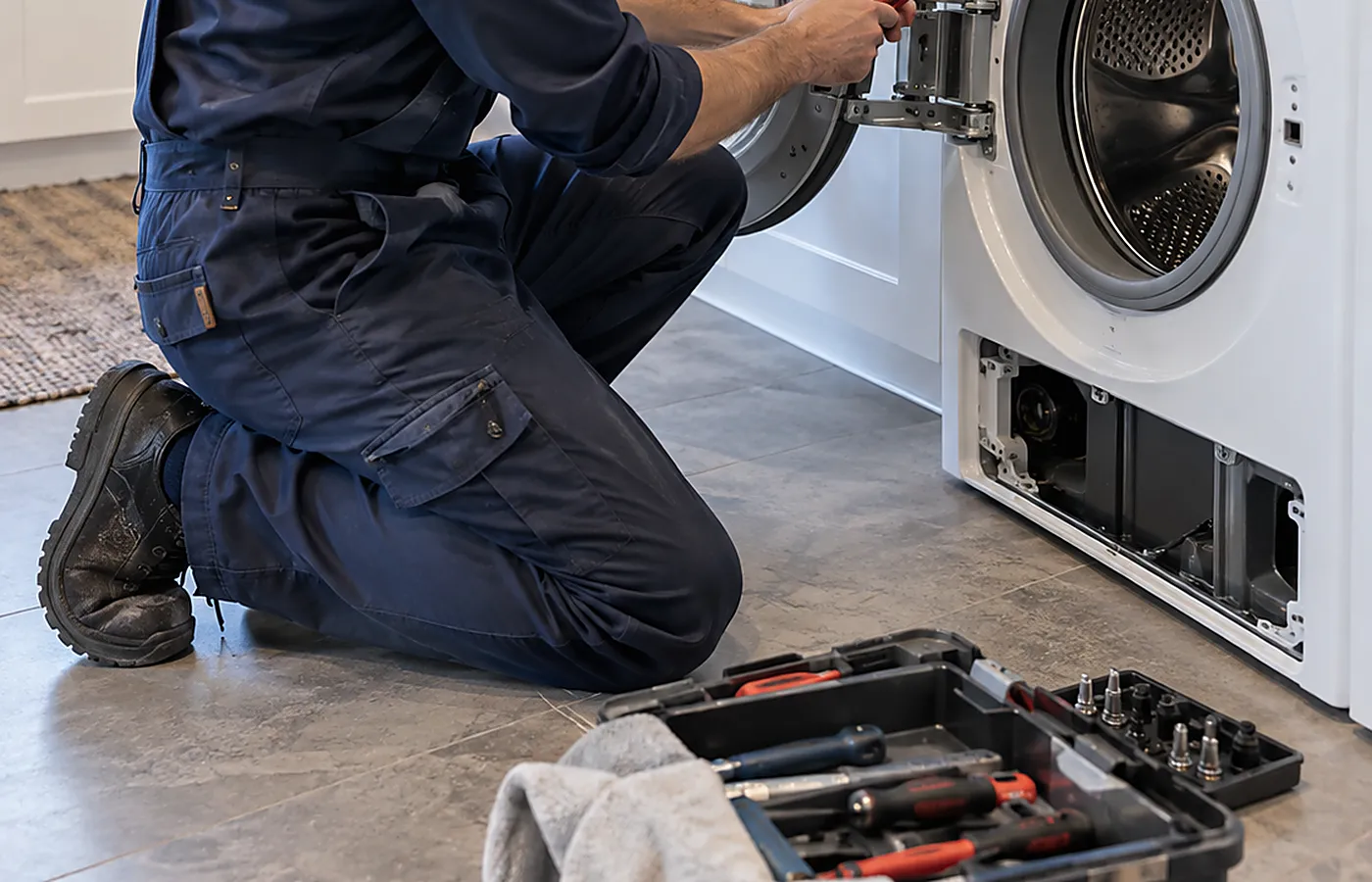
Temperature controls regulate the heating cycle.
Cycling thermostats, thermistors and high-limit devices tell the dryer when to apply or remove heat. A fault in those components or their wiring can change heating behavior without stopping the motor.
Because the exact control design differs by model, component testing should follow the manufacturer platform rather than a generic internet diagram.
When is professional diagnosis the next step?
If the lint screen and visible vent opening are clear, the selected cycle is correct and the dryer still has no heat, the problem has moved beyond simple homeowner checks. Service may need to test supply, heating components, controls, airflow and gas ignition where applicable.
Stop using the dryer immediately if there is smoke, a burning odor, severe overheating, visible wiring damage or repeated electrical trips.
Dryer runs but does not heat: diagnostic clues
| Observation | System to consider | Important caution |
|---|---|---|
| Drum turns, no electric heat | Supply or heating circuit | High voltage requires qualified testing |
| Igniter glows but no sustained flame | Gas ignition path | Do not bypass gas safety controls |
| Heat present but clothes stay damp | Airflow or vent restriction | Check exhaust path |
| Protective fuse failed | Overheat condition may be present | Find the cause before replacement |
| Burning smell or severe heat | Safety problem | Stop use immediately |
A symptom can involve more than one system. The purpose of the table is to organize the diagnostic path, not prescribe a component replacement.
Safe checks before dryer service
- Clean the lint screen. Make sure airflow starts with a clear screen.
- Check the selected cycle. Confirm a heated cycle is actually being used.
- Inspect the visible vent path. Look for a crushed transition duct or blocked exterior hood without dismantling live equipment.
- Stop on warning signs. Smoke, burning odor or abnormal overheating means stop using the dryer.
- Record the model and symptom. Note whether the dryer is electric or gas and whether any heat appears at all.
Frequently asked questions
Can a dryer motor work if the heating element is bad?
Yes. The motor and heater are separate systems, so a dryer can tumble with a failed heating circuit.
Does a blown thermal fuse mean I should just replace the fuse?
Not necessarily. If excessive heat caused the protective device to open, the airflow or temperature-control problem also needs to be identified.
Can a clogged vent cause long drying without a total no-heat condition?
Yes. Restricted airflow can make drying inefficient and can contribute to overheating even when the heater still operates.
Should I keep using a dryer that smells burnt?
No. Stop use and address the safety concern before further cycles.
Related Franklin appliance resources
Sources and further reading
- USFA Appliance & Electrical Fire Safety , Federal fire-safety guidance that includes clothes dryer cleaning and electrical practices.
- CPSC Clothes Dryer Safety , Consumer dryer safety guidance related to lint, exhaust restriction and excess heat.

Harpeth Appliance Works Editorial Team
This guide explains “Why Does a Dryer Run but Not Heat?” for Franklin homeowners, with symptom-specific observations, safe external checks and the information that helps prepare a dryer service request.
Editorial responsibility →