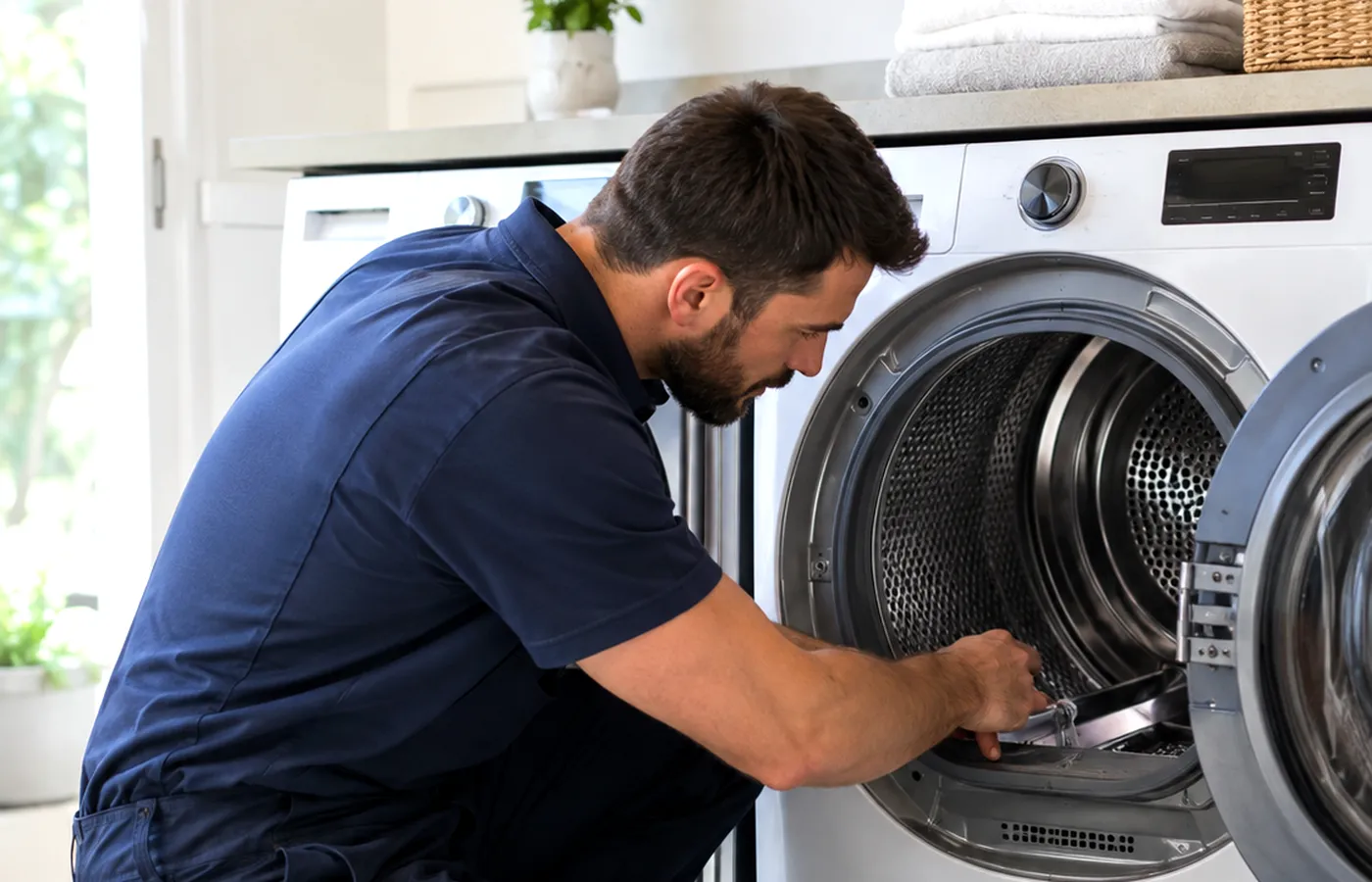
Why lint and airflow deserve immediate attention.
Dryers move large volumes of heated air through clothing, a lint screen and an exhaust duct. When lint accumulates or the vent is restricted, heat can build inside the system and drying time often increases.
USFA identifies failure to clean as a leading factor in clothes dryer fires, and CPSC guidance emphasizes keeping lint screens and exhaust ducts clear. That makes a burning odor plus long dry times a reason to stop and inspect the airflow path, not simply add more cycle time.
Mechanical friction can create a burnt-rubber or hot smell.
A slipping belt, seized roller, worn idler or dragging drum can create friction. Those faults may also come with squealing, thumping or difficulty turning the drum.
Do not continue running the dryer if the smell intensifies or the drum sounds mechanically distressed. Continued operation can damage additional components and increase heat.

Motors and electrical components can overheat.
A motor struggling under load can develop an electrical or hot-winding odor. Loose connections, damaged wiring or overheated terminals can also create a sharp electrical smell.
Because dryers use significant electrical power, internal electrical testing should be left to qualified service. If the outlet, plug or cord shows discoloration or heat damage, stop using the appliance and have the electrical condition assessed.
Foreign material can contact a hot surface.
Small items can escape pockets or move outside the drum area. Certain synthetic materials can produce strong odors if they contact a hot surface or become trapped near airflow components.
After the dryer is off and cool, check only accessible areas such as the drum and lint screen. Do not remove panels around heating or electrical components unless you are qualified.
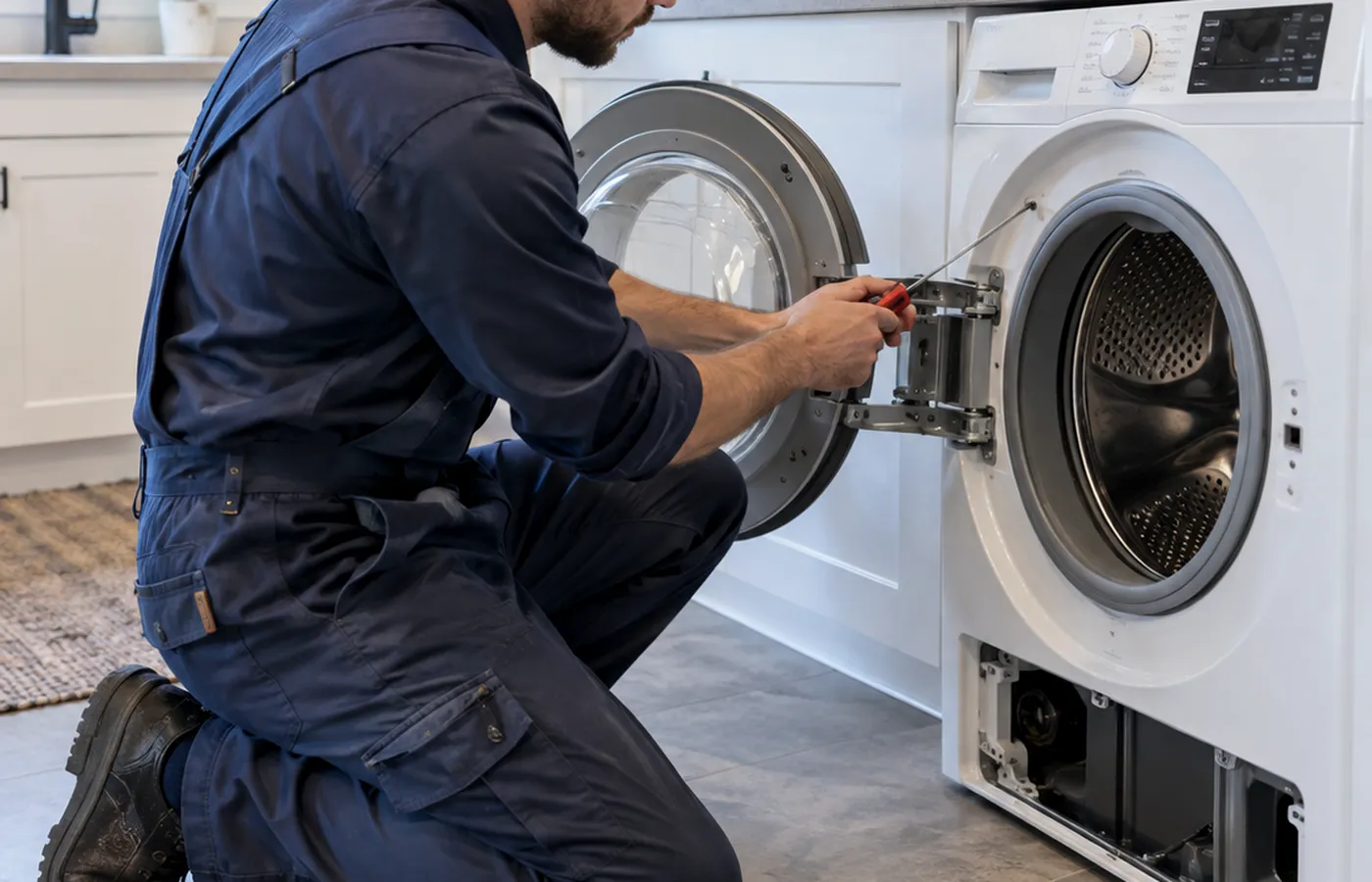
What about a smell from a new dryer?
New appliances can sometimes have temporary manufacturing or coating odors during early use, but the smell should match manufacturer documentation and should not be accompanied by smoke, abnormal heat or electrical symptoms.
When the odor is strong, persistent or unclear, stopping the appliance is the safer choice. Do not assume every “new appliance smell” is harmless.
What should a technician inspect?
The diagnostic path can include the lint and exhaust system, heating components, thermal protection, belt and rollers, motor, wiring and any visible heat damage. The technician should connect the smell to a physical cause rather than treating odor alone as a component diagnosis.
Mention whether dry times increased before the smell began, whether the dryer is electric or gas, and whether the odor appears immediately or only after the machine warms up.
Burning-smell patterns and why they matter
| Odor/condition | Possible area | Action |
|---|---|---|
| Hot lint or dusty smell with long dry times | Airflow/exhaust restriction | Stop and inspect airflow path |
| Burnt-rubber smell with squeal | Belt/roller friction | Stop use and diagnose mechanics |
| Sharp electrical smell | Motor, wiring, connection | Stop use; qualified testing |
| Smoke or visible scorching | Immediate safety concern | Disconnect safely and seek help |
| Mild new-appliance odor only | Possible normal break-in | Check manufacturer guidance and monitor |
Odor descriptions are subjective. When the source is uncertain, stopping the dryer is safer than continuing cycles.
What to do immediately
- Stop the cycle. Do not wait for the load to finish when the smell is abnormal.
- Let the dryer cool. Avoid touching hot internal areas.
- Clean the lint screen. Remove visible lint from the normal user-accessible screen.
- Inspect the visible vent path. Look for obvious crushing or blockage without dismantling electrical components.
- Arrange diagnosis if the smell returns. Persistent odor, smoke, severe heat or electrical symptoms should not be ignored.

Frequently asked questions
Can lint really cause a burning smell?
Lint accumulation and restricted airflow can contribute to excess heat. Federal fire-safety guidance emphasizes dryer cleaning for this reason.
Should I keep running the dryer on air-only to test it?
If there has been a strong burning smell, smoke or electrical symptom, repeated testing is not appropriate until the cause is understood.
Can a bad belt smell burnt?
Yes. A slipping or overheating belt can create a rubber-like odor, often with other mechanical symptoms.
What if the plug or outlet feels hot?
Stop using the dryer and have the electrical connection assessed. Heat at the cord or receptacle is not a normal drying symptom.
Related Franklin appliance resources
Sources and further reading
- USFA Appliance & Electrical Fire Safety , Federal dryer-fire prevention and electrical safety guidance.
- CPSC Clothes Dryer Safety , Consumer guidance on dryer lint, exhaust restriction and excess heat.

Harpeth Appliance Works Editorial Team
This guide explains “What Should You Do if Your Dryer Smells Like It Is Burning?” for Franklin homeowners, with symptom-specific observations, safe external checks and the information that helps prepare a dryer service request.
Editorial responsibility →