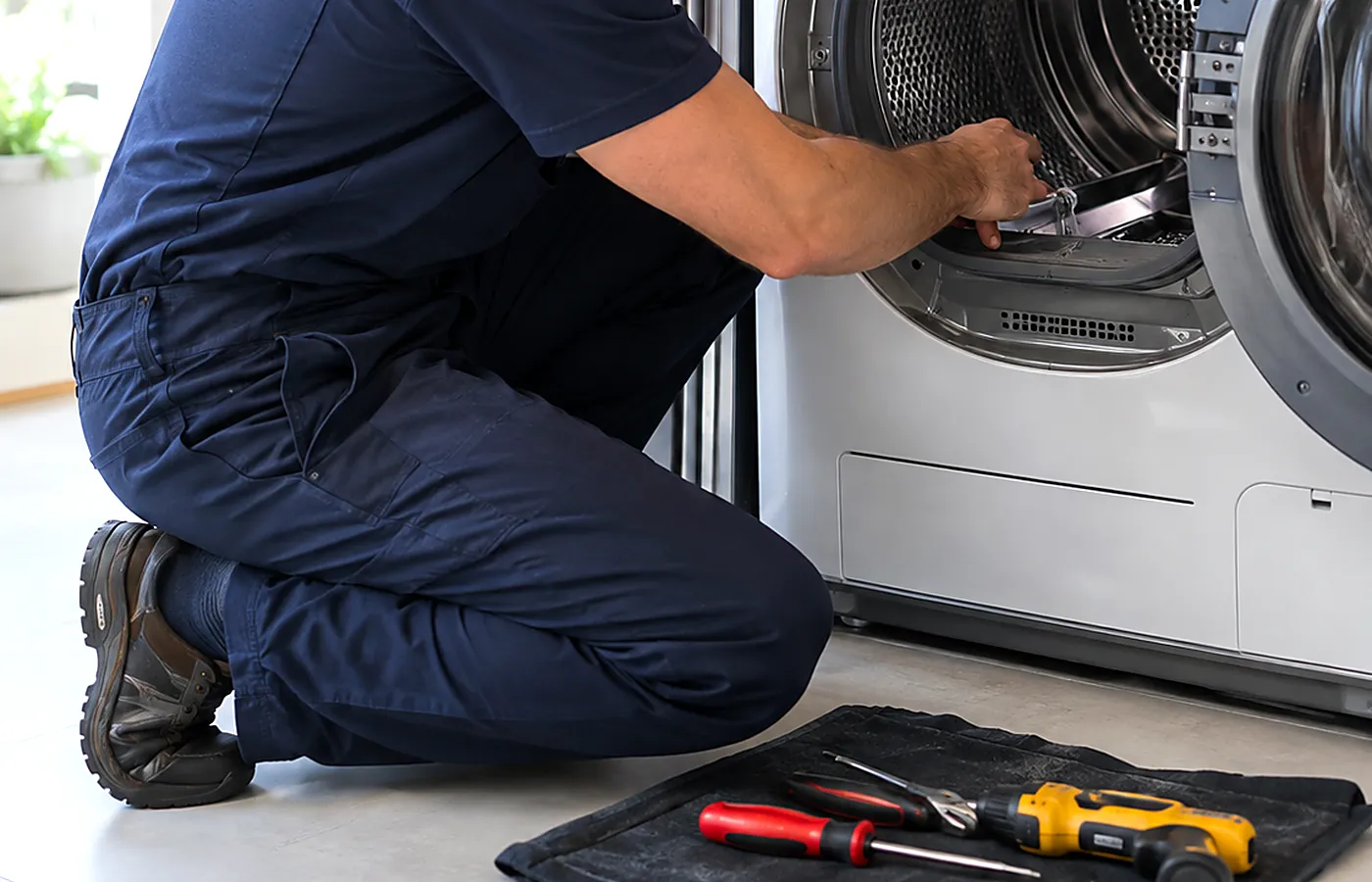
What does this symptom actually tell you?
For “Dryer Overheating: Why the Cabinet or Clothes Get Too Hot,” the useful clues are the timing, the functions that still work and any change that happened just before the symptom. Those observations narrow the dryer systems that deserve testing without treating one visible behavior as proof of a failed part.
For “Dryer Overheating: Why the Cabinet or Clothes Get Too Hot,” describe the dryer in plain language: what happens, what does not happen, and the cycle stage or condition where the behavior changes. That is more useful than choosing a board, pump, valve or other component before testing.
Restricted exhaust airflow
Lint buildup, a crushed transition duct or a restricted exterior vent can trap heat in the dryer. Long drying times and unusually hot clothing together make airflow especially important.
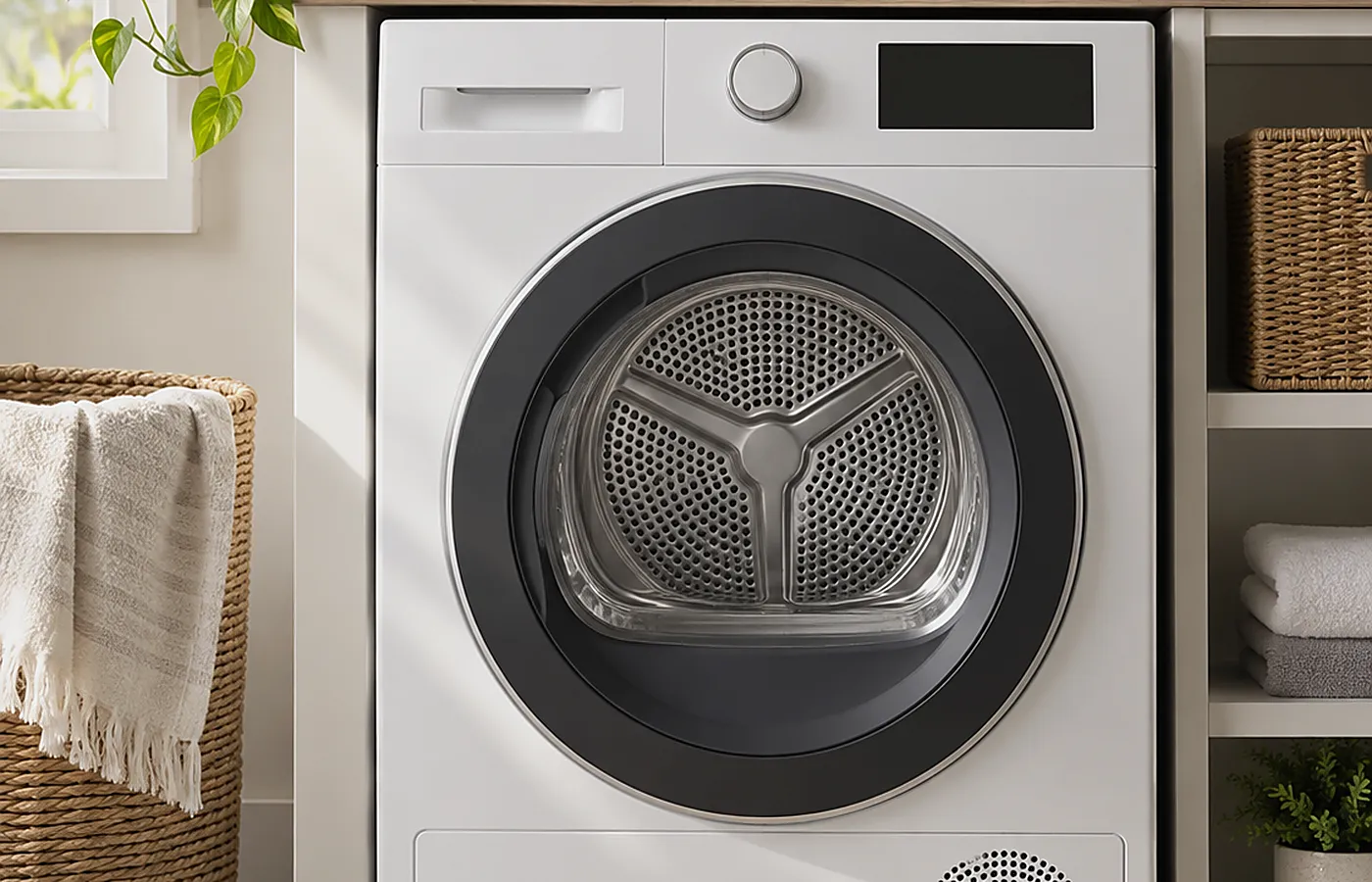
Thermostat or temperature-control problem
Cycling thermostats and sensors regulate heat. If a control does not respond correctly, the heating system can stay active longer than intended.
Heating element shorted to housing
On some electric dryers, a damaged element can contact its metal housing and remain energized under conditions where it should cycle off. This requires electrical testing.
Blocked internal lint path
The lint screen is only part of the airflow path. Internal ducts and blower areas can collect lint or debris that reduces air movement.
Overloaded drum
A very large load can restrict tumbling and airflow through the clothing. If only oversized loads overheat or dry poorly, load size is useful context.
Motor or blower problem
A weak blower or motor problem can reduce airflow even when the vent appears open. Mechanical noise or slow drum behavior may accompany the heat issue.
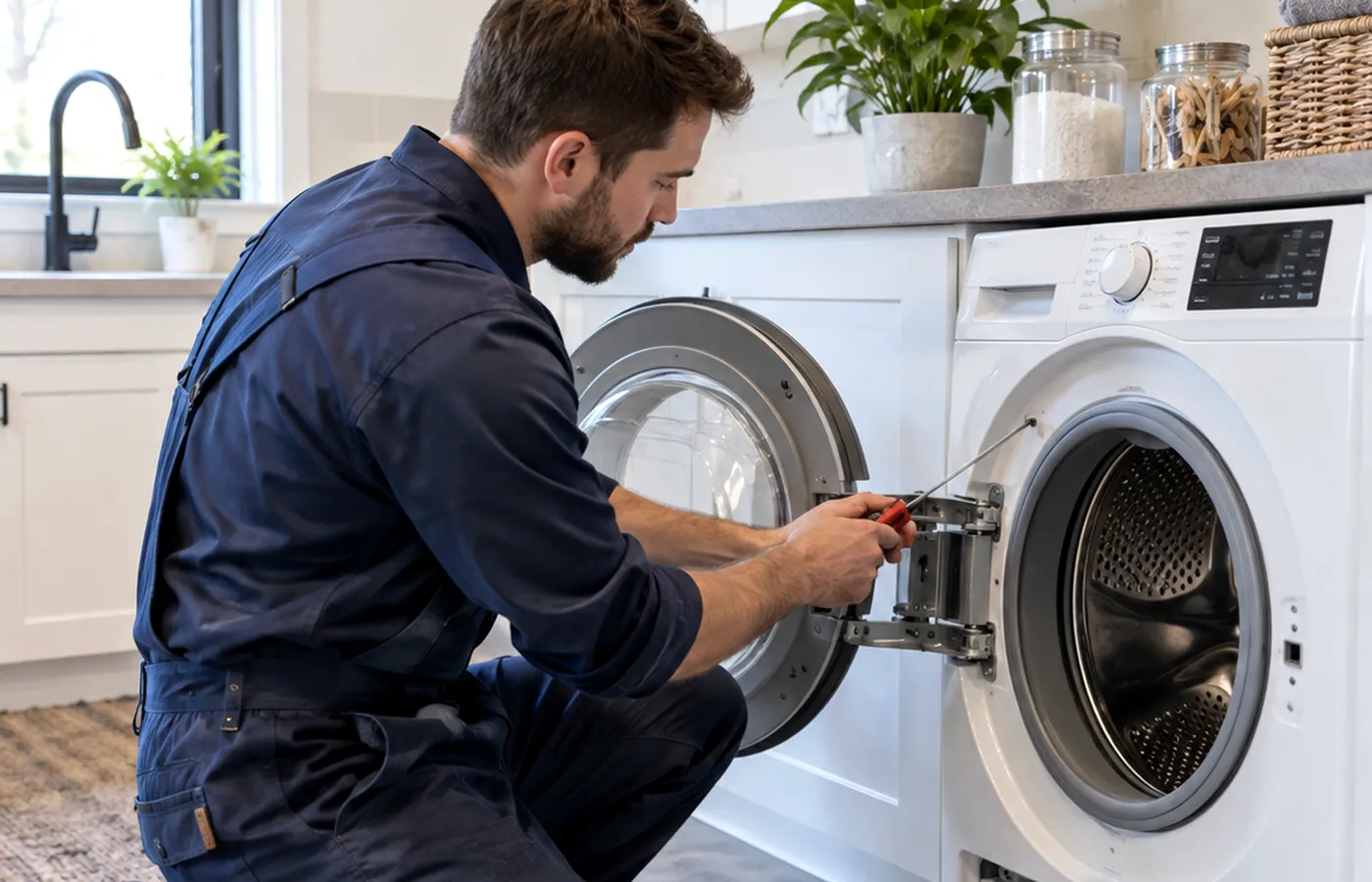
What can you safely check before service?
Keep checks for “Dryer Overheating: Why the Cabinet or Clothes Get Too Hot” external and low risk. Do not defeat door, lid or thermal safety devices, remove energized panels or continue testing the dryer when a clear safety warning is present.
- Clean the lint screen before every test cycle.
- Check that the flexible vent behind the dryer is not crushed.
- Observe whether warm air is exiting the exterior vent normally.
- Use a normal-size load rather than packing the drum.
- Stop use immediately for burning odor, smoke, scorching or repeated safety shutoffs.
How does the symptom pattern change the diagnostic path?
The symptom combinations below organize the diagnostic path for “Dryer Overheating: Why the Cabinet or Clothes Get Too Hot.” They are observation patterns, not instructions to replace a specific part without testing.
| What you notice | Areas usually considered |
|---|---|
| Dryer hot and clothes still damp | Airflow restriction |
| Dryer hot even on low heat | Temperature control or heating fault |
| Overheats only with large loads | Load size or airflow capacity |
| Overheats and shuts off | Airflow, thermostat or motor protection |
When should you stop using the appliance?
Stop using the dryer if this problem is accompanied by smoke, sparking, burning odor, repeated breaker trips, severe overheating or uncontrolled water near electrical parts. For gas cooking equipment, a gas odor also requires immediate stop-use action.
If there is no immediate safety concern, avoid cycling the dryer repeatedly just to reproduce “Dryer Overheating: Why the Cabinet or Clothes Get Too Hot.” Save any error code and note the cycle stage, sound, temperature or other condition present when the symptom appears.
When is professional dryer service the next step?
If the safe checks in “Dryer Overheating: Why the Cabinet or Clothes Get Too Hot” do not resolve the issue, the next step is model-specific diagnosis of the relevant dryer system. Bring the brand, full model number, any error code and the symptom timing rather than relying on repeated resets.
- Describe the behavior. Explain what the appliance does and when the problem appears.
- Provide model information. The model identifies the appliance platform, component layout and service documentation.
- Flag safety concerns. Mention leaks, overheating, gas odor, electrical smell or repeated breaker trips before the visit.
- Confirm the failed condition. Testing should support the diagnosis before a repair decision is made.
Learn about Dryer Repair in Franklin → Find your appliance model number →
What should Franklin homeowners have ready?
For a Franklin service request about “Dryer Overheating: Why the Cabinet or Clothes Get Too Hot,” include the ZIP code and any gate, building or appliance-access instructions that affect the visit. Keep the technical description centered on the dryer symptom and when it occurs.
View the Franklin service area → Prepare for an appliance repair appointment →
Frequently asked questions
Can a clogged vent make a dryer overheat?
Yes. Restricted airflow prevents heat and moisture from leaving efficiently and can raise internal temperatures.
Why does my dryer shut off when it gets hot?
A protective thermostat or motor overload may be opening because of overheating. The reason for the excess heat still needs to be found.
Is it safe to keep using an overheating dryer?
No. Stop use when overheating is abnormal, especially if there is a burning odor, smoke or scorching.
Can the heating element stay on too long?
A control failure or damaged element can affect heat cycling. Electrical testing is needed before identifying the exact cause.

Harpeth Appliance Works Editorial Team
This guide explains “Dryer Overheating: Why the Cabinet or Clothes Get Too Hot” for Franklin homeowners, with symptom-specific observations, safe external checks and the information that helps prepare a dryer service request.
About our editorial approach →