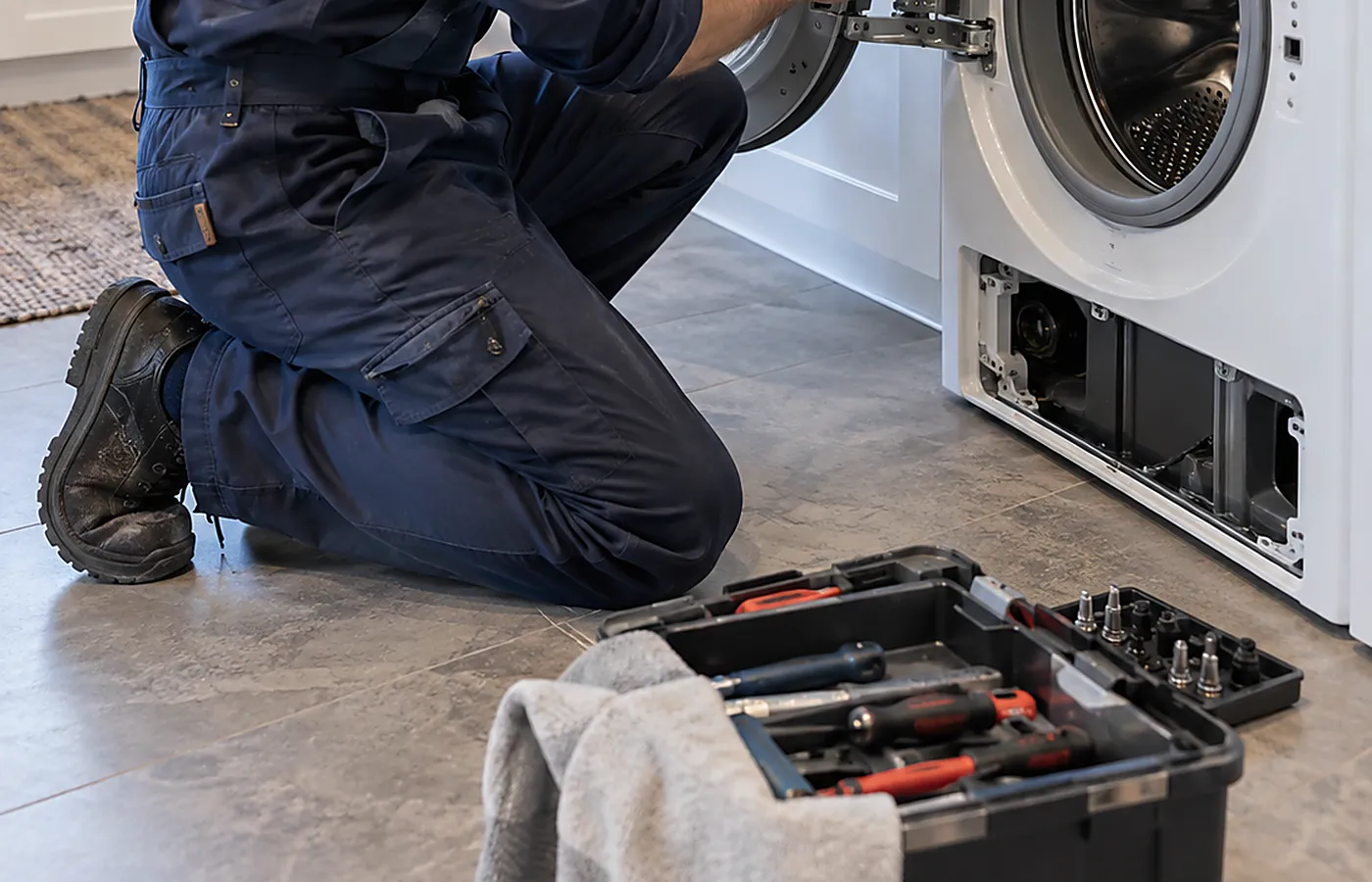
Check the filter and visible sump area first.
Food debris can restrict the filter or the area leading into the drain system. Remove and clean only parts the owner documentation identifies as user-accessible. Do not reach into concealed pump areas with power connected.
If broken glass is possible, protect your hands and avoid blind probing into the sump.
Can the drain hose cause standing water?
A kinked hose, improper routing or blockage can reduce drain flow. The hose connection at a sink drain, air gap or disposal can also matter depending on the installation.
If the dishwasher was recently installed or the disposal was replaced, installation details become especially relevant. A drain problem that began immediately after plumbing work may not be an internal dishwasher failure.
What happens when the drain pump cannot move water?
The pump may be jammed, worn or electrically failed. A humming sound without water movement is different from complete silence, but neither proves the pump is the only problem.
Debris in the drain path can mimic a weak pump and can also damage pump components, so the full path should be checked before replacement decisions are made.
What about check valves and backflow?
Some drain systems use check valves to prevent discharged water from returning to the tub. Backflow from sink plumbing or a failed valve can leave dirty water after the dishwasher appears to have drained.

Can a control issue prevent draining?
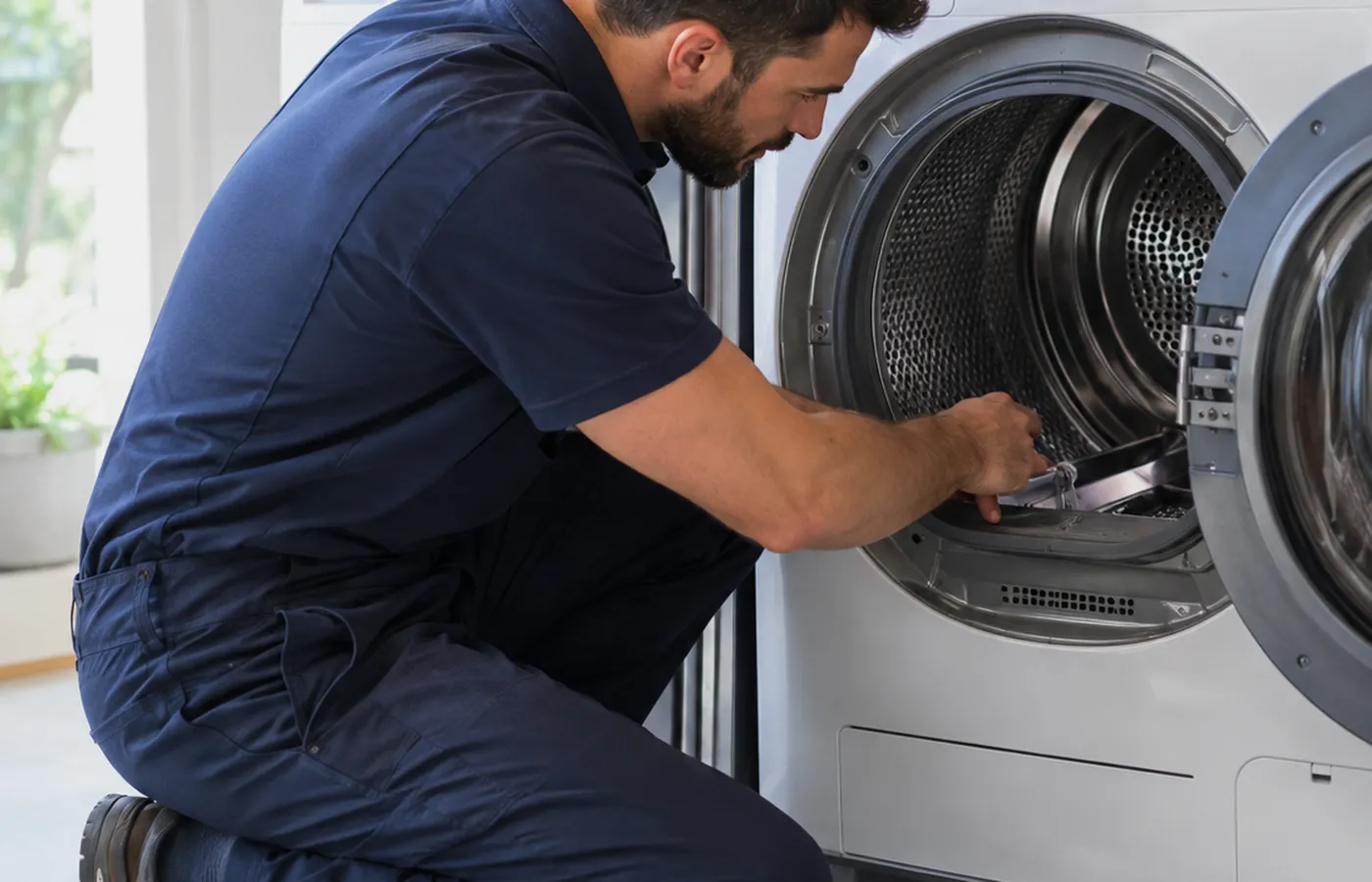
Door-latch sensing, wiring, controls and cycle logic can prevent the drain pump from receiving the expected command. Error codes may help when interpreted for the exact model.
What if the dishwasher is leaking too?
Stop using the appliance if water is escaping onto flooring or cabinets. A drainage problem can contribute to high water level, but separate leak sources include door seals, hoses, pumps and inlet components.
How the drain pattern narrows the cause
The pattern matters because one symptom can come from several different systems. These observations help organize the diagnostic path without assuming a failed part.
| What you notice | Areas usually considered |
|---|---|
| Water remains after a full cycle | Filter, drain hose, pump, check valve or sink/disposal connection |
| Hums during drain but water stays | Pump obstruction, restricted hose or failing pump |
| No drain sound at all | Control, wiring, door state or pump circuit |
| Problem began after disposal work | Dishwasher drain connection or installation issue |
What should you check before requesting service?
Keep the checks external and safe. The goal is to describe the problem accurately, not to dismantle the appliance.
- Clean only the filter or strainer the manufacturer identifies as user-serviceable.
- Check the visible drain hose for a sharp kink.
- If connected to a garbage disposal, note whether recent plumbing work was performed.
- Stop the dishwasher if water is leaking onto flooring.
- Do not reach into the pump area while power is connected.
When should you request dishwasher service?
If the accessible filter is clear, the drain hose is not visibly kinked and water still remains, diagnosis should move into the pump, hose path, valves, controls and installation connections. Share whether the pump makes noise and whether the problem started after plumbing or disposal work.
Why installation context matters for dishwasher draining
Dishwashers depend on the appliance and the connected plumbing working together. A correctly routed drain hose helps reduce unwanted backflow, while sink plumbing, an air gap where used, and the disposal connection can all affect the path water takes after the pump turns on.
If the problem began immediately after a disposal replacement, sink plumbing change or dishwasher installation, tell the service provider. That timing can prevent unnecessary focus on internal components when the restriction is outside the appliance itself.
Frequently asked questions
Is a little water in the bottom of a dishwasher normal?
Some models retain a small amount near the sump, but a visibly full tub or water covering the filter area after the cycle is different.
Can a garbage disposal connection stop dishwasher draining?
Yes, installation and connection conditions can affect draining, especially after a new disposal or plumbing change.
Should I run another cycle to clear the water?
One controlled drain attempt may provide diagnostic information, but repeated cycles will not correct a blocked path or failed pump and may increase leak risk.
What should I tell the technician?
Share whether the drain pump makes noise, whether any water leaves the tub, and whether the issue began after plumbing work or another change.

Harpeth Appliance Works Editorial Team
This guide explains “Dishwasher Not Draining: Why Water Stays in the Bottom” for Franklin homeowners, with symptom-specific observations, safe external checks and the information that helps prepare a dishwasher service request.
Editorial responsibility →