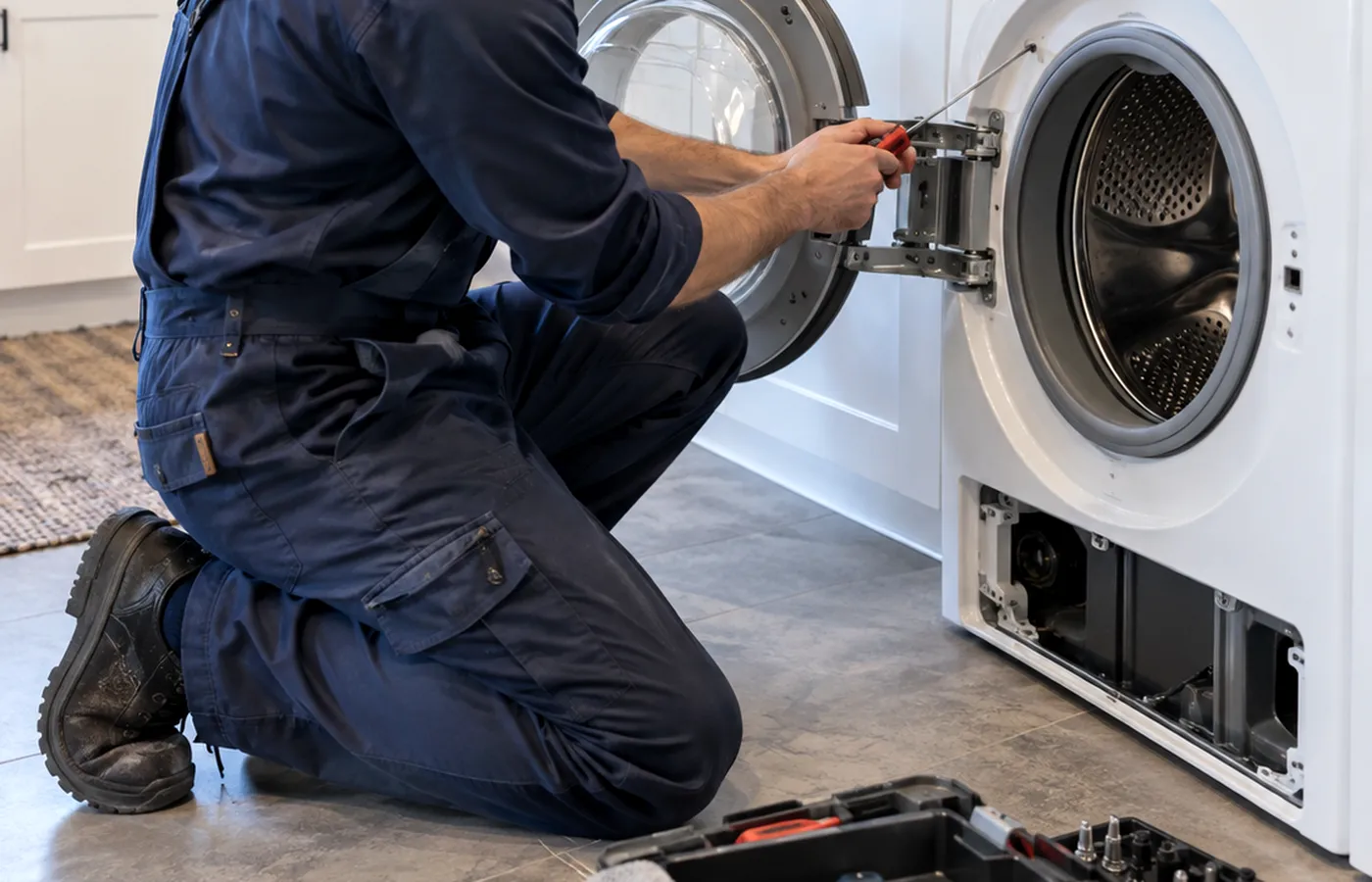
What does this symptom actually tell you?
For “Dishwasher Not Cleaning Dishes: Why Wash Performance Drops,” the useful clues are the timing, the functions that still work and any change that happened just before the symptom. Those observations narrow the dishwasher systems that deserve testing without treating one visible behavior as proof of a failed part.
For “Dishwasher Not Cleaning Dishes: Why Wash Performance Drops,” describe the dishwasher in plain language: what happens, what does not happen, and the cycle stage or condition where the behavior changes. That is more useful than choosing a board, pump, valve or other component before testing.
Clogged filter
Food debris in the filter can reduce circulation and allow particles to redeposit on dishes. Follow the manufacturer’s cleaning instructions rather than forcing components apart.

Blocked spray arms
Mineral debris or food particles can block spray-arm holes. A spray arm that cannot rotate freely may leave one rack or side of the dishwasher noticeably dirtier.
Weak circulation pump
The circulation pump moves water through the spray system. If it is weak or obstructed, the machine may sound different and dishes may remain dirty even though water enters and drains.

Low water fill
An inlet-valve, supply or sensing issue can leave too little water for proper circulation. A dishwasher can still appear to “run” while wash pressure is poor.
Loading pattern
Large pans can block spray paths or prevent detergent and water from reaching other items. A problem that appears only with certain loading patterns is different from a mechanical failure.
Heating or detergent conditions
Some cycles rely on adequate water temperature and correct detergent use. A heating-system issue can affect cleaning and drying together, while detergent that is clumped or unsuitable can also reduce performance.
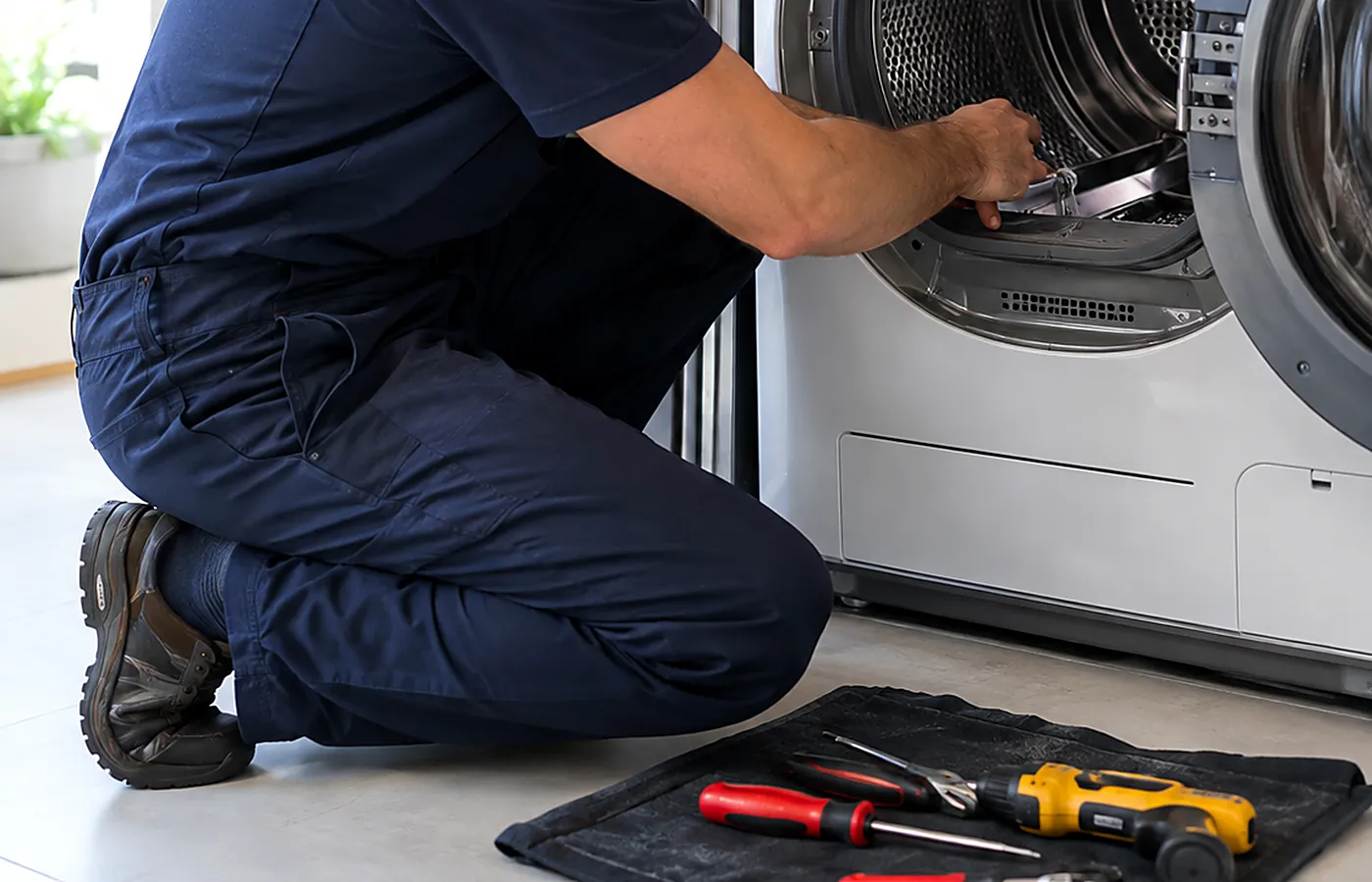
What can you safely check before service?
Keep checks for “Dishwasher Not Cleaning Dishes: Why Wash Performance Drops” external and low risk. Do not defeat door, lid or thermal safety devices, remove energized panels or continue testing the dishwasher when a clear safety warning is present.
- Clean the user-serviceable filter according to the manual.
- Make sure spray arms can rotate without hitting dishes.
- Avoid blocking the detergent dispenser with large cookware.
- Note whether the dishwasher also has drying or heating problems.
- Record whether poor cleaning affects the upper rack, lower rack or both.
How does the symptom pattern change the diagnostic path?
The symptom combinations below organize the diagnostic path for “Dishwasher Not Cleaning Dishes: Why Wash Performance Drops.” They are observation patterns, not instructions to replace a specific part without testing.
| What you notice | Areas usually considered |
|---|---|
| Upper rack poor, lower rack better | Upper spray path or loading |
| Both racks poor | Filter, circulation, fill or heating |
| Food redeposited on dishes | Filter or circulation issue |
| Poor cleaning plus poor drying | Heating or cycle-temperature issue |

When should you stop using the appliance?
Stop using the dishwasher if this problem is accompanied by smoke, sparking, burning odor, repeated breaker trips, severe overheating or uncontrolled water near electrical parts. For gas cooking equipment, a gas odor also requires immediate stop-use action.
If there is no immediate safety concern, avoid cycling the dishwasher repeatedly just to reproduce “Dishwasher Not Cleaning Dishes: Why Wash Performance Drops.” Save any error code and note the cycle stage, sound, temperature or other condition present when the symptom appears.
When is professional dishwasher service the next step?
If the safe checks in “Dishwasher Not Cleaning Dishes: Why Wash Performance Drops” do not resolve the issue, the next step is model-specific diagnosis of the relevant dishwasher system. Bring the brand, full model number, any error code and the symptom timing rather than relying on repeated resets.
- Describe the behavior. Explain what the appliance does and when the problem appears.
- Provide model information. The model identifies the appliance platform, component layout and service documentation.
- Flag safety concerns. Mention leaks, overheating, gas odor, electrical smell or repeated breaker trips before the visit.
- Confirm the failed condition. Testing should support the diagnosis before a repair decision is made.
Learn about Dishwasher Repair in Franklin → Find your appliance model number →
What should Franklin homeowners have ready?
For a Franklin service request about “Dishwasher Not Cleaning Dishes: Why Wash Performance Drops,” include the ZIP code and any gate, building or appliance-access instructions that affect the visit. Keep the technical description centered on the dishwasher symptom and when it occurs.
View the Franklin service area → Prepare for an appliance repair appointment →
Frequently asked questions
Why are dishes dirty even though the dishwasher runs a full cycle?
The machine may fill and drain but have weak circulation, blocked spray arms, low water fill or a heating-related performance issue.
Can loading cause poor cleaning?
Yes. Large items can block spray arms or shield other dishes from water.
Should I use more detergent?
Not automatically. Use the type and amount recommended by the dishwasher and detergent manufacturer. Excess detergent can create other problems.
Why is only the top rack dirty?
A rack-specific spray arm, feed tube, loading obstruction or circulation issue may affect the upper rack more than the lower one.

Harpeth Appliance Works Editorial Team
This guide explains “Dishwasher Not Cleaning Dishes: Why Wash Performance Drops” for Franklin homeowners, with symptom-specific observations, safe external checks and the information that helps prepare a dishwasher service request.
About our editorial approach →