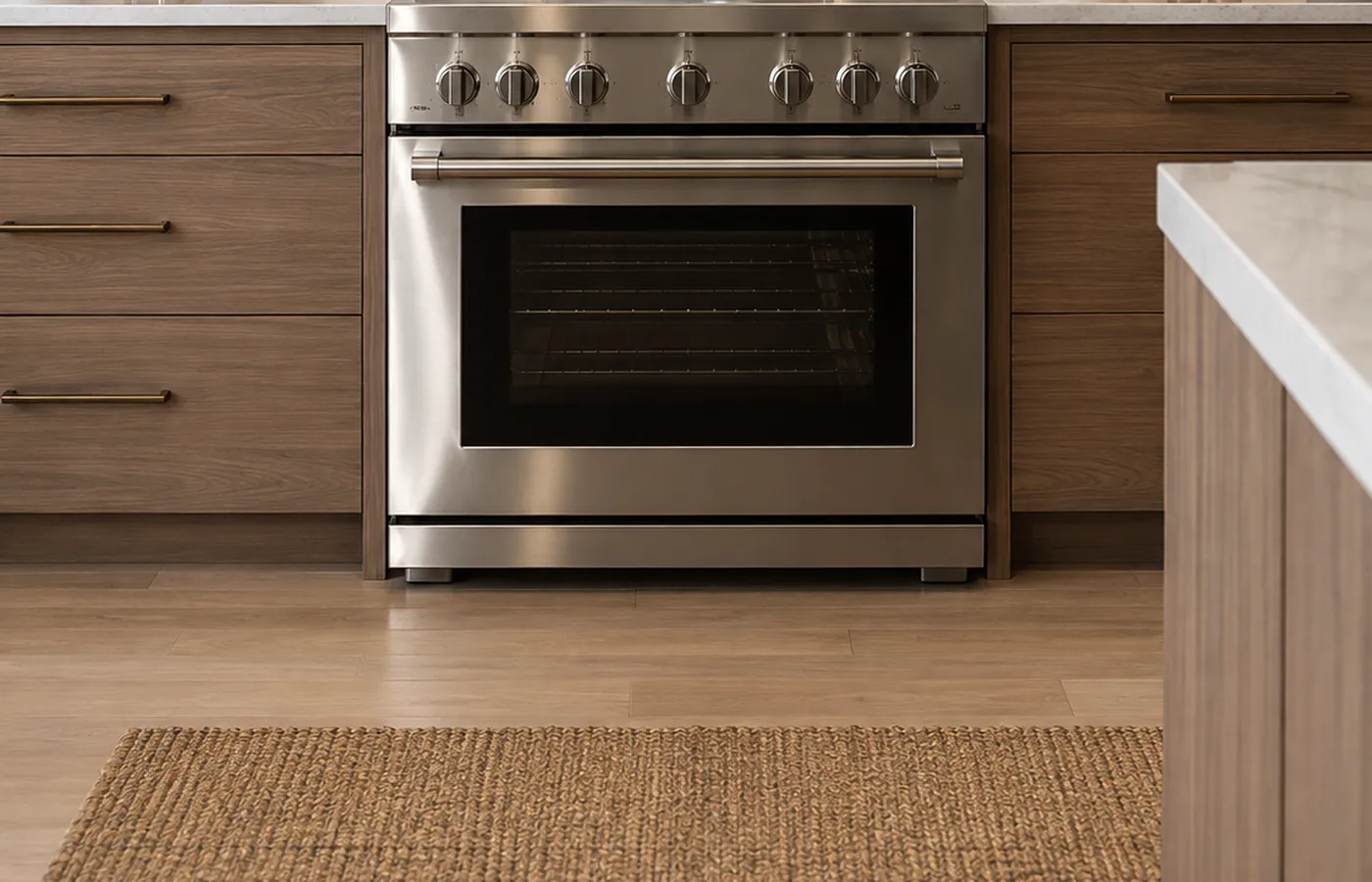
What does this symptom actually tell you?
For “Gas Burner Not Igniting: Clicking Without a Flame,” the useful clues are the timing, the functions that still work and any change that happened just before the symptom. Those observations narrow the oven/stove systems that deserve testing without treating one visible behavior as proof of a failed part.
For “Gas Burner Not Igniting: Clicking Without a Flame,” describe the oven or stove in plain language: what happens, what does not happen, and the cycle stage or condition where the behavior changes. That is more useful than choosing a board, pump, valve or other component before testing.
Wet or dirty burner
Cleaning water, spills or food debris around the burner head can interfere with the spark path. After the surface is cool, removable parts can be cleaned and dried according to the manual.
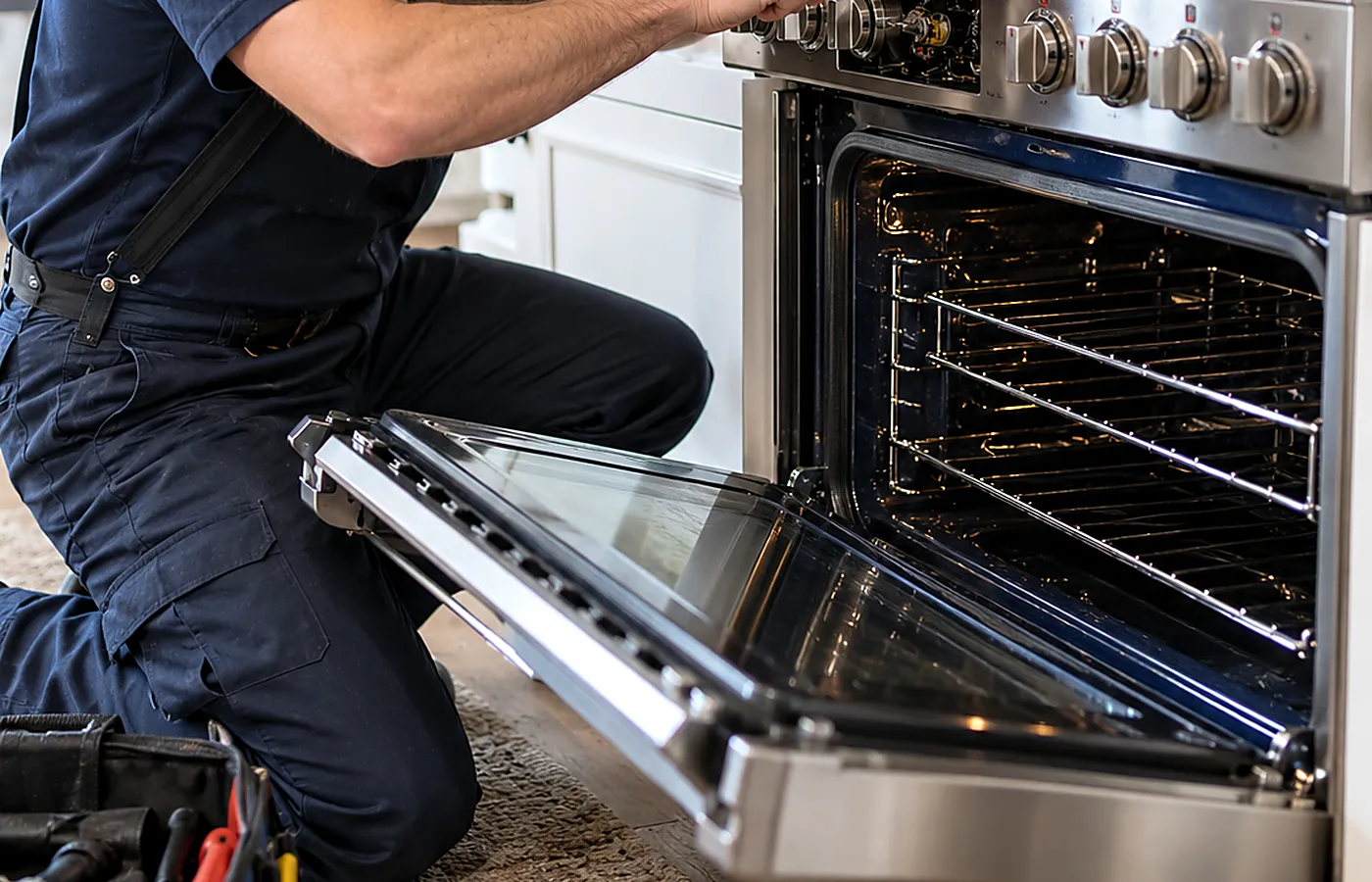
Burner cap misaligned
A cap that is not seated correctly can prevent gas from flowing toward the electrode as designed. This often happens after cleaning.
Ignition electrode
A cracked, dirty or damaged electrode may click but produce a weak or poorly placed spark. The ceramic insulator and tip should not be handled while the system is energized.
Spark module or switch
The burner knob switch and spark module control ignition. If multiple burners stop sparking or all click continuously, the shared ignition system becomes more relevant.
Gas supply
A closed valve or supply problem can prevent flame even when a strong spark is present. If you smell unburned gas, stop trying to ignite the burner and follow gas-safety guidance.
Wiring or control issue
Loose or damaged wiring can interrupt the ignition path. Internal electrical and gas-system testing should be left to qualified service.
What can you safely check before service?
Keep checks for “Gas Burner Not Igniting: Clicking Without a Flame” external and low risk. Do not defeat door, lid or thermal safety devices, remove energized panels or continue testing the oven or stove when a clear safety warning is present.
- If you smell gas, stop immediately and follow appropriate gas-safety procedures.
- Once cool, make sure the removable burner cap is seated as the manufacturer shows.
- Allow recently cleaned burner parts to dry fully before testing.
- Do not use matches or another flame to compensate for a failed electronic ignition system.
- Record whether one burner or all burners are affected.
How does the symptom pattern change the diagnostic path?
The symptom combinations below organize the diagnostic path for “Gas Burner Not Igniting: Clicking Without a Flame.” They are observation patterns, not instructions to replace a specific part without testing.
| What you notice | Areas usually considered |
|---|---|
| One burner clicks but will not light | Cap, debris, electrode or local gas path |
| All burners fail to spark | Power, spark module or shared control |
| Strong spark but no gas | Gas supply or valve path |
| Continuous clicking after cleaning | Moisture, switch or ignition circuit |
When should you stop using the appliance?
Stop using the oven or stove if this problem is accompanied by smoke, sparking, burning odor, repeated breaker trips, severe overheating or uncontrolled water near electrical parts. For gas cooking equipment, a gas odor also requires immediate stop-use action.
If there is no immediate safety concern, avoid cycling the oven or stove repeatedly just to reproduce “Gas Burner Not Igniting: Clicking Without a Flame.” Save any error code and note the cycle stage, sound, temperature or other condition present when the symptom appears.
When is professional oven service the next step?
If the safe checks in “Gas Burner Not Igniting: Clicking Without a Flame” do not resolve the issue, the next step is model-specific diagnosis of the relevant oven/stove system. Bring the brand, full model number, any error code and the symptom timing rather than relying on repeated resets.
- Describe the behavior. Explain what the appliance does and when the problem appears.
- Provide model information. The model identifies the appliance platform, component layout and service documentation.
- Flag safety concerns. Mention leaks, overheating, gas odor, electrical smell or repeated breaker trips before the visit.
- Confirm the failed condition. Testing should support the diagnosis before a repair decision is made.
Learn about Oven & Stove Repair in Franklin → Find your appliance model number →
What should Franklin homeowners have ready?
For a Franklin service request about “Gas Burner Not Igniting: Clicking Without a Flame,” include the ZIP code and any gate, building or appliance-access instructions that affect the visit. Keep the technical description centered on the oven or stove symptom and when it occurs.
View the Franklin service area → Prepare for an appliance repair appointment →
Frequently asked questions
Why does my burner click after I cleaned it?
Moisture around the electrode or switch area can cause continued clicking. Let removable parts dry fully and follow the manual.
Is it safe to light the burner with a match?
Do not improvise around a suspected ignition or gas-supply fault. Follow manufacturer guidance and stop if you smell gas.
Why do all burners click when I turn on one?
Many ranges intentionally spark multiple electrodes during ignition. The problem is when clicking continues after ignition or no burner lights.
Can a burner cap cause ignition problems?
Yes. If it is not seated correctly, gas may not reach the electrode in the intended pattern.

Harpeth Appliance Works Editorial Team
This guide explains “Gas Burner Not Igniting: Clicking Without a Flame” for Franklin homeowners, with symptom-specific observations, safe external checks and the information that helps prepare a oven/stove service request.
About our editorial approach →