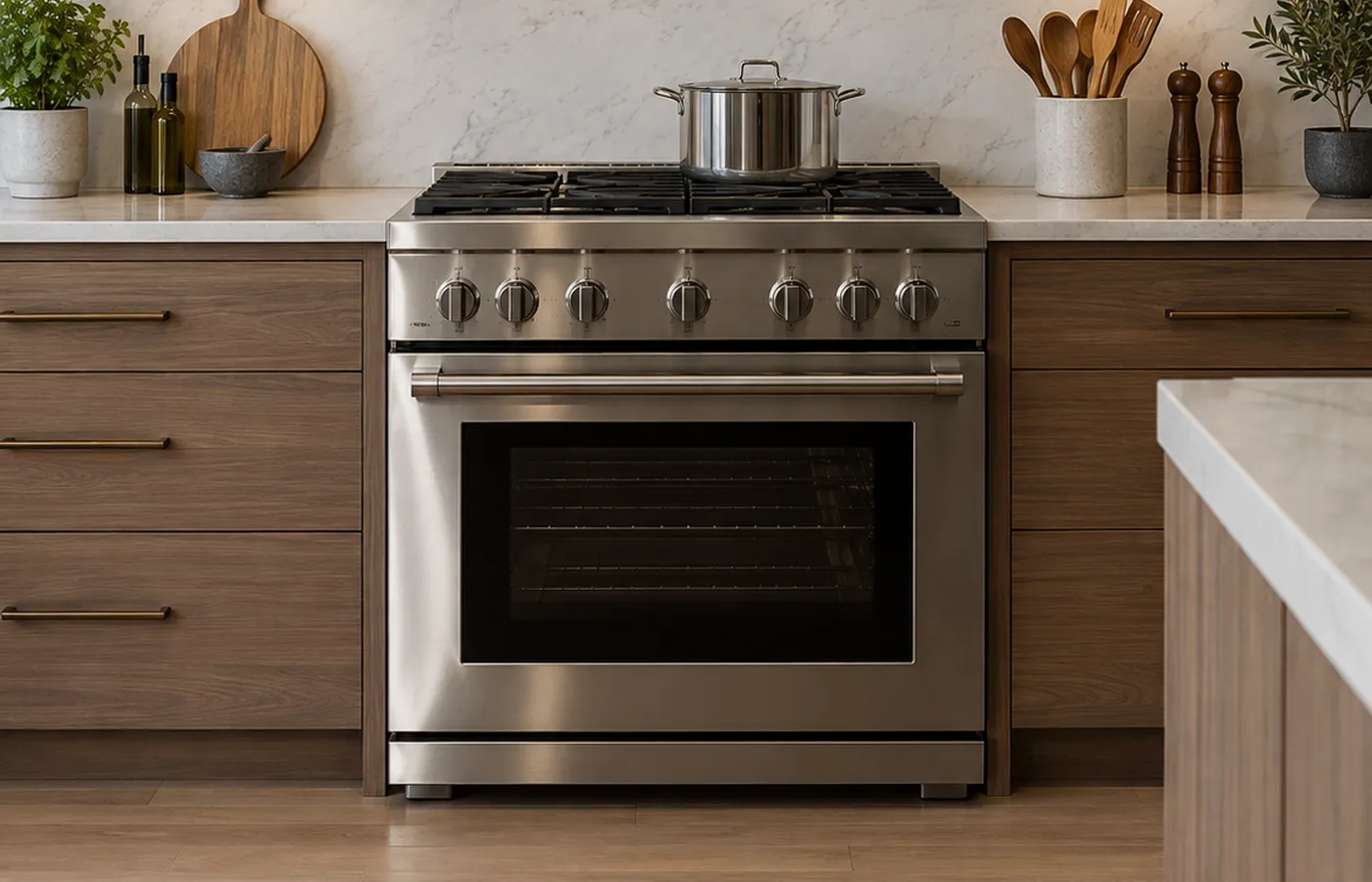
What does this symptom actually tell you?
For “Electric Stove Burner Not Heating: What Can Fail?,” the useful clues are the timing, the functions that still work and any change that happened just before the symptom. Those observations narrow the oven/stove systems that deserve testing without treating one visible behavior as proof of a failed part.
For “Electric Stove Burner Not Heating: What Can Fail?,” describe the oven or stove in plain language: what happens, what does not happen, and the cycle stage or condition where the behavior changes. That is more useful than choosing a board, pump, valve or other component before testing.
Surface element
Coil and radiant elements can open electrically or develop visible damage. On a glass cooktop, the element may be hidden beneath the surface, so electrical testing is needed.
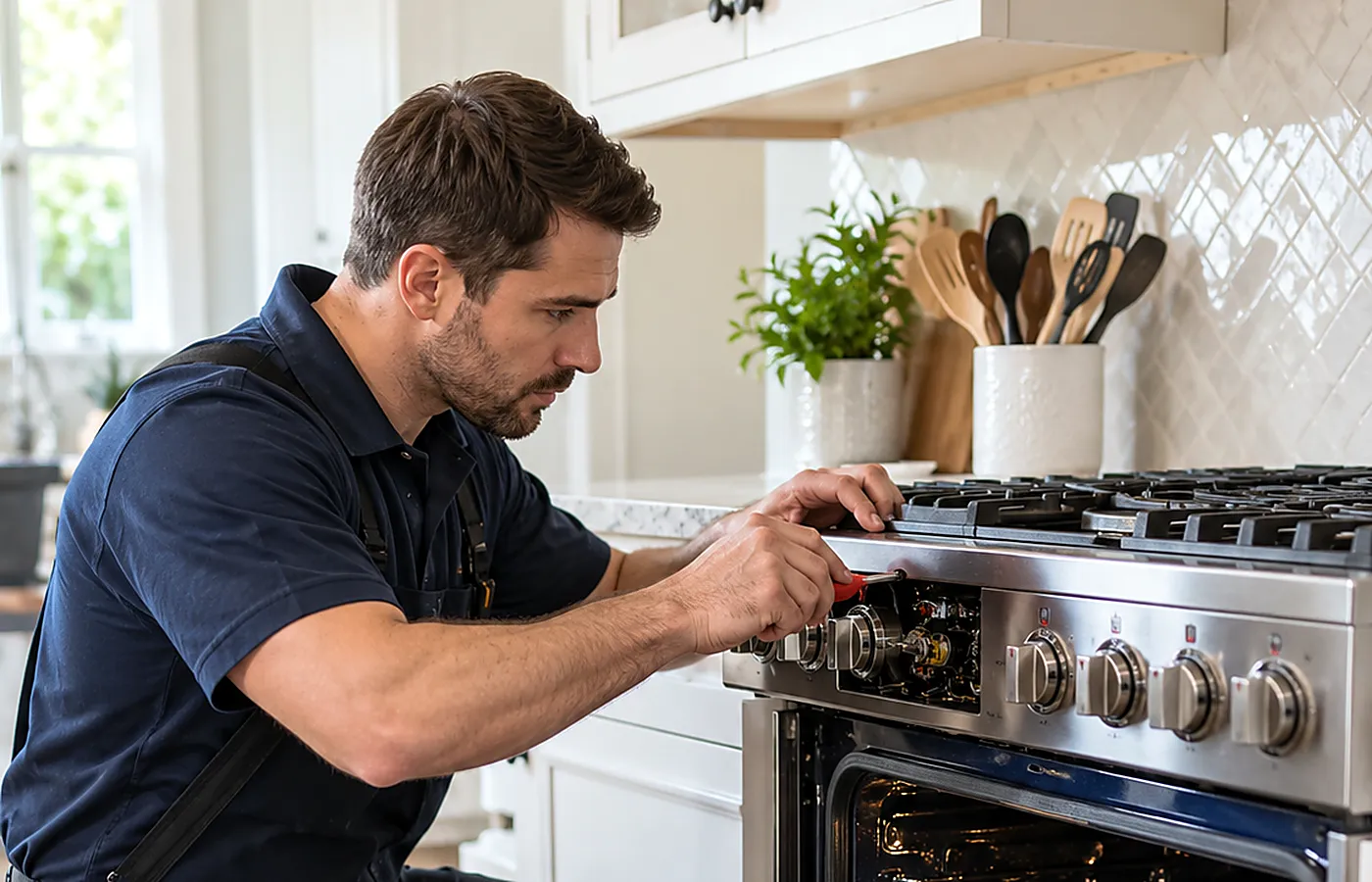
Element receptacle
Plug-in coil elements use a receptacle that can burn, loosen or lose tension. Discoloration or obvious damage means the connection should not be reused until repaired.
Infinite switch
Many electric ranges use an infinite switch behind the knob to regulate burner power. A failed switch can cause no heat, erratic heat or an indicator-light issue.

Electronic relay
Some smooth-top ranges use relays or control boards instead of simple switches. A display can work while one relay fails to send power to a specific element.
Wiring connection
High-current burner circuits can develop loose or burned connections. A hot smell, arcing or damaged terminal changes the situation from performance troubleshooting to electrical safety.
Power supply
If several high-power elements or the oven behave abnormally, the range may have a broader electrical supply problem rather than multiple failed burners.
What can you safely check before service?
Keep checks for “Electric Stove Burner Not Heating: What Can Fail?” external and low risk. Do not defeat door, lid or thermal safety devices, remove energized panels or continue testing the oven or stove when a clear safety warning is present.
- Stop use if you see arcing, melted terminals or damaged glass.
- For removable coil elements, do not handle them until fully cool and power is off.
- Note whether the indicator light changes when the control is turned on.
- Compare whether other burners and the oven heat normally.
- Do not repeatedly cycle a control that smells burned or feels unusually hot.
How does the symptom pattern change the diagnostic path?
The symptom combinations below organize the diagnostic path for “Electric Stove Burner Not Heating: What Can Fail?.” They are observation patterns, not instructions to replace a specific part without testing.
| What you notice | Areas usually considered |
|---|---|
| One coil burner dead | Element, receptacle or switch |
| One radiant zone dead | Element, relay/switch or wiring |
| Burner stays high regardless of setting | Control switch/relay fault |
| Several heating zones weak or dead | Power supply or shared control |

When should you stop using the appliance?
Stop using the oven or stove if this problem is accompanied by smoke, sparking, burning odor, repeated breaker trips, severe overheating or uncontrolled water near electrical parts. For gas cooking equipment, a gas odor also requires immediate stop-use action.
If there is no immediate safety concern, avoid cycling the oven or stove repeatedly just to reproduce “Electric Stove Burner Not Heating: What Can Fail?.” Save any error code and note the cycle stage, sound, temperature or other condition present when the symptom appears.
When is professional oven service the next step?
If the safe checks in “Electric Stove Burner Not Heating: What Can Fail?” do not resolve the issue, the next step is model-specific diagnosis of the relevant oven/stove system. Bring the brand, full model number, any error code and the symptom timing rather than relying on repeated resets.
- Describe the behavior. Explain what the appliance does and when the problem appears.
- Provide model information. The model identifies the appliance platform, component layout and service documentation.
- Flag safety concerns. Mention leaks, overheating, gas odor, electrical smell or repeated breaker trips before the visit.
- Confirm the failed condition. Testing should support the diagnosis before a repair decision is made.
Learn about Oven & Stove Repair in Franklin → Find your appliance model number →
What should Franklin homeowners have ready?
For a Franklin service request about “Electric Stove Burner Not Heating: What Can Fail?,” include the ZIP code and any gate, building or appliance-access instructions that affect the visit. Keep the technical description centered on the oven or stove symptom and when it occurs.
View the Franklin service area → Prepare for an appliance repair appointment →
Frequently asked questions
Can I swap coil elements to test a burner?
Some owner manuals permit limited element interchange on matching plug-in coils, but only when power is off and parts are fully cool. Follow the model instructions.
Why is the burner indicator light still on?
A failed surface switch or sensing circuit can keep an indicator illuminated even when the element is not heating.
Is a cracked glass cooktop safe to use?
Stop use and follow manufacturer guidance. Cracks can expose electrical components to spills and create a safety hazard.
Why does one burner stay on high?
A failed infinite switch or electronic control can stop normal cycling. Turn the burner off and arrange diagnosis.

Harpeth Appliance Works Editorial Team
This guide explains “Electric Stove Burner Not Heating: What Can Fail?” for Franklin homeowners, with symptom-specific observations, safe external checks and the information that helps prepare a oven/stove service request.
About our editorial approach →