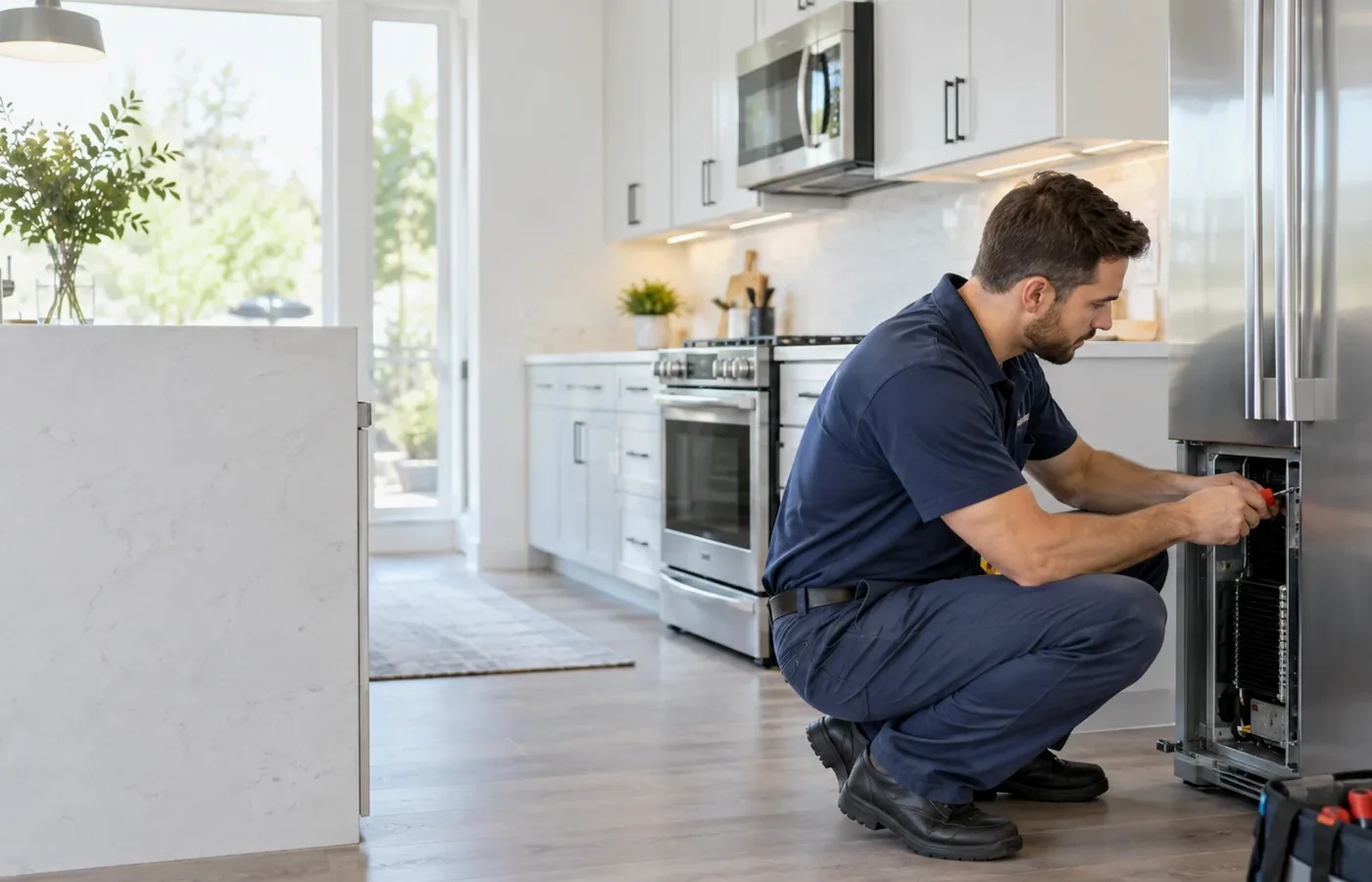
1. Identify the appliance and full model number.
The model number identifies the product platform, component layout and service information. Include every letter, number and suffix shown on the model/serial label.
If the label is difficult to photograph, type the model carefully and attach the clearest image you can take safely.
2. Describe the symptom in plain language.
Say what happens and what does not happen. “Washer fills and drains but the basket never spins” is more useful than “washer broken.”
For temperature problems, say which compartment is warm. For leaks, say when and where water appears.
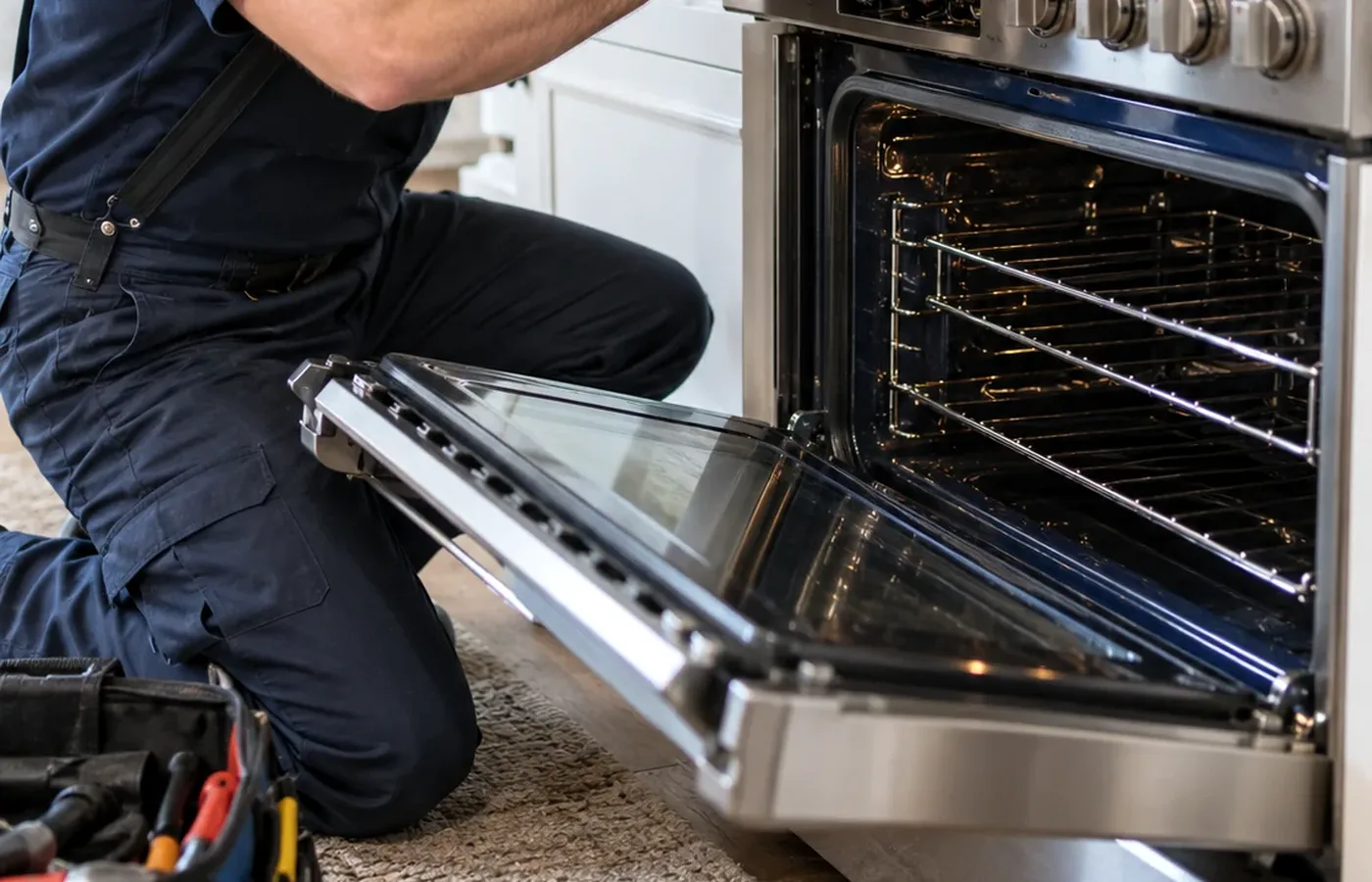
3. Explain when the problem occurs.
Mention the cycle stage, elapsed time or condition that triggers the symptom. Intermittent problems are easier to understand when the pattern is recorded.
Also mention whether the issue followed a power interruption, installation, plumbing change or filter replacement.
4. Include codes, sounds and odors exactly.
Photograph error codes before clearing them. Describe sounds as clicking, humming, grinding, scraping or another plain-language observation.
If there is smoke, burning odor, gas odor or sparking, stop use and identify that as a safety concern in the first line of the request.
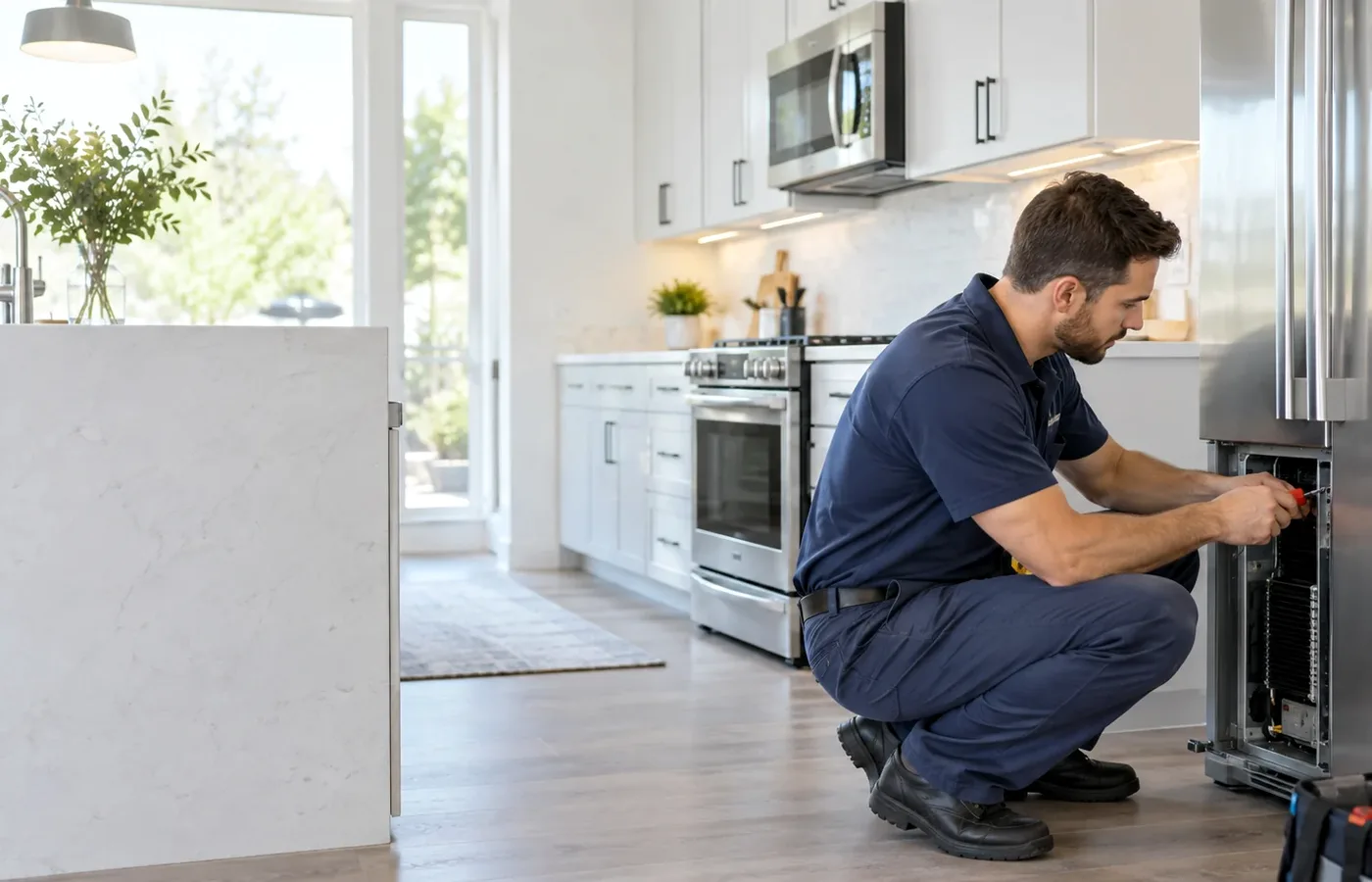
5. Use photos to show installation and access.
Photos are useful for built-in appliances, stacked laundry, tight closets, damaged door seals, frost patterns and visible leak areas after the appliance is safely off.
Do not remove energized panels to take internal photos.
6. Provide the Franklin service location and access notes.
Include the address, neighborhood or ZIP along with gate, parking, elevator, stair or unit-number details that affect residential access.
The location page can explain neighborhood context, while the service page explains the appliance itself.
What does a strong symptom description look like?
Useful examples are specific and sequential: “the dishwasher drains first, then hums and never fills,” “the dryer runs for ten minutes and stops while the display stays on,” or “the freezer is cold but the refrigerator section is warm.” Each statement identifies what works, what fails and when the change occurs.
Avoid component guesses such as “the board is bad” unless a qualified diagnosis already established that. Observed behavior gives the service request a cleaner starting point.
How does this fit a Franklin appliance service request?
For service in Franklin, include the appliance brand, complete model number, exact symptom and the address or ZIP code. If the appliance is built in, stacked, behind a gate or inside a multi-unit building, include access details so the request starts with the right context.
Frequently asked questions
Do I need the serial number too?
The full model number is the first priority, but the serial number can also be useful for production information and should be included when available.
Should I guess which part is bad?
No. Describe the observed behavior and let testing determine the failed component.
What photos are most useful?
The model/serial label, full appliance installation and any visible symptom such as frost, water location or damaged external part are usually more useful than random close-ups.
What should I say about an intermittent problem?
Describe how often it happens, what cycle or condition triggers it and what the appliance does immediately before and after the symptom.
How do I request service with Harpeth Appliance Works?
Use the contact page or call +1 (615) 729-6435 with the appliance, model, symptom and Franklin service location ready.

Harpeth Appliance Works Editorial Team
This page uses symptom-first, safety-first appliance guidance for Franklin homeowners and separates observable behavior from component diagnosis.
About our editorial approach →