
What photos are useful before a built-in appliance visit?
Take one full view of the appliance in the room and closer photos of the edges where it meets cabinetry or trim. For stacked laundry, include the full closet or alcove.
Photos should document access, not require you to remove panels or trim.
Why is the complete model number especially important?
Built-in product families can look nearly identical from the front while using different mounting, trim and service procedures. The full model number identifies the correct platform.
Photograph the model/serial label clearly enough to read every character.
How much space should you clear?
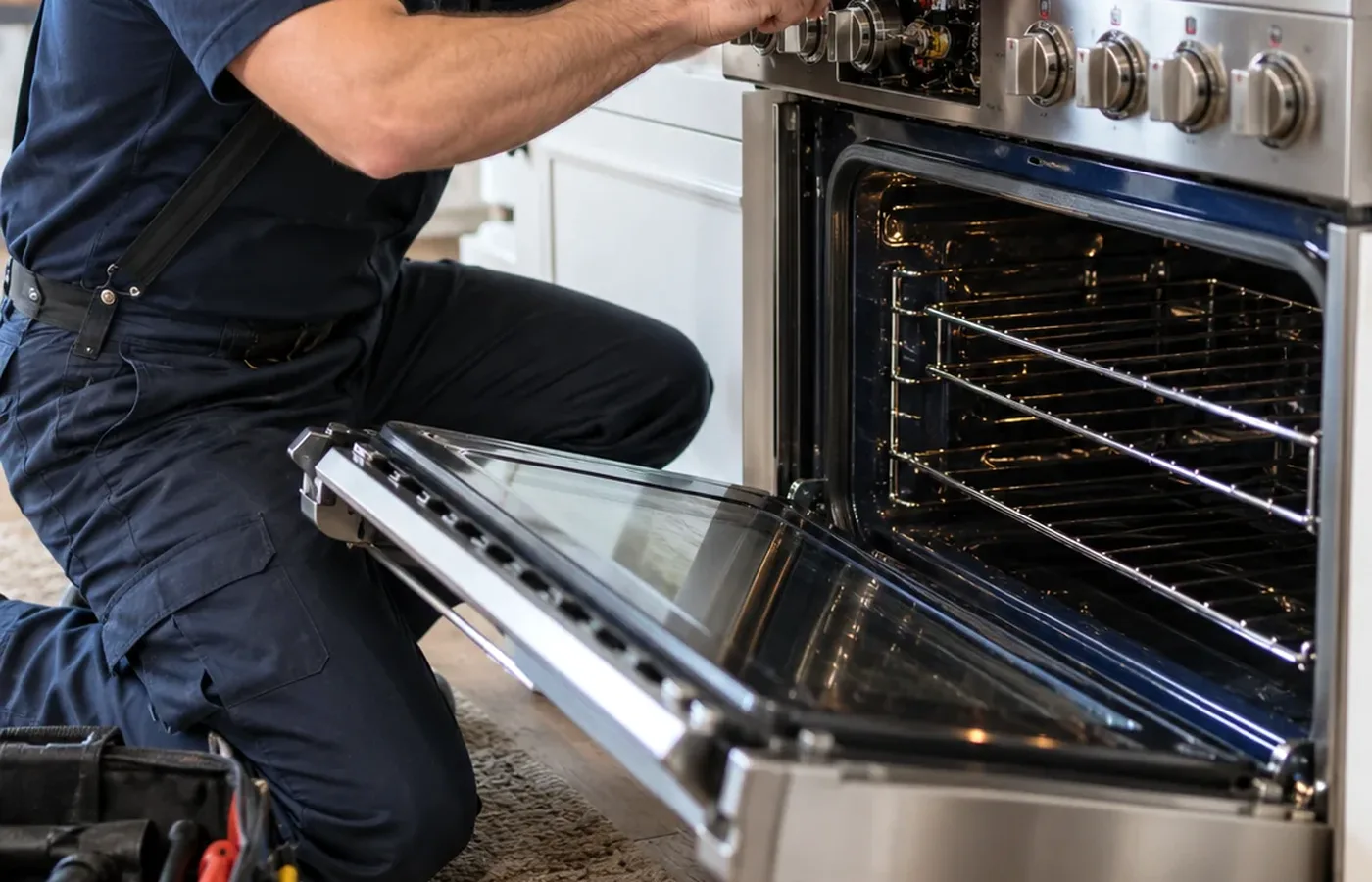
Clear ordinary household items from the immediate work area and provide a safe path to the appliance. Do not remove permanent cabinetry or force the unit out.
For laundry closets, remove loose items from shelves if they could fall into the work area.
What utility information helps?
Mention whether the appliance is gas or electric and where an accessible water shutoff is located if the appliance uses water. You do not need to disconnect utilities before the visit unless specifically instructed.
If a breaker or shutoff is difficult to identify, say so rather than experimenting.
Why should flooring and trim be documented?
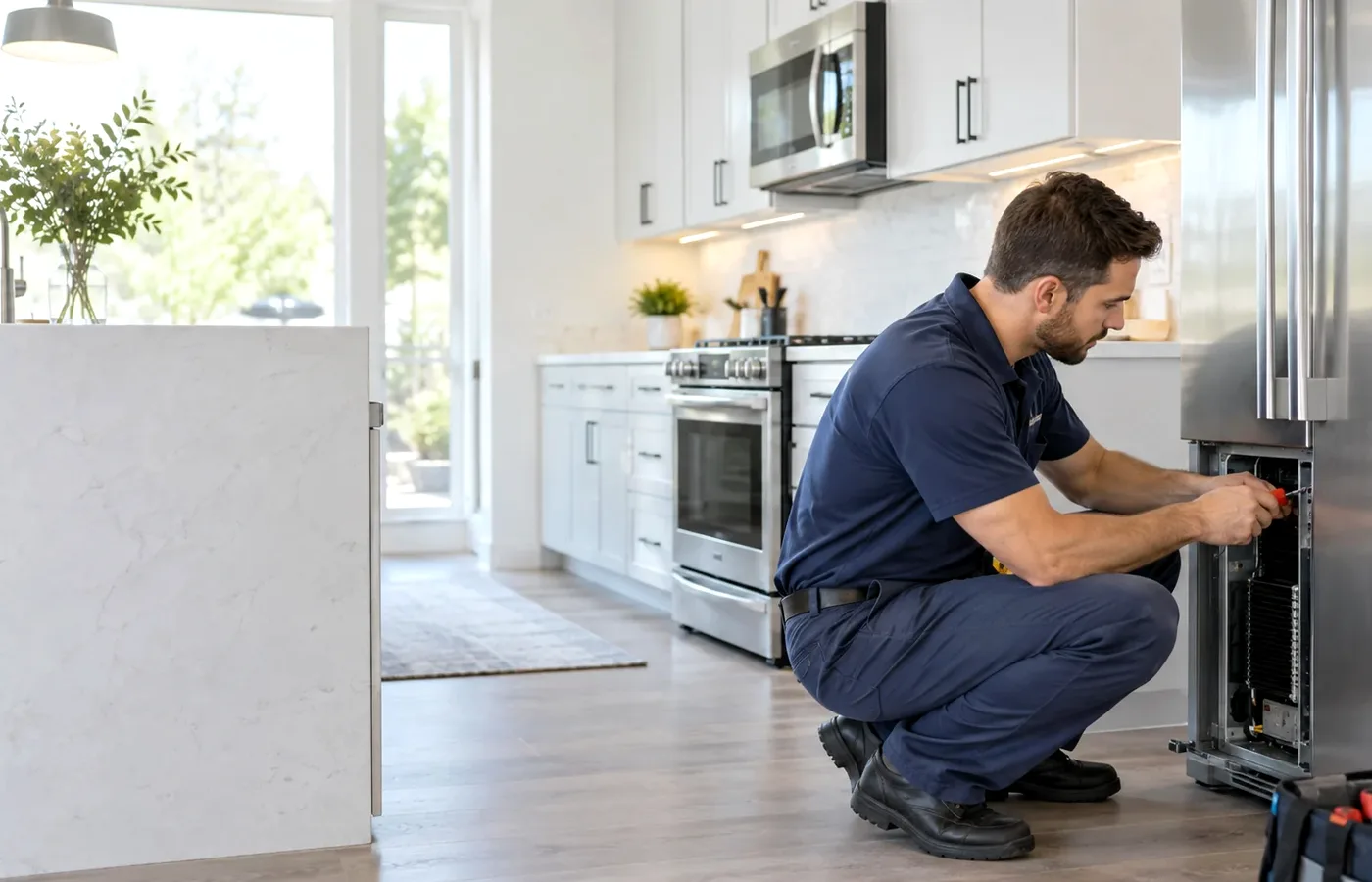
Tight clearances, raised flooring, toe-kicks and trim can affect how an appliance moves. A photo can reveal whether protection or additional access planning may be needed.
Do not pry against finished cabinetry or flooring to create space.
What should Franklin homeowners include with the request?
Provide the address or neighborhood, appliance type, brand, model number, symptom and any gate, stair, elevator, parking or building-access notes.
That information is especially useful in condos, townhomes and homes with integrated kitchens.
Which built-in appliances usually need the most access planning?
Integrated refrigerators, wall ovens, over-the-range microwaves, panel-ready dishwashers and stacked laundry can all have mounting or clearance details that are not obvious from the front. Even a standard dishwasher may be tightly captured by flooring or cabinetry.
That does not mean the homeowner should remove anything. A wide photo of the installation plus the model number allows the access question to be considered before tools or movement are planned.
How does this fit a Franklin appliance service request?
For service in Franklin, include the appliance brand, complete model number, exact symptom and the address or ZIP code. If the appliance is built in, stacked, behind a gate or inside a multi-unit building, include access details so the request starts with the right context.
Frequently asked questions
Should I pull out my built-in refrigerator before service?
No. Leave it in place unless you have been specifically instructed and can move it safely. Send photos of the installation instead.
Should I remove a wall oven from the cabinet?
No. Wall ovens are heavy, wired or plugged into dedicated supplies and installed with model-specific fasteners. Access should be planned first.
What if the model label is hidden?
Check the normal door, frame or drawer areas described in the owner documentation. Do not remove the appliance just to find the label.
Can stacked laundry be serviced in place?
It depends on the model and installation. Photos, both model numbers and the closet dimensions help determine the access plan.
Why do you need building-access details?
Parking, gates, stairs, elevators and unit access can affect how a residential visit is coordinated, especially for large or built-in appliances.

Harpeth Appliance Works Editorial Team
This page uses symptom-first, safety-first appliance guidance for Franklin homeowners and separates observable behavior from component diagnosis.
About our editorial approach →