
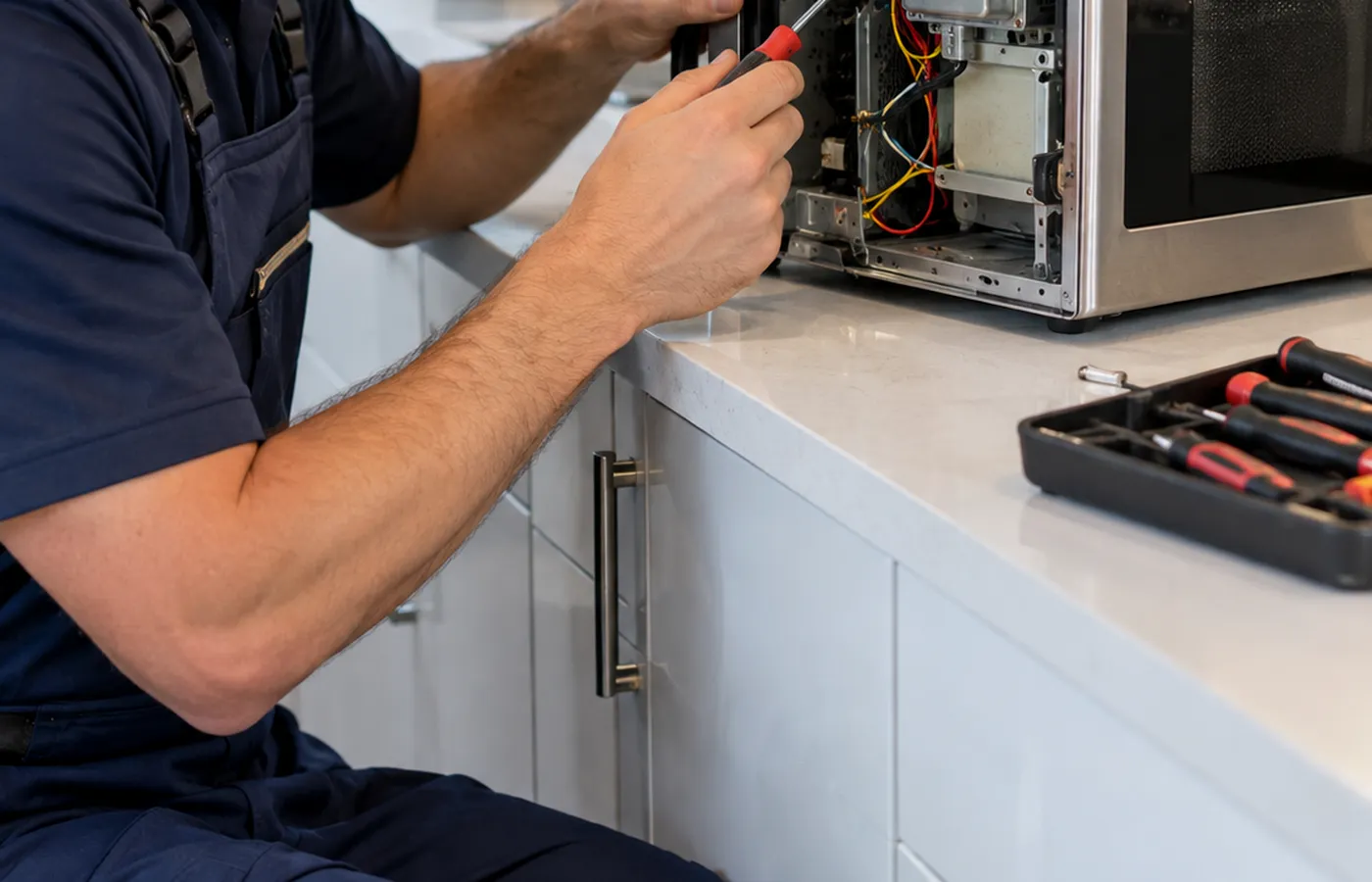
What should you do when a microwave sparks?
Stop the cycle. Do not continue repeated test runs to see whether the sparking returns. After the appliance is off, inspect only the accessible cooking cavity for obvious metal objects, damaged cookware or heavy burned food residue.
Can the cooking cavity cause arcing?
Metal trim on dishes, foil, twist ties, carbonized food residue or damage around a waveguide cover can create arcing. Follow the manufacturer instructions for cleaning and acceptable cookware.
When does sparking require professional diagnosis?
If the cavity is clean and appropriate cookware was used, or if there is visible damage, burning odor or recurring arcing, further testing may involve internal high-voltage components that are not safe for homeowner access.
What information should you provide for microwave service?
Share the model number, where the sparking appeared, what was inside the microwave, whether there is visible cavity damage and whether the event included smoke, odor or a breaker trip.
Useful next steps
For appliance-specific service information, see Microwave Repair in Franklin, TN. Have the brand, full model number and symptom timing ready before requesting service.
You can also use the service preparation guide to collect model, error-code and access details.
What should you do when a microwave is sparking?
Sparking or arcing deserves more caution than a normal heating complaint. Stop the cycle and inspect only the accessible cooking cavity after the appliance is no longer operating. Look for obvious metal objects, foil, metallic trim on dishes, burned food residue or a visibly damaged interior surface. Do not continue running the microwave repeatedly to see whether the sparking stops.
If sparking occurred with an unsuitable container, remove that item and check the cavity for damage before further use. If arcing occurs with ordinary microwave-safe items, or if there is a burning smell, smoke or a damaged waveguide cover, leave the unit off and arrange service. Do not remove the outer cabinet because high-voltage components can present a serious hazard even when the appliance is unplugged.
For service preparation, note exactly where the sparks appeared, what was inside the microwave and whether there are burn marks. Provide the model number and whether the unit is countertop, built in or over-the-range. These details help separate a cavity or usage issue from a component-related problem without encouraging unsafe internal troubleshooting.
If the cavity shows a burned spot or damaged coating, take a clear photo for the service request and leave the microwave off until the condition is inspected. Continued arcing can worsen localized damage. For over-the-range or built-in models, also mention whether the sparking occurs only during heating or whether any unusual sound appears as soon as the cycle begins. That timing can help the technician understand the sequence of events without requiring unsafe internal access.
Frequently asked questions
Can food residue make a microwave spark?
Burned or carbonized residue can contribute to arcing, but recurring sparks after cleaning need further evaluation.
Can I keep using a microwave after one spark?
Do not continue use until the obvious cause is identified. If there was no clear cookware or food-related cause, or if damage is visible, arrange diagnosis.