
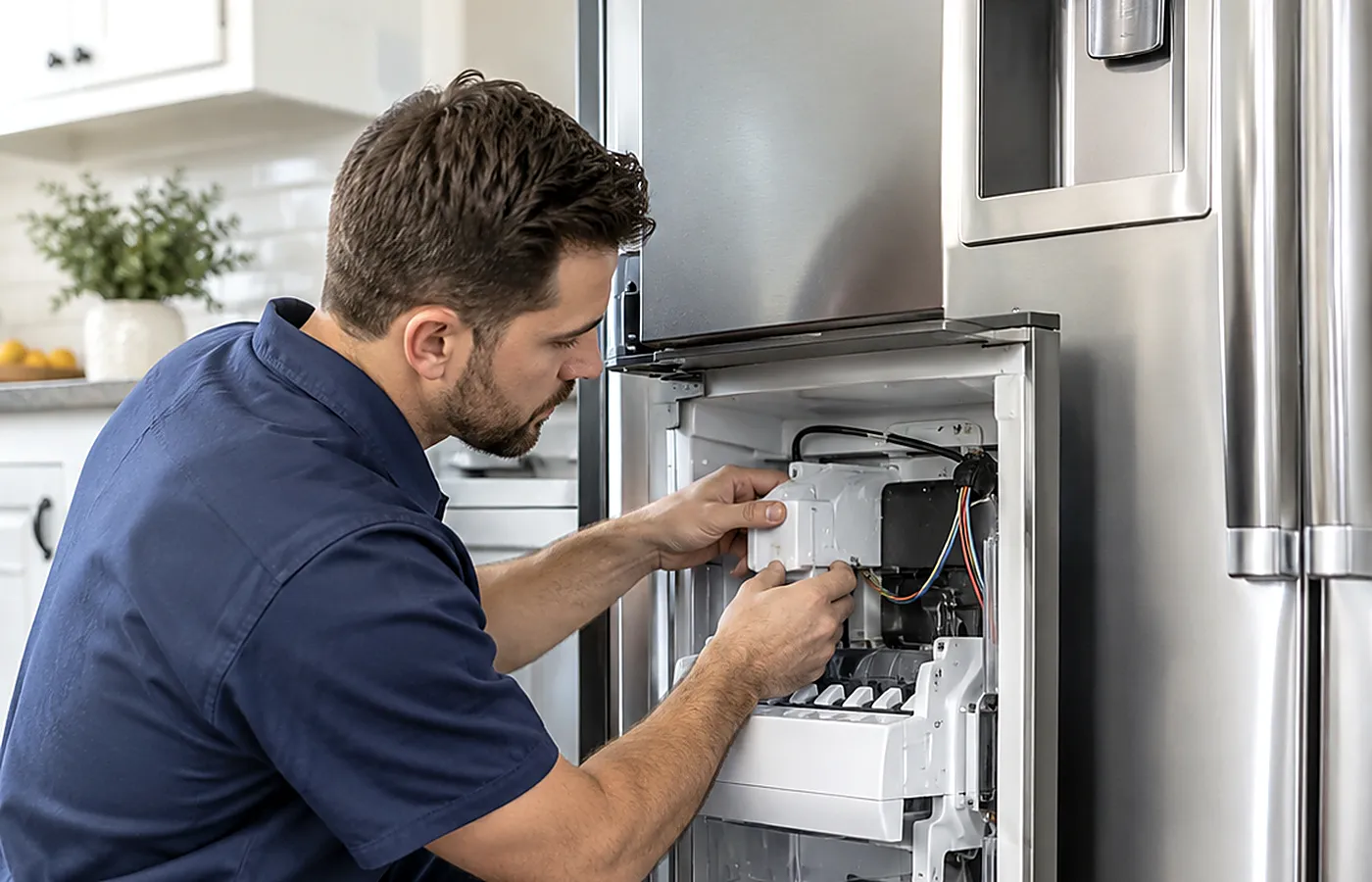
How can water flow change cube size?
A restricted filter, partially closed supply valve, kinked line or inlet-valve problem can reduce fill volume. If other refrigerator water functions are also slow, that shared symptom is useful context.
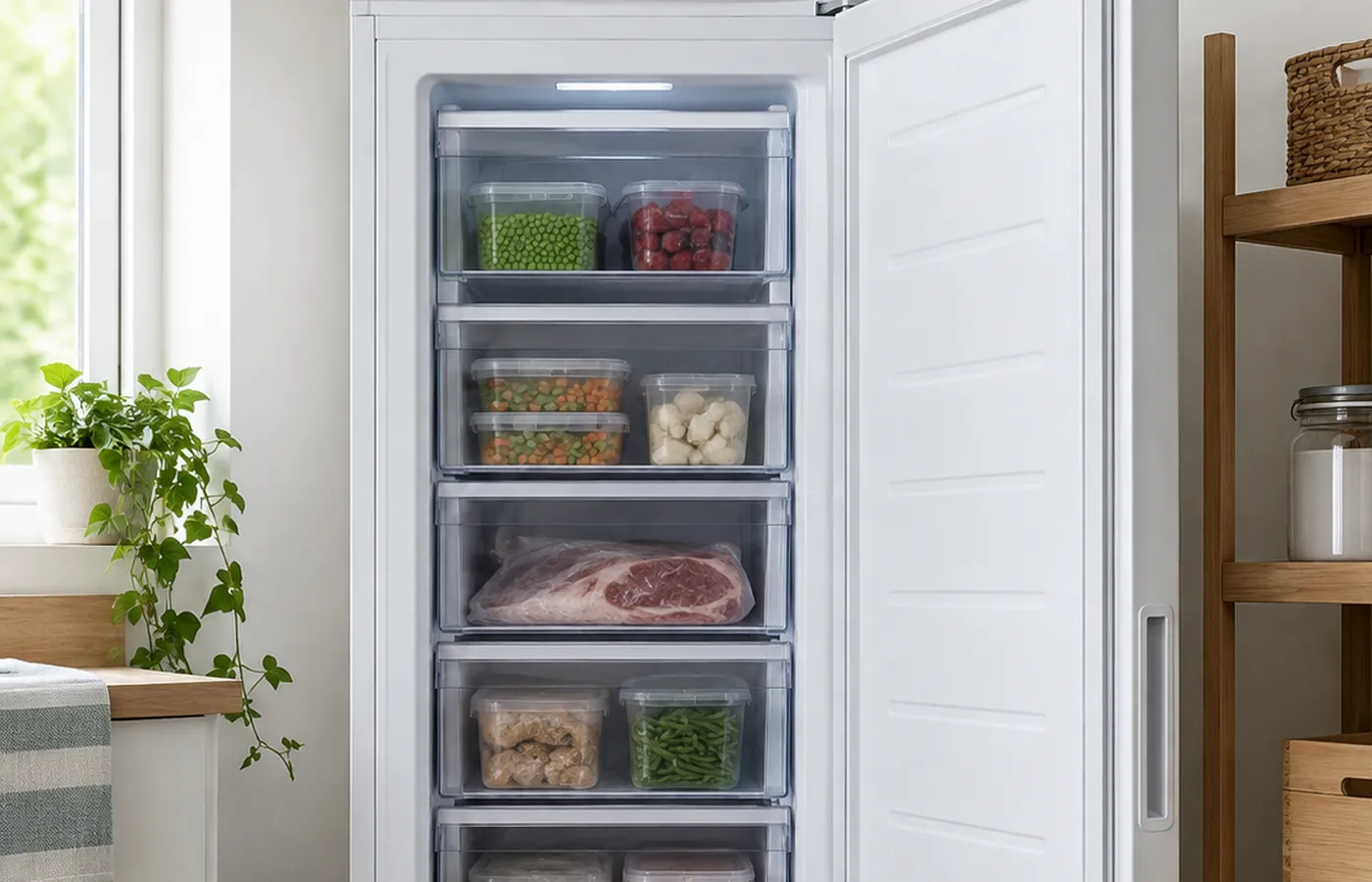
Why does freezer temperature matter?
The ice maker depends on a sufficiently cold freezer to complete the freeze-and-harvest cycle. A freezer that is warmer than normal can produce irregular cubes or slow production even when water supply is adequate.
Can the ice maker itself control too little water?
Depending on the model, fill timing, sensors or the ice-maker module can affect how much water enters the mold. Model-specific testing is needed before an internal control is blamed.
What should you report when requesting ice-maker service?
Share whether cubes are small, hollow or misshapen, whether refrigerator water flow is normal, whether the freezer is holding temperature and whether the filter or water connection was recently changed.
Useful next steps
For appliance-specific service information, see Ice Maker Repair in Franklin, TN. Have the brand, full model number and symptom timing ready before requesting service.
You can also use the service preparation guide to collect model, error-code and access details.
What can small ice cubes tell you about an ice-maker problem?
Small, hollow or irregular cubes often mean the ice maker is not receiving or retaining the normal amount of water for each cycle, although the exact cause cannot be confirmed from cube size alone. Note whether every batch is small or whether the problem is intermittent. Also check whether the household water dispenser, if present, has changed in flow at the same time.
External checks can include confirming that the refrigerator water supply is fully open and that the visible supply line is not sharply kinked. If the refrigerator uses a replaceable water filter, note when it was last changed and whether the small-cube symptom began after a filter change. Do not bypass safety devices or dismantle the ice maker to increase water flow.
When requesting service, include the model number, cube shape, production rate and any related leaking or dispenser symptoms. Those details help determine whether diagnosis should focus on water supply, the fill path, temperature conditions, sensors, controls or the ice-maker assembly itself. If the freezer is also too warm, the temperature problem may be relevant because ice production depends on sufficiently cold conditions.
If cube size changes from one batch to the next, note whether the variation happens after heavy water use elsewhere in the home or after the refrigerator door has been opened frequently. Those details do not prove a cause, but they can help describe whether the symptom is constant or dependent on operating conditions. Consistent notes about cube size, production speed and dispenser flow are more useful than adjusting internal settings without confirming the manufacturer guidance for the specific model.
Frequently asked questions
Can a clogged refrigerator filter make ice cubes small?
Yes, on systems where the filter restricts flow to the ice maker. A filter issue is more likely when dispenser flow is also reduced.
Why are my cubes hollow?
Hollow cubes can occur when the mold receives too little water or freezing conditions are not normal. Water supply and freezer temperature are both relevant.