
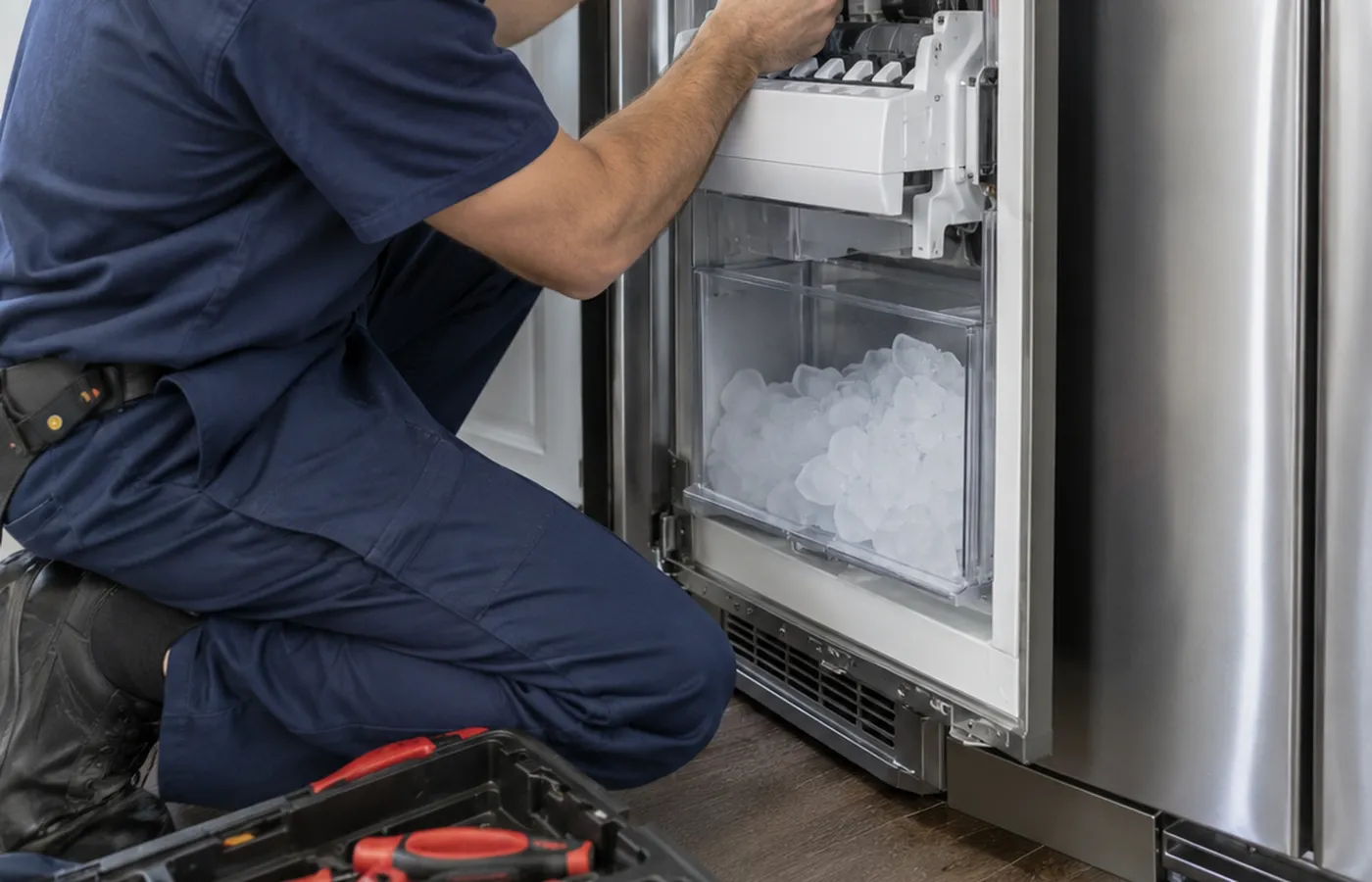
Why does the leak location matter?
Water near the rear supply connection suggests a different path than water entering the freezer from the fill tube or overflowing near the ice mold. Note the first place moisture appears before wiping it away.
Can the fill system cause repeated leaking?
A misdirected or frozen fill tube, inlet-valve problem or abnormal fill timing can send water outside the intended mold. Do not disassemble energized refrigerator components to trace an active leak.
What should you do if water reaches electrical areas?
Stop using the affected function and avoid contact with wet electrical components. If water is actively escaping, shut off the appliance water supply when it can be done safely and arrange diagnosis.
What details help with ice-maker leak diagnosis?
Provide the refrigerator model number, whether the leak happens during a fill cycle, whether dispenser water also behaves abnormally and whether the filter, water line or refrigerator was recently moved or serviced.
Useful next steps
For appliance-specific service information, see Ice Maker Repair in Franklin, TN. Have the brand, full model number and symptom timing ready before requesting service.
You can also use the service preparation guide to collect model, error-code and access details.
How should you document an ice-maker leak before service?
First identify where the water appears. A drip from the dispenser area, water beneath the refrigerator, overflow inside the ice bin and a wet fill-tube area are different symptom patterns. Dry the visible water when safe to do so, then watch where fresh moisture returns. That observation is more useful than guessing which valve or line has failed.
Check for simple external causes such as an ice bin that is not seated correctly, cubes jammed around the dispenser chute or a visible supply-line kink behind the refrigerator. Do not pull the refrigerator aggressively if the floor is wet or if the water line is under tension. If water is actively reaching electrical components or spreading across the floor, stop the water source when it can be done safely and arrange service promptly.
For the service request, provide the refrigerator model number, whether the leak happens only during ice production or dispensing, and whether the cubes are normal size. Small or hollow cubes together with leaking can add useful context about water flow. Photos of the leak location can also help describe the issue, but they should not replace shutting down an active water leak when there is a risk of property damage.
Frequently asked questions
Can an ice maker leak only when it fills?
Yes. A leak that appears only during fill can point toward the supply, inlet valve, fill tube or mold area rather than a general refrigerator drain issue.
Should I keep the ice maker turned on if it is leaking?
No if it is actively leaking. Disable the ice-making function and control the water source when safe until the cause is identified.