
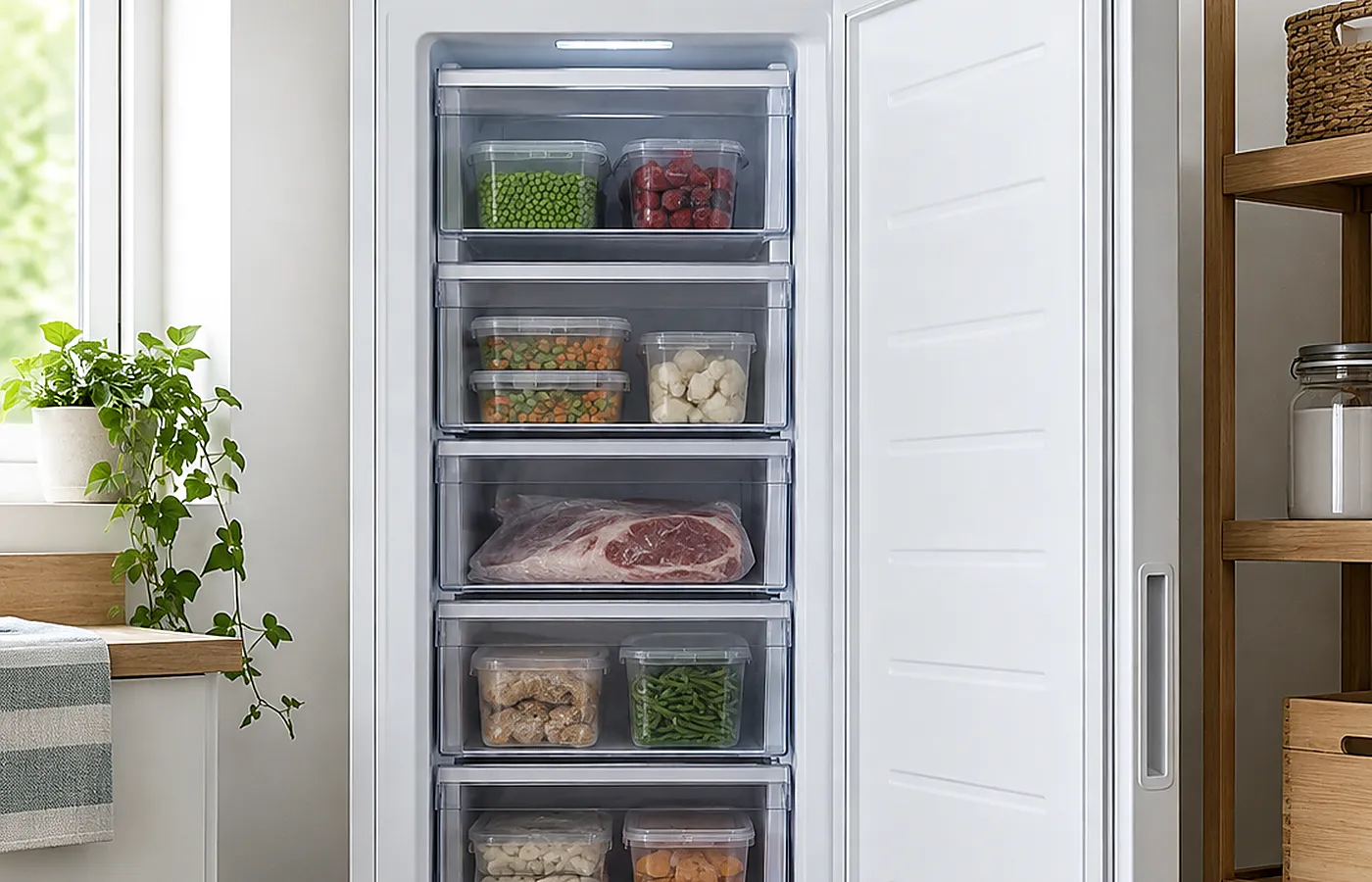
What does the temperature pattern tell you?
Check whether the freezer is slightly warm or has lost freezing completely, and whether a connected refrigerator section is also affected. A whole-appliance temperature rise points to a different diagnostic path than one compartment with poor airflow.
How can airflow or frost stop normal freezing?
Cold air has to move across the evaporator and through the storage area. A blocked vent, failed fan or heavy frost around the evaporator can reduce that movement even when the appliance still sounds like it is running.
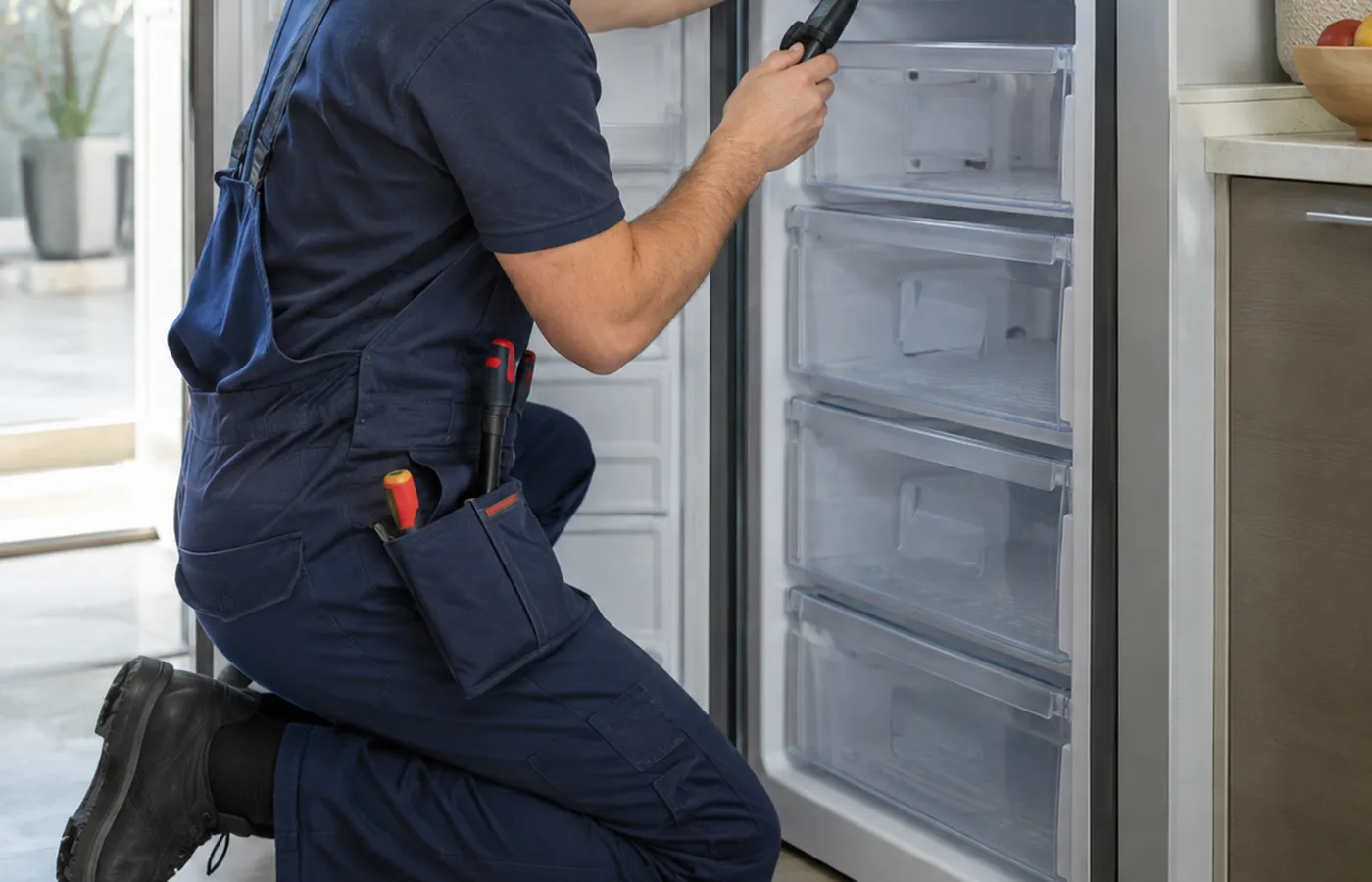
Can a door-seal problem make a freezer too warm?
A door that does not close fully allows warm, humid air to enter. That can lengthen run time, create frost and make temperature recovery harder. Check for packages, baskets or damaged gasket areas preventing a complete seal.
When is freezer service the next step?
If the freezer remains above normal freezing temperature after safe external checks, diagnosis may need to cover fans, defrost operation, sensors, controls and refrigeration performance. Keep the model number and temperature pattern ready for the service request.
Useful next steps
For appliance-specific service information, see Freezer Repair in Franklin, TN. Have the brand, full model number and symptom timing ready before requesting service.
You can also use the service preparation guide to collect model, error-code and access details.
What details help narrow down a freezer that is not freezing?
A useful service request separates a freezer that is slightly warm from one that is completely unable to freeze. Note whether food is still partly frozen, whether ice cream is soft, whether the cabinet feels warm near the compressor area and whether the appliance is running continuously or cycling normally. These observations help distinguish a broad temperature-control problem from a sudden loss of cooling.
From the outside, verify that the control has not been changed accidentally and that air vents are not tightly packed with food. Make sure the door closes fully and that the gasket is not visibly folded or blocked. If the freezer shares refrigeration components with a refrigerator, note whether the refrigerator compartment is also warming. Avoid removing internal panels or touching electrical components simply to investigate the symptom.
If the problem followed a power outage, breaker trip or recent relocation, include that timing when requesting service. A technician may need to evaluate airflow, fans, sensors, defrost operation, controls or the sealed refrigeration system depending on the symptom pattern. If food temperatures are no longer safe, treat food safety as the priority rather than waiting for the appliance to recover on its own.
Also note whether the freezer recently received a large load of unfrozen food or was left open for an extended period, because temporary warm conditions can affect recovery time. If the temperature fails to improve after normal conditions return, include that timeline with the service request. A clear timeline helps separate a short recovery period from a persistent cooling fault and gives the technician better context before inspecting the appliance.
Frequently asked questions
Why is my freezer cold but not freezing hard?
Restricted airflow, frost, door leakage, sensing problems or reduced refrigeration performance can leave the compartment cold without reaching a proper freezing temperature.
Should I keep food in a warming freezer?
Food safety depends on actual temperature and time. Keep the door closed as much as practical and follow authoritative food-safety guidance when frozen food begins thawing.