
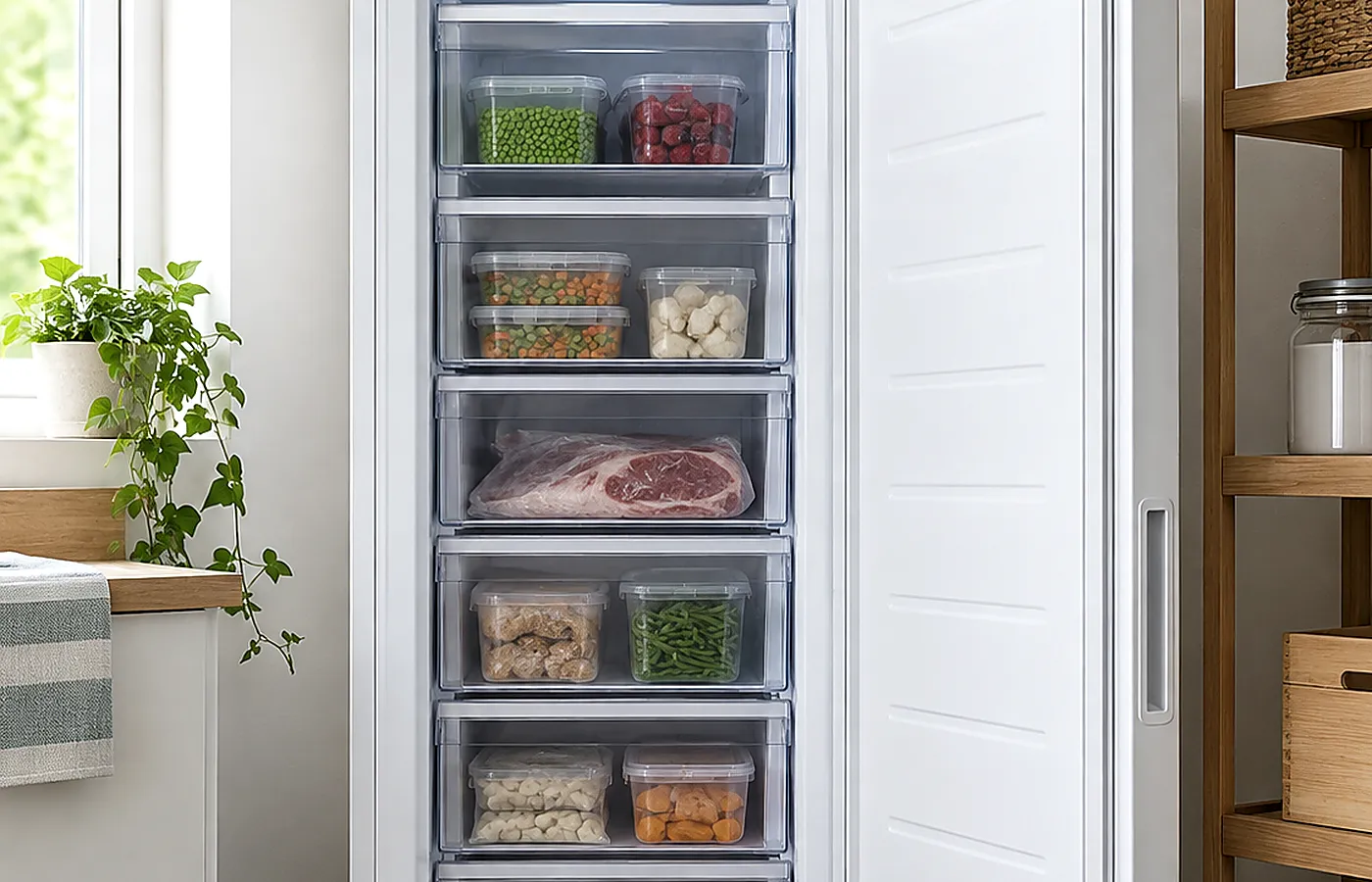
Why does the frost location matter?
Frost concentrated near the door can suggest warm, humid air entering through an incomplete seal. Heavy frost behind an interior evaporator cover can point toward a defrost or airflow problem that requires model-specific diagnosis.
What can you safely inspect around the door?
Make sure packages and baskets are not holding the door open. Look for obvious gasket gaps, debris or damaged areas. Avoid using sharp tools to chip ice because hidden tubing or liners can be damaged.
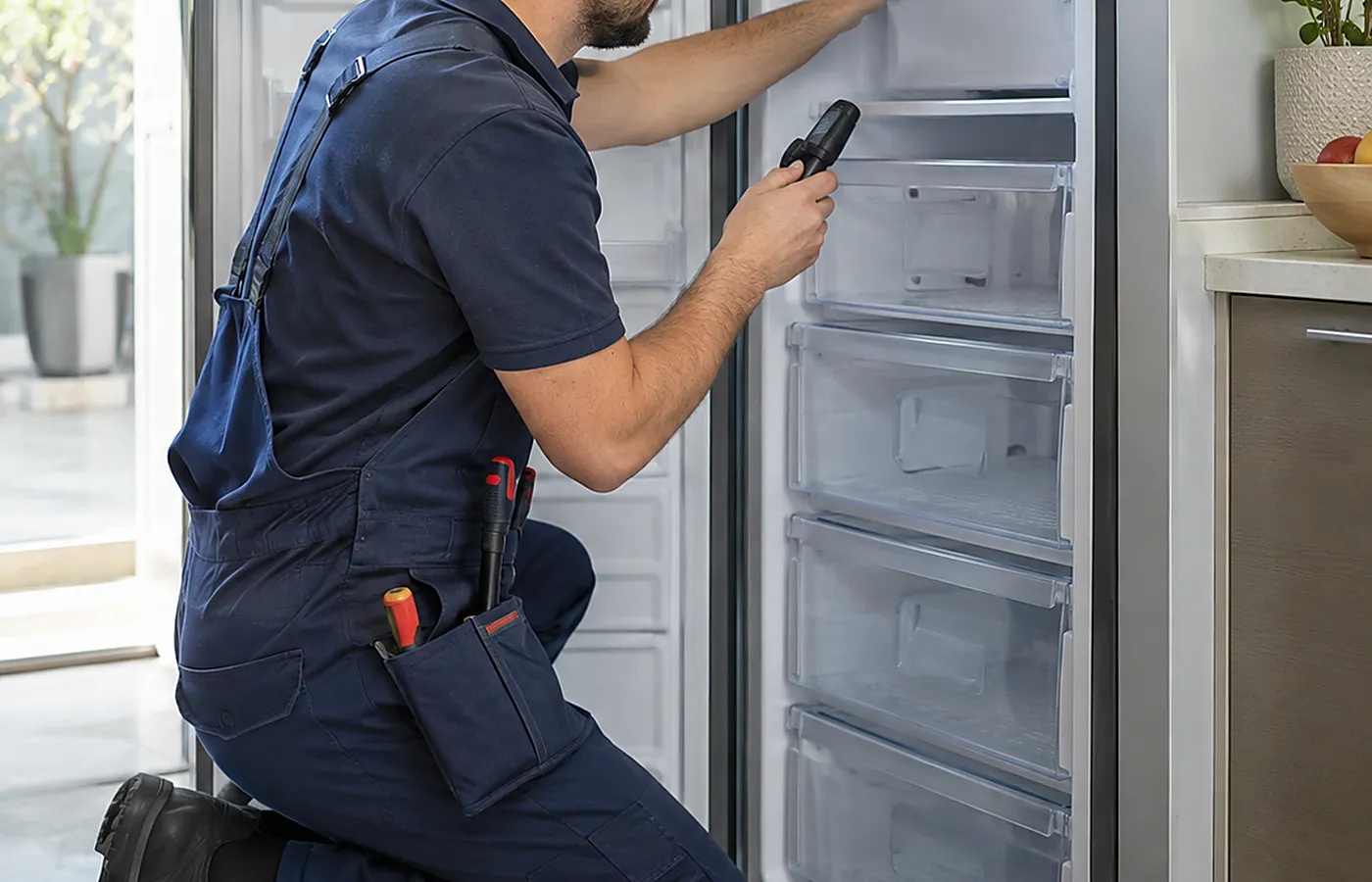
How can the defrost system affect frost buildup?
Automatic-defrost freezers periodically clear frost from the evaporator. A heater, sensor, control or drainage problem can allow ice to accumulate and eventually restrict airflow.
When should heavy frost be diagnosed?
If frost quickly returns after normal use, the door seals correctly, or cooling performance is dropping, professional diagnosis can separate an air-leak problem from defrost, fan or control faults.
Useful next steps
For appliance-specific service information, see Freezer Repair in Franklin, TN. Have the brand, full model number and symptom timing ready before requesting service.
You can also use the service preparation guide to collect model, error-code and access details.
What should you observe before requesting freezer service?
Before requesting service, note where the frost is forming. Frost concentrated around the door opening can point attention toward sealing, door alignment or repeated warm-air entry. A solid frost layer across the inside rear panel can be more consistent with an airflow or defrost-related pattern. Frost limited to food packages after a door was left open may have a different cause. The location and timing of the frost are therefore more useful than simply reporting that the freezer is icy.
Check the door gasket from the outside for obvious gaps, folded sections or debris that prevents the door from closing evenly. Make sure packages, baskets or shelves are not pushing the door outward. Avoid scraping ice with knives or other sharp tools because hidden refrigerant lines and interior surfaces can be damaged. If a thick ice layer blocks vents, fans or drawers, do not force moving parts through the ice.
Also note whether the freezer temperature is actually rising, whether the fan sound has changed and whether the compressor seems to run almost continuously. If food is softening, protect food safety first. Keep the door closed as much as practical and move temperature-sensitive food to another reliably cold location when needed. When arranging service, provide the model number, the exact frost location and whether the condition returned after a previous thaw or power interruption.
If the frost returns quickly after a complete thaw, record how many hours or days it takes to reappear and whether the door has been opened frequently during that period. A recurring pattern is more useful for diagnosis than a single snapshot because it helps show whether moisture entry, door sealing, airflow or defrost operation may be involved. Avoid repeated manual thawing as a long-term workaround if the frost keeps returning, since the underlying condition may still need diagnosis.
Frequently asked questions
Does heavy frost mean the freezer needs refrigerant?
Not necessarily. Door sealing, humid air entry and defrost faults are common frost-related paths. Refrigeration performance is only one part of the diagnosis.
Can I remove freezer frost with a knife?
No. Sharp tools can puncture liners or refrigerant tubing. Use the manufacturer-approved defrost procedure instead.